
Born in Kezthely in the county of Zala, Hungary, December 18, 1811. He graduated from the academy at Selmecbanya and, after receiving government appointment as an engineer, worked in various parts of Hungary. During the Hungarian Revolt of 1848 against temporal power of Austria, he associated himself with Lajos Kossuth and followed him into exile in the United States in 1851.
By 1861 he had become a citizen and offered his services to the Union when the Civil War broke out. John C. Fremont, who had known him in New York, applied for his services, appointed him a Brigadier General of Volunteers and his chief-of-staff. However, the appointment was not recognized in Washington, and lapsed until he was duly appointed on March 21, 1862. During the same month he was wounded while in command of a Division at Pea Ridge (Elkhorn Tavern).
The following year he was in command at Columbus, Kentucky, and later the District of West Florida. In 1864, at the Battle of Marianna, he was badly wounded in the left cheek bone and left arm.
In 1866, he was appointed U.S. Minister to Argentina and Uruguay. By this time he had been accorded the brevet rank of Major General of Volunteers for his gallant and faithful service during the Civil War. The wound in his cheek failed to heal, and on January 21, 1868, he died at Buenos Aires, Argentina, probably of malignancy. He was first buried in the British Cemetery in Victoria Park. In 1923, Victoria District became a park and the cemetery was moved to the Chacarita District.
He came home on October 23, 1990 to full military honors. His remains had recently been exhumed in Argentina after a campaign by Hungarian Americans, who regard him as a hero, and who wished to honor his last request to be buried in Arlington. His great-great-grandnephew, Sandor Asboth, a 22-year-old member of the Virginia National Guard, attended the funeral services and received the folded U.S. flag that had draped the coffin. General Asboth was accorded a caisson drawn by horses, the playing of Taps and a riderless horse, the symbol of a fallen military leader. The date of the burial coincided with the Hungarian uprising of october 23, 1956, which was crushed by Rusian Troops. He lies today in Section 2 of Arlington National Cemetery.
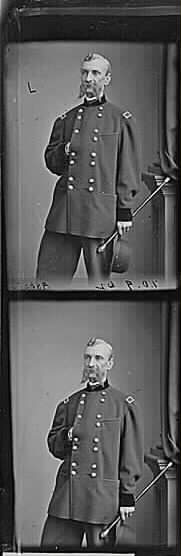
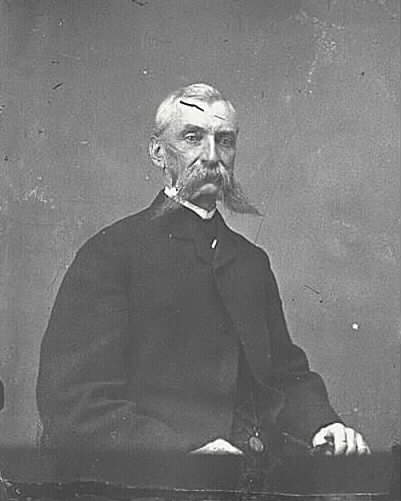
Photos Courtesy of the National Archives
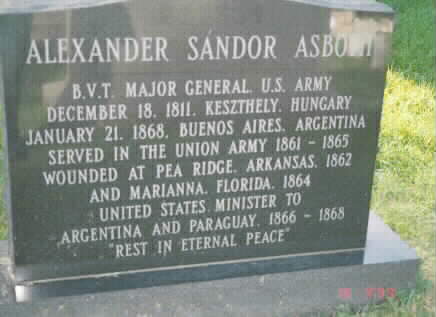
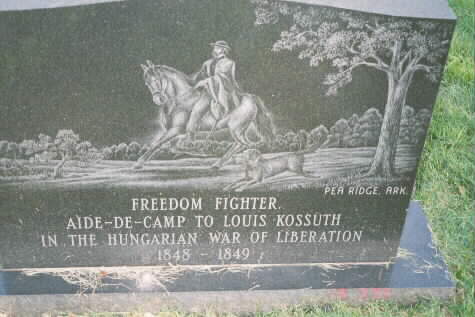

Michael Robert Patterson was born in Arlington and is the son of a former officer of the US Army. So it was no wonder that sooner or later his interests drew him to American history and especially to American military history. Many of his articles can be found on renowned portals like the New York Times, Washingtonpost or Wikipedia.
Reviewed by: Michael Howard