
Among nearly 700 men lost when the torpedoed U.S. troop ship Dorchester went down off Greenland in World War II were four chaplains whose sacrifice was remembered Sunday in a memorial by Jacksonville Beach veterans.
The four who perished, a priest, a rabbi and two Protestant minsters, gave up their own life jackets and remained on board to comfort and pray with the hundreds of men who were lost when the ship went down February 3, 1943.
Sunday, the American Legion Post 129 honored the sacrifice in a Four Chaplains Memorial Service observed by veterans nationwide.
“The only shred of hope, order or discipline on that ship came from those four chaplains,” retired Marine Corps Colonel Jim Fugit told an audience of about 50 at the post. The last thing any of the 230 survivors reported hearing before the ship went under, following three torpedo strikes, was a recitation of The Lord's Prayer, Fugit said.
The sacrifice became a national symbol of selfless service and unity, said post chaplain Bill Reno. Three crosses and a Star of David honor the men at Arlington National Cemetery and a Congressional medal was struck in the names of chaplains George L. Fox, Alexander D. Goode, Clark V. Poling and John P. Washington. The four were honored posthumously with the Distinguished Service Cross.
The Sandalwood High School Air Force Junior ROTC color guard presented the colors in the service that included a rifle salute among the tributes.
Courtesy of the Four Chaplains Memorial Foundation:
It was the evening of February 2, 1943, and the U.S.A.T. Dorchester was crowded to capacity, carrying 902 service men, merchant seamen and civilian workers.
Once a luxury coastal liner, the 5,649-ton vessel had been converted into an Army transport ship. The Dorchester, one of three ships in the SG-19 convoy, was moving steadily across the icy waters from Newfoundland toward an American base in Greenland. SG-19 was escorted by Coast Guard Cutters Tampa, Escanaba and Comanche.
Hans J. Danielsen, the ship's captain, was concerned and cautious. Earlier the Tampa had detected a submarine with its sonar. Danielsen knew he was in dangerous waters even before he got the alarming information. German U-boats were constantly prowling these vital sea lanes, and several ships had already been blasted and sunk.
The Dorchester was now only 150 miles from its destination, but the captain ordered the men to sleep in their clothing and keep life jackets on. Many soldiers sleeping deep in the ship's hold disregarded the order because of the engine's heat. Others ignored it because the life jackets were uncomfortable.
On February 3, at 12:55 a.m., a periscope broke the chilly Atlantic waters. Through the cross hairs, an officer aboard the German submarine U-223 spotted the Dorchester.
The U-223 approached the convoy on the surface, and after identifying and targeting the ship, he gave orders to fire the torpedoes, a fan of three were fired. The one that hit was decisive–and deadly–striking the starboard side, amid ship, far below the water line.
Danielsen, alerted that the Dorchester was taking water rapidly and sinking, gave the order to abandon ship. In less than 20 minutes, the Dorchester would slip beneath the Atlantic's icy waters.
Tragically, the hit had knocked out power and radio contact with the three escort ships. The CGC Comanche, however, saw the flash of the explosion. It responded and then rescued 97 survivors. The CGC Escanaba circled the Dorchester, rescuing an additional 132 survivors. The third cutter, CGC Tampa, continued on, escorting the remaining two ships.
.
Aboard the Dorchester, panic and chaos had set in. The blast had killed scores of men, and many more were seriously wounded. Others, stunned by the explosion were groping in the darkness. Those sleeping without clothing rushed topside where they were confronted first by a blast of icy Arctic air and then by the knowledge that death awaited.
Men jumped from the ship into lifeboats, over-crowding them to the point of capsizing, according to eyewitnesses. Other rafts, tossed into the Atlantic, drifted away before soldiers could get in them.
Through the pandemonium, according to those present, four Army chaplains brought hope in despair and light in darkness. Those chaplains were Lieutenant George L. Fox, Methodist; Lieutenant Alexander D. Goode, Jewish; Lieutenant John P. Washington, Roman Catholic; and Lieutenant Clark V. Poling, Dutch Reformed.
Quickly and quietly, the four chaplains spread out among the soldiers. There they tried to calm the frightened, tend the wounded and guide the disoriented toward safety.
“Witnesses of that terrible night remember hearing the four men offer prayers for the dying and encouragement for those who would live,” says Wyatt R. Fox, son of Reverend Fox.
One witness, Private William B. Bednar, found himself floating in oil-smeared water surrounded by dead bodies and debris. “I could hear men crying, pleading, praying,” Bednar recalls. “I could also hear the chaplains preaching courage. Their voices were the only thing that kept me going.”
Another sailor, Petty Officer John J. Mahoney, tried to reenter his cabin but Rabbi Goode stopped him. Mahoney, concerned about the cold Arctic air, explained he had forgotten his gloves.
“Never mind,” Goode responded. “I have two pairs.” The rabbi then gave the petty officer his own gloves. In retrospect, Mahoney realized that Rabbi Goode was not conveniently carrying two pairs of gloves, and that the rabbi had decided not to leave the Dorchester.
By this time, most of the men were topside, and the chaplains opened a storage locker and began distributing life jackets. It was then that Engineer Grady Clark witnessed an astonishing sight.
When there were no more lifejackets in the storage room, the chaplains removed theirs and gave them to four frightened young men.
“It was the finest thing I have seen or hope to see this side of heaven,” said John Ladd, another survivor who saw the chaplains' selfless act.
Ladd's response is understandable. The altruistic action of the four chaplains constitutes one of the purest spiritual and ethical acts a person can make. When giving their life jackets, Rabbi Goode did not call out for a Jew; Father Washington did not call out for a Catholic; nor did the Reverends Fox and Poling call out for a Protestant. They simply gave their life jackets to the next man in line.
As the ship went down, survivors in nearby rafts could see the four chaplains–arms linked and braced against the slanting deck. Their voices could also be heard offering prayers.
Of the 902 men aboard the U.S.A.T. Dorchester, 672 died, leaving 230 survivors. When the news reached American shores, the nation was stunned by the magnitude of the tragedy and heroic conduct of the four chaplains.
“Valor is a gift,” Carl Sandburg once said. “Those having it never know for sure whether they have it until the test comes.”
That night Reverend Fox, Rabbi Goode, Reverend Poling and Father Washington passed life's ultimate test. In doing so, they became an enduring example of extraordinary faith, courage and selflessness.
The Distinguished Service Cross and Purple Heart were awarded posthumously December 19, 1944, to the next of kin by Lieutenant General Brehon B. Somervell, Commanding General of the Army Service Forces, in a ceremony at the post chapel at Fort Myer, Virginia.
A one-time only posthumous Special Medal for Heroism was authorized by Congress and awarded by the President Eisenhower on January 18, 1961. Congress attempted to confer the Medal of Honor but was blocked by the stringent requirements that required heroism performed under fire. The special medal was intended to have the same weight and importance as the Medal of Honor.
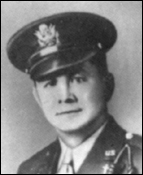
Upon his discharge, he returned home to Altoona, completed his last year in high school, and went to work for the Guarantee Trust Company. In 1923, he entered Moody Institute in Illinois, where he married at Winona Lake, Indiana. After he withdrew from Moody, he became an itinerant preacher in the Methodist faith. A son, Wyatt Ray, was born on November 11, 1924. After several successful years, George held a student pastorate in Downs, Illinois. He entered Illinois Wesleyan University in Bloomington in 1929 and graduated with an A.B. degree in 1931. Again as a student pastorate in Rye, New Hampshire, he entered the Boston University School of Theology. George was ordained a Methodist minister on June 10, 1934 and graduated with a S.T.B. degree. He was appointed pastor in Waits River, Vermont. Their second child, Mary Elizabeth, was born shortly thereafter. In 1936, he accepted a pastorate in Union Village, Vermont. His next calling was in Gilman, Vermont where he joined the Walter G. Moore American Legion Post. He was later appointed state chaplain and historian for the Legion.
In mid-1942, George decided to join the Army Chaplain Service and he was appointed on July 24, 1942. He went on active duty August 8, 1942, the same day his son Wyatt enlisted in the Marine Corps. He was assigned to the Chaplains school at Harvard and then reported to the 411th Coast Artillery Battalion at Camp Davis. He was then reunited with Chaplains Goode, Poling and Washington at Camp Myles Standish in Taunton, Massachusetts and their fateful trip on the USAT DORCHESTER. Chaplain Fox was posthumously awarded the Purple Heart and Distinguished Service Cross.
George L. Fox
Chaplain – First Lieutenant, U.S. Army
Service # 0-485690
United States Army
Entered the Service from: Vermont
Died: 3-Feb-43
Missing in Action or Buried at Sea
Tablets of the Missing at East Coast Memorial
New York City, USA
Awards: Distinguished Service Cross, Silver Star, Purple Heart with Oak Leaf Cluster
*FOX, GEORGE L. (MIA-KIA)
Synopsis:
The President of the United States takes pride in presenting the Distinguished Service Cross (Posthumously) to George L. Fox (0-485690), First Lieutenant (Chaplain), U.S. Army, for extraordinary heroism in connection with military operations against an armed enemy in action against enemy forces on 3 February 1943. Chaplain Fox was one of four Army Chaplains aboard the U.S.A.T. Dorchester which was torpedoed in the North Atlantic. He and his comrades bravely brought order to panicked soldiers as the ship was sinking and, when no more life jackets were available, he gave up his own life jacket to another man. Chaplain Fox's intrepid actions, personal bravery and zealous devotion to duty at the cost of his life, exemplify the highest traditions of the military forces of the United States and reflect great credit upon himself, his unit, and the United States Army.
War Department, General Orders No. 93 (1944)
Born: March 15, 1900 at Lewisburg, Pennsylvania
Home Town: Gilman, Vermont
Personal Awards: Distinguished Service Cross (WWII), Chaplain's Medal (WWII), Silver Star (WWI), 2 Purple Hearts
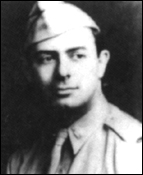
He entered the University of Cincinnati and graduated in 1934 with an A.B. degree…and then on to Hebrew Union College with a B.H. degree in 1937. He later received his Ph.D. from John Hopkins University in 1940.
Alex married his childhood sweetheart, Theresa Flax, daughter of Nathan and Rose Flax. Theresa was a niece of singer and motion picture star, Al Jolson. They were married on October 7, 1935. His first assignment as an ordained Rabbi was at a synagogue in Marion, Indiana in 1936. On July 16, 1937, he was transferred to the Beth Israel synagogue in York, Pennsylvania until mid-1942. Alex and Theresa had a daughter, Rosalie, who was born in 1939.
Rabbi Goode applied to become a chaplain with the U.S. Navy in January 1941, but he was not accepted at that time. Right after Pearl Harbor, he tried again, this time with the Army, and received an appointment on July 21, 1942. Chaplain Goode went on active duty on August 9, 1942 and he was selected for the Chaplains School at Harvard. He had courses in map reading, first aid, law, and chemical warfare. Chaplain Goode was then assigned to the 333rd Airbase Squadron in Goldsboro, North Carolina. In October 1942, he was transferred to Camp Myles Standish in Taunton, Massachusetts and Alex was reunited with Chaplains Fox, Poling and Washington, who were classmates at Harvard.
It was January 1943 when he boarded the U.S.A.T. Dorchester in Boston and embarkation to Greenland. Chaplain Goode was killed in action on February 3, 1943 in the icy waters of the North Atlantic when the Dorchester was sunk by a German U-boat. Chaplain Goode was posthumously awarded the Purple Heart and Distinguished Service Cross.
Alexander D. Goode
Chaplain – First Lieutenant, U.S. Army
Service # 0-485093
United States Army
Entered the Service from: Pennsylvania
Died: 3-Feb-43
Missing in Action or Buried at Sea
Tablets of the Missing at East Coast Memorial
New York City, USA
Awards: Distinguished Service Cross, Purple Heart
GOODE, ALEXANDER D. (MIA-KIA)
Synopsis:
The President of the United States takes pride in presenting the Distinguished Service Cross (Posthumously) to Alexander D. Goode (0-485093), First Lieutenant (Chaplain), U.S. Army, for extraordinary heroism in connection with military operations against an armed enemy in action against enemy forces on 3 February 1943.
Chaplain Goode was one of four Army Chaplains aboard the U.S.A.T. Dorchester which was torpedoed in the North Atlantic. He and his comrades bravely brought order to panicked soldiers as the ship was sinking and, when no more life jackets were available, he gave up his own life jacket to another man. Chaplain Goode's intrepid actions, personal bravery and zealous devotion to duty exemplify the highest traditions of the military forces of the United States and reflect great credit upon himself, his unit, and the United States Army.
War Department, General Orders No. 93 (1944)
Personal Awards: Distinguished Service Cross (WWII), Chaplain's Medal (WWII), Purple Heart
GOODE, ALEXANDER DAVID
- 1ST LT US ARMY
- WORLD WAR II
- DATE OF BIRTH: 05/10/1911
- DATE OF DEATH: 02/03/1943
- BURIED AT: SECTION MF SITE 40-2
ARLINGTON NATIONAL CEMETERY
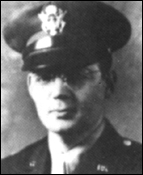
Clark attended Oakwood, a Quaker high school in Poughkeepsie, New York, and was a good student and an excellent football halfback. Clark was a council member and president of the student body. In 1929, he enrolled at Hope College in Holland, Michigan and spent his last two years at Rutgers University in New Brunswick, New Jersey, graduating in 1933 with an A.B. degree. Clark entered Yale University's Divinity School in New Haven, Connecticut and graduated with his B.D. degree in1936. He was ordained in the Reformed Church in America and his first assignment was the First Church of Christ, New London, Connecticut. Shortly thereafter, he accepted the assignment of Pastor of the First Reformed Church in Schenectady, New York.
Clark was married to Betty Jung of Philadelphia, Pennsylvania and the next year, Clark, Jr. (Corky) was born. With our country now at war with Japan, Germany and Italy, he decided to become a chaplain. Talking with his father, Dr. Daniel A. Poling, who was a chaplain in World War I, he was told that chaplains in that conflict sustained the highest mortality rate of all military personnel. Without hesitation, he was appointed on June 10, 1942 as a chaplain with the 131st Quartermaster Truck Regiment and reported to Camp Shelby, Hattiesburg, Mississippi, on June 25, 1942. Later he attended Chaplains School at Harvard with Chaplains Fox, Goode and Washington after his transfer to Camp Myles Standish in Taunton, Massachusetts. Shortly after the U.S.A.T. Dorchester was sunk on February 3, 1943, his wife, Betty, gave birth to a daughter, Susan Elizabeth, on April 20. Chaplain Poling was posthumously awarded the Purple Heart and Distinguished Service Cross.
Clark V. Poling
Chaplain – First Lieutenant, U.S. Army
Service # 0-477425
United States Army
Entered the Service from: New York
Died: 3-Feb-43
Missing in Action or Buried at Sea
Tablets of the Missing at East Coast Memorial
New York City, USA
Awards: Distinguished Service Cross, Purple Heart
POLING, CLARK V. (MIA-KIA)
Synopsis:
The President of the United States takes pride in presenting the Distinguished Service Cross (Posthumously) to Clark V. Poling (0-477425), First Lieutenant (Chaplain), U.S. Army, for extraordinary heroism in connection with military operations against an armed enemy, in action against enemy forces on 3 February 1943, in the North Atlantic Ocean. Chaplain Poling was one of four Army Chaplains aboard the U.S.A.T. Dorchester which was torpedoed in the North Atlantic. He and his comrades bravely brought order to panicked soldiers as the ship was sinking and, when no more life jackets were available, he gave up his own life jacket to another man. Chaplain Poling's intrepid actions, personal bravery and zealous devotion to duty at the cost of his life, exemplify the highest traditions of the military forces of the United States and reflect great credit upon himself, his unit, and the United States Army.
War Department, General Orders No. 93 (1944)
Personal Awards: Distinguished Service Cross (WWII), Chaplain's Medal (WWII), Purple Heart
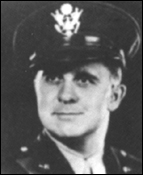
John entered Seton Hall in South Orange, New Jersey to complete his high school and college courses in preparation for the priesthood. He graduated in 1931 with an A.B. degree. He entered Immaculate Conception Seminary in Darlington, New Jersey and received his minor orders on May 26, 1933. John excelled in the seminary, was a sub deacon at all the solemn masses, and later became a deacon on December 25, 1934. John was elected prefect of his class and was ordained a priest on June 15, 1935.
Father Washington's first parish was at St. Genevieve's in Elizabeth, New Jersey, and then he served at St. Venantius for a year. In 1938, he was assigned to St. Stephen's in Arlington, New Jersey. Shortly after the Pearl Harbor attack of December 7, 1941, he received his appointment as a chaplain in the United States Army. Father Washington went on active duty May 9, 1942. He was named Chief of the Chaplains Reserve Pool, in Ft. Benjamin Harrison, Indiana. In June 1942, he was assigned to the 76th Infantry Division in Ft. George Meade, Maryland. In November 1942, he reported to Camp Myles Standish in Taunton, Massachusetts and met Chaplains Fox, Goode and Poling at Chaplains School at Harvard.
Father Washington boarded the U.S.A.T. Dorchester at the Embarkation Camp at Boston Harbor in January 1943 en route to Greenland. Chaplain Washington was killed in action on February 3, 1943, when the Dorchester was sunk by a German U-boat. Chaplain Washington was posthumously awarded the Purple Heart and Distinguished Service Cross.
John P. Washington
Chaplain – First Lieutenant, U.S. Army
Service # 0-463529
United States Army
Entered the Service from: New Jersey
Died: 3-Feb-43
Missing in Action or Buried at Sea
Tablets of the Missing at East Coast Memorial
New York City, USA
Awards: Distinguished Service Cross, Purple Heart
WASHINGTON, JOHN P. (MIA-KIA)
Synopsis:
The President of the United States takes pride in presenting the Distinguished Service Cross (Posthumously) to John P. Washington (0-463529), First Lieutenant (Chaplain), U.S. Army, for extraordinary heroism in connection with military operations against an armed enemy, in action against enemy forces on 3 February 1943. Chaplain Washington was one of four Army Chaplains aboard the U.S.A.T. Dorchester which was torpedoed in the North Atlantic. He and his comrades bravely brought order to panicked soldiers as the ship was sinking and, when no more life jackets were available, he gave up his own life jacket to another man. Chaplain Washington's intrepid actions, personal bravery and zealous devotion to duty at the cost of his life, exemplify the highest traditions of the military forces of the United States and reflect great credit upon himself, his unit, and the United States Army.
War Department, General Orders No. 93 (1944)
Personal Awards: Distinguished Service Cross (WWII), Chaplain's Medal (WWII), Purple Heart

Michael Robert Patterson was born in Arlington and is the son of a former officer of the US Army. So it was no wonder that sooner or later his interests drew him to American history and especially to American military history. Many of his articles can be found on renowned portals like the New York Times, Washingtonpost or Wikipedia.
Reviewed by: Michael Howard