
Biography Courtesy of the United States Air Force
GENERAL HOWELL MARION ESTES JR.
Retired August 1, 1969. Died July 2, 2007.
General Howell Marion Estes Jr., was commander of the Military Airlift Command. MAC operates a global military airlift system – plus air rescue, air weather, photo audio-visual and carto-geodetic services and aeromedical evacuation systems throughout the world.
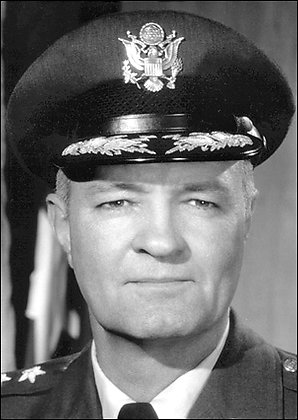
General Estes was born in Fort Oglethorpe, Georgia, in 1914. He graduated from the U.S. Military Academy in June 1936 and began his military career at Fort Bliss, Texas. He was appointed platoon and troop commanding officer of the 7th Cavalry, and later was assigned to Headquarters First Cavalry Division, as aide to the commanding general. He entered pilot training school in June 1939. Upon graduation in April 1940, he transferred to the Army Air Corps and subsequently was assigned as a flight instructor at Brooks Field, Texas.
In August he was appointed commandant of cadets at the Brooks Field Advanced Flying School. He became director of flying for the school in July 1942 and was redesignated director of training the following year. In February 1944 he assumed command of Blackland Army Air Base, Waco, Texas. With the closing of Blackland, he assumed command of Lubbock Army Air Field at Lubbock, Texas, in July 1944.
In January 1946 General Estes became chief of the Plans and Policy Branch, Operations Division, U.S. Air Forces in Europe, at Wiesbaden, Germany. He was named chief of the plans section, Operations Division in April and three months later was designated deputy assistant chief of staff, operations. In November 1947 he became assistant chief of staff, plans, at USAFE.
He returned to the United States and in June 1949 completed courses at the Air War College, Maxwell Air Force Base, Alabama. He was then assigned to March Air Force Base, California, where he assumed command of the 1st Air Base Group and shortly thereafter became deputy commander and chief of staff, 22d Bombardment Wing and later became commander of the wing. In January 1951 he became commander of the 44th Bombardment Wing at March Air Force Base.
During the Korean War, General Estes was on temporary duty overseas from March to July 1951 as vice commander of the Far East Air Forces Bomber Command. During that time, he flew 25 combat missions over Korea with a total of 328 hours in B-29s.
He assumed command of the 320th Bombardment Wing at March Air Force Base in August 1951 and was named commander of the 12th Air Division in 1952. In October, as an additional duty, he was designated commander, Air Task Group 7.4, Joint Task Force Seven, for the overseas atomic test, Operation Castle. He relinquished command of the 12th Air Division in July 1953 and took active command of Air Task Group 7.4. During the operational phase of operation Castle in 1954, he spent four months at the Pacific Proving Grounds on Eniwetok Island.
General Estes was assigned as Director of Weapon Systems Operations, Wright Air Development Center of the Air Research and Development Command, Wright-Patterson Air Force Base, Ohio, in July 1954. This directorate was transferred to the Office of the Deputy Commander for Weapon Systems, ARDC, in August 1955, and became known as Detachment 1 at which time General Estes became assistant deputy commander for weapon systems, Headquarters ARDC and commander, Detachment 1.
General Estes was transferred to Headquarters U.S. Air Force, Washington, D.C., as the assistant chief of staff, air defense systems, in August 1957, and was reassigned as assistant deputy chief of staff, operations, in June 1958. In April 1961 General Estes became the deputy commander for aerospace systems, Air Force Systems Command, in Los Angeles, California, and in October 1962, he became vice commander of AFSC at Andrews Air Force Base, Maryland.
In July 1964 General Estes became commander of the Military Airlift Command (then the Military Air Transport Service) with headquarters at Scott Air Force Base, Illinois.
General Estes was presented the General H.H. Arnold Trophy, the highest military honor given by the Arnold Air Society, on April 26, 1967 for outstanding contributions to military aviation and aerospace programs.
His military decorations include the Distinguished Service Medal (Air Force), Distinguished Service Medal (Army), Legion of Merit with two oak leaf clusters, Distinguished Flying Cross, and Air Medal with oak leaf cluster. He is rated a command pilot.
EDUCATION
- 1931 Graduate Hampton High School, Virginia
- 1936 Graduate U.S. Military Academy, West Point, New York
- 1940 Primary and Advanced Flying Schools, Randolph and Kelly fields, Texas
- 1949 Air War College, Maxwell Air Force Base, Alabama
ASSIGNMENTS
- 1. June 1936 – June 1939, various duties, 7th Cavalry and 1st Cavalry Division, Fort Bliss, Texas
- 2. June 1939 – April 1940, flying school, Love, Randolph and Kelly fields, Texas
- 3. April 1940 – February 1944, commanding officer, 23d Pursuit Squadron; commandant of flying cadets; and then director of training, Brooks Field, Texas
- 4. February 1944 – June 1944, commander, Blackland Army Air Base, Waco, Texas
- 5. July 1944 – December 1945, commander, Lubbock Army Air Force Base, Lubbock, Texas
- 6. January 1946 – July 1948, chief, Plans and Policy Branch; chief, Plans Section; deputy assistant chief of staff, operations; and later assistant chief of staff, plans, Headquarters U.S. Air Forces, Europe
- 7. July 1948 – June 1949, student, Air War College, Maxwell Air Force Base, Alabama
- 8. June 1949 – February l951, commander, 1st Air Base Group; deputy commander and commander, 22d Bomb Wing; commander, 44th Bomb Wing, March Air Force Base, California
- 9. March 1951 – July 1951, 98th Bomb Wing, Fairchild Air Force Base, Wash., with temporary duty to Korea as vice commander, Far East Air Forces Bomber Command
- 10. August 1951 – July 1953, commander, 320th Bomb Wing and later commander, 12th Air Division, March Air Force Base, California
- 11. August 1953 – July 1954, commander, Air Task Group 7.4, Kirtland Air Force Base, N.M., with temporary duty on Eniwetok Island during operational phase of Operation Castle
- 12. July 1954 – August 1957, director, Weapon Systems Operations, Wright Air Development Center; assistant deputy commander for weapon systems with additional duty as commander, Detachment 1, Headquarters ARDC, and director of systems management, Wright-Patterson Air Force Base, Ohio
- 13. August 1957 – March 1961, assistant chief of staff, Air Defense Systems; and later assistant deputy chief of staff, operations, Headquarters U.S. Air Force, Washington, D.C.
- 14. April 1961 – October 1962, deputy commander, Aerospace Systems (Air Force Systems Command), Los Angeles, California
- 15. October 1962 – July 1964, vice commander, Air Force Systems Command, Andrews Air Force Base, Md.
- 16. July 1964 – present, commander, Military Airlift Command, (formerly Military Air Transport Service), Scott Air Force Base, Illinois
MAJOR AWARDS AND DECORATIONS
- Distinguished Service Medal (Air Force)
- Distinguished Service Medal (Army)
- Legion of Merit with two oak leaf clusters
- Distinguished Flying Cross
- Air Medal with oak leaf cluster
- American Defense Service Medal
- American Campaign Medal
- World War II Victory Medal
- Army of Occupation Medal (Japan and Germany)
- National Defense Service Medal with service star
- Antarctica Service Medal
- Korean Service Medal with four service stars
- United Nations Service Medal
Air Force Longevity Service Award Ribbon with six oak leaf clustersNOTE: The General's Father, Howell Marion Estes, Sr., Colonel, United States Army, is also buried in Arlington National Cemetery.
5 July 2007:Howell M. Estes Jr., 92, an Air Force four-star General who led the command that flew cargo to U.S. forces during the Vietnam War, died July 2, 2007, at his home in Bethesda, Maryland. He had a heart ailment.
From 1964 to 1969, General Estes headed the Illinois-based Military Airlift Command, now called the Air Mobility Command. In addition to his Vietnam War responsibilities, he had oversight of medical evacuations, air rescue and other military airlift systems worldwide.
During his retirement, he served brief terms as president of World Airways in Oakland, California, and Federal Express Corp. in Memphis.
Howell Marion Estes Jr., the son of an Army officer, was born in Fort Oglethorpe, Georgia, in 1914.
He graduated in 1936 from the U.S. Military Academy at West Point, New York, where he was captain of the championship polo team. After a period in the cavalry, he began pilot training.
During World War II, he was a flight instruction commander at bases in Texas. In 1947, he joined the newly created U.S. Air Force. During the Korean War, he flew 25 combat missions in B-29s.
General Estes commanded the planning and operations teams of a hydrogen bomb test in 1954 near the Pacific atoll of Eniwetok in the Marshall Islands. This led to further command roles in weapon systems operations, air defense systems and aerospace systems.
In 1961, he helped oversee the installation of missile silos and the construction of missiles as part of the country's strategic nuclear deterrent program.
His decorations included the Air Force Distinguished Service Medal, the Army Distinguished Service Medal, three awards of the Legion of Merit, the Distinguished Flying Cross and two awards of the Air Medal.
He settled in the Washington area in the mid-1970s and was a parishioner at St. Bartholomew Catholic Church and a member of the Burning Tree Club, both in Bethesda.
His marriage to Annah Verbeck Estes ended in divorce.
Survivors include three sons, retired Air Force Gen. Howell M. Estes III of Colorado Springs, Michael S. Estes of Lafayette, Calif., and Charles D. Estes of Washington; a sister, Katherine Estes of Bethesda; 10 grandchildren; and 11 great-grandchildren.
The general who once led the command charged with re-supplying deployed U.S. forces passed away July 2 at his home in Bethesda, Maryland.From July 1964 until he retired in August 1969, retired General Howell M. Estes Jr. was the commander of the Military Air Transport Service, later known as the Military Airlift Command, during the Vietnam War.
“General Estes exemplified the meaning of service through his leadership, professionalism and commitment to the United States Air Force and our nation, said Air Force Chief of Staff Gen. T. Michael Moseley of his valuable leadership was during the Vietnam conflict. “Our thoughts and prayers go to his family and loved ones during their time of loss.”
In addition to his responsibilities of supporting U.S. forces fighting communism in the jungles of Southeast Asia, he had oversight of a global military airlift system, now known as Air Mobility Command, to include aeromedical evacuation operations, air rescue, air weather, photography and mapping services throughout the world.
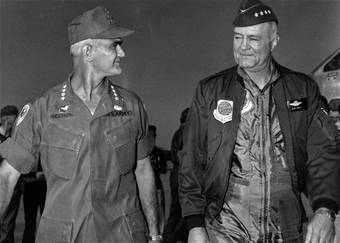
The son of an Army officer, the Fort Oglethorpe, Georgia, native graduated in 1936 from the U.S. Military Academy at West Point, N.Y., and was assigned to the cavalry before he entered pilot training school in June 1939. Upon graduation he transferred to the Army Air Corps and subsequently was assigned as a flight instructor at Brooks Field, now Brooks City-Base, in San Antonio in April 1940.
In August of that same year he was appointed commandant of cadets at the Brooks Field Advanced Flying School. He became director of flying for the school in July 1942 and was re-designated director of training the following year. In February 1944 he assumed command of Blackland Army Air Base in Waco, Texas. With the closing of Blackland, he assumed command of Lubbock Army Air Field at Lubbock, Texas, in July 1944.
In 1947, he was transferred to the newly created U.S. Air Force.
During the Korean War, General Estes was on temporary duty overseas from March to July 1951 as vice commander of the Far East Air Forces Bomber Command. During that time, he flew 25 combat missions over Korea with a total of 328 hours in the B-29.
General Estes was presented the General H.H. Arnold Trophy, the highest military honor given by the Arnold Air Society, April 26, 1967, for outstanding contributions to military aviation and aerospace programs.
His military decorations include the Distinguished Service Medal (Air Force), Distinguished Service Medal (Army), Legion of Merit with two oak leaf clusters, Distinguished Flying Cross, and Air Medal with oak leaf cluster.
General Estes was 92 years old.
5 July 2007: Howell M. Estes Jr., an Air Force four-star general who led the command that flew cargo to US forces during the Vietnam War, died Monday at his home in Bethesda, Maryland. He was 92 and had a heart ailment.
From 1964 to 1969, General Estes headed the Illinois-based Military Airlift Command, now called the Air Mobility Command. In addition to his Vietnam War responsibilities, he oversaw medical evacuations, air rescue, and other military airlift systems worldwide.
During his retirement, he served brief terms as president of World Airways in Oakland, California, and Federal Express Corp. in Memphis.
Howell Marion Estes Jr., the son of an Army officer, was born in Fort Oglethorpe, Georgia, in 1914.
He graduated in 1936 from the US Military Academy at West Point, New York, where he was captain of the championship polo team. After a period in the cavalry, he began pilot training.
During World War II, he was a flight instruction commander at bases in Texas.
In 1947, he joined the newly created Air Force. During the Korean War, he flew 25 combat missions in B-29s.
General Estes commanded the planning and operations teams of a hydrogen bomb test in 1954 near the Pacific atoll of Eniwetok in the Marshall Islands. This led to command roles in weapon systems operations, air defense systems, and aerospace systems.
In 1961, he helped oversee the installation of missile silos and the construction of missiles as part of the country's strategic nuclear deterrent program.
His decorations included the Air Force Distinguished Service Medal, the Army Distinguished Service Medal, three awards of the Legion of Merit, the Distinguished Flying Cross, and two awards of the Air Medal.
He settled in the Washington area in the mid-1970s. His marriage to Annah Verbeck Estes ended in divorce.
General Estes leaves three sons, retired Air Force General Howell M. III of Colorado Springs, Michael S. of Lafayette, Calif., and Charles D. of Washington; a sister, Katherine of Bethesda; 10 grandchildren; and 11 great-grandchildren.
The Tennessee Valley has lost another veteran. General Howell Estes, a highly decorated Air Force General born in North Georgia passed away.Estes was born in Fort Oglethorpe in 1914. He rose quickly through the ranks and at the height of his career, was commander of the “Military Air Transport Service.”
He served in the Korean war as a pilot and served with distinction as a four star general in Vietnam. General Estes was 92-years-old. He will be buried in Arlington National cemetery, near Washington D.C.

Michael Robert Patterson was born in Arlington and is the son of a former officer of the US Army. So it was no wonder that sooner or later his interests drew him to American history and especially to American military history. Many of his articles can be found on renowned portals like the New York Times, Washingtonpost or Wikipedia.
Reviewed by: Michael Howard