
Born: Owego, NY, July 8, 1835. He raised the first company of Volunteers for the Civil War on the day of President Lincoln's call for 75,000 troops.
Served as Captain, 3rd New York Infantry, May 14, 1861; resigned March 14, 1862; appointed First Lieutenant and Adjutant, 109th New York Infantry, August 2, 1862; Lieutenant Colonel, August 28, 1862; Colonel, July 29, 1864; honorably mustered out June 4, 1865.
Appointed Captain, 45th US Infantry, May 6, 1867; retired with the rank of Colonel, May 6, 1870; Brigadier General, US Army, retired list by act of April 23, 1904. Breveted Brigadier General of Volunteers, March 13, 1865 “for gallant and meritorious services during the war”; breveted Major General, March 13, 1865, for same in battles before Petersburg, Virginia (where he lost his right leg); breveted Major, May 6, 1867, for same in Battle of the Wilderness; breveted Lieutenant Colonel, May 6, 1867, for same at Petersburg. Awarded the Medal of Honor “for most distinguished gallantry in action at explosion of the mine at Petersburg.”
Served as Assistant US District Attorney, 1871; elected district attorney, Kings County (Brooklyn, NY), 1877; reelected, 1880; nominated for mayor of Brooklyn, New York, 1885; nominated for Congress, declined nomination, 1893; offered, but declined, nomination for lieutenant governor of New York, 1896; originally a Republican, then was a Cleveland Democrat; he supported war policy (Spanish-American War) of McKinley and Roosevelt.
Wrote: “Memoirs of Civil and Military Career.” Home: Brooklyn, New York. Died: January 19, 1916, and was buried in Section 2, Grave 3397, Arlington National Cemetery. His wife, Virginia Bacon Catlin (February 10, 1842-May 9, 1913) is buried with him.
CATLIN, ISAAC S.
Rank and organization: Colonel, 109th New York Infantry. Place and date: At Petersburg, Virginia, 30 July 1864. Entered service at: Oswego, New York. Birth: New York. Date of issue: 13 January 1899.
Citation:
In a heroic effort to rally the disorganized troops was disabled by a severe wound. While being carried from the field he recovered somewhat and bravely started to return to his command, when he received a second wound, which necessitated amputation of his right leg.
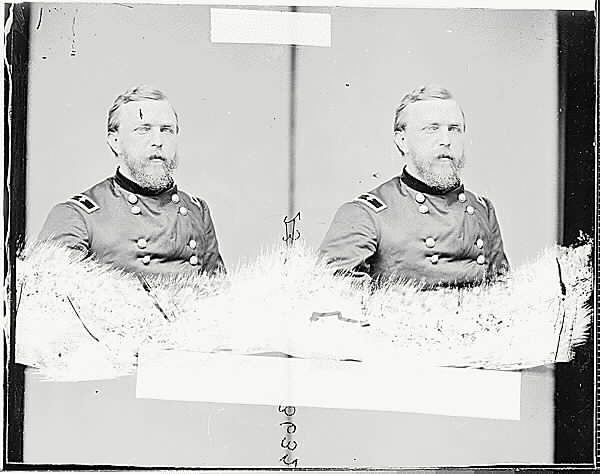
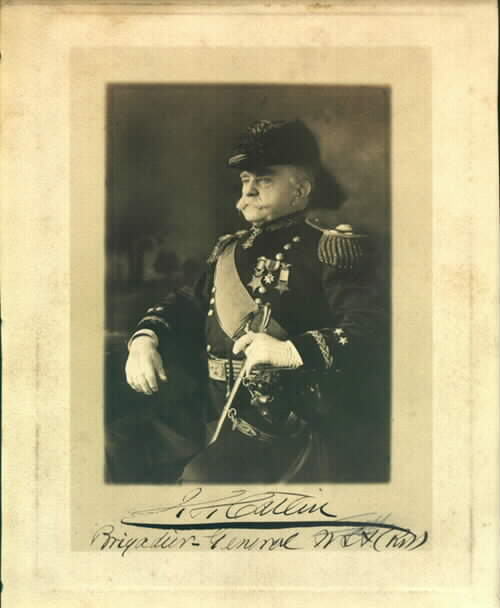
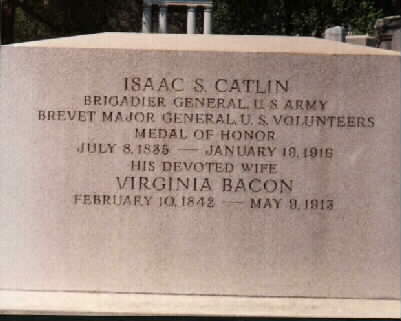
CATLIN, ISAAC S
BRIG GEN USA RTD
- DATE OF DEATH: 01/19/1916
- BURIED AT: SECTION SOUTH SITE 3397
ARLINGTON NATIONAL CEMETERY
CATLIN, VIRGINIA B W/O ISAAC S
- DATE OF DEATH: 05/09/1913
- BURIED AT: SECTION W.SDE SITE 3397
ARLINGTON NATIONAL CEMETERY

Michael Robert Patterson was born in Arlington and is the son of a former officer of the US Army. So it was no wonder that sooner or later his interests drew him to American history and especially to American military history. Many of his articles can be found on renowned portals like the New York Times, Washingtonpost or Wikipedia.
Reviewed by: Michael Howard