
From a contemporary press report:
March 11, 1837 – December 4, 1890). Jedediah Hyde Baxter, Surgeon General of the United States Army, August 16, 1890 – December 4, 1890, was born at Strafford, Orange County, Vermont, the son of Portus and Ellen Janette (Harris) Baxter. His early education was obtained in academies at South Woodstock and St. Johnsbury in his native state after which he attended the University of Vermont at Burlington where he received the degree of B. S. in 1859 and that of M. D. in 1860. After graduation be went to New York City where he saw some service as resident physician at Bellevue and Blackwell's Island hospitals. With the outbreak of the Civil War he volunteered for service and was commissioned as surgeon of the 12th Massachusetts Volunteers on June 26, 1861.
In this capacity he served with the Army of the Potomac from July 27, 1861, to April 4, 1862, when he was appointed major and surgeon of volunteers and assigned to the duty of brigade surgeon. Later that year he was ordered to Washington and placed in charge of Campbell General Hospital and still later in that year he was assigned to duty in the newly organized Provost Marshal General's Bureau as chief medical officer, a position which he filled for the remainder of the war and until the completion of the records of that office. It appears that during a portion of this period he had some duties as a medical purveyor. On March 13, 1865, he received the brevet of colonel of volunteers for “faithful and meritorious service during the war.”
Incident to the reorganization of the army following the war Baxter was appointed by President Johnson an assistant medical purveyor with the rank of lieutenant colonel, to fill a original vacancy, dating from July 20, 1867. His acceptance vacated his volunteer commission and brought to the regular corps a remarkable personage who strongly influenced the affairs of the medical department for the next quarter of a century. He was given the brevet of colonel in the regular establishment on the same date as that of his appointment to the corps. There is no evidence that Baxter served outside of Washington after 1862. He was appointed chief medical purveyor with no change in grade on March 12, 1872, and was promoted to colonel and chief medical purveyor on June 23, 1874. Appointed to this position during the administration of Surgeon General Barnes, he continued through the terms of General Crane, General Murray, and General Moore. He early developed an understandable ambition to head the medical department, and with each successive vacancy he not only was a candidate but was always strongly supported for the place.
It was urged against him that he had entered the corps as a lieutenant colonel instead of as a lieutenant as had his competitors and that though he held high rank in the corps he had much less service than many who were his juniors oil the lineal list. It was further urged that he had entered the service without the professional examination which bad been required of others. Considerable heat and bitterness were aroused in each of the contests and they were each time settled by the advancement of the senior ranking officer of the corps. With his comparative youth Baxter could wait his turn for the place.
As chief medical purveyor his work was of high advantage to the service. Medical supplies were of better quality and more abundant in quantity. He increased markedly the professional literature furnished to medical officers and was sympathetic to requests for instruments and appliances from those proposing to make special research. In addition to the work of his office he carried on all active medical practice. His professional clientele included several presidents and their families, and he had a large following among senators, congressmen, and other government officials. His alleged methods in obtaining a clientele that would assist in furthering his military ambitions were the subject of considerable criticism from civilian physicians who accused him of unethical practices. He was the medical attendant at the White House during the early part of the administration of President Garfield and considerable comment was aroused by his failure to be included among the surgical attendants following the fatal wounding of the President. Whatever the cause of this neglect or to whom it may be charged the incident provoked a high degree of resentment among Baxter's friends. Even the additional activity of a busy practice did not fill Baxter's time as he would have it filled, so he took up the study of law and after a full course at the Law School of the Columbian University he was graduated with the degree of LL. B. With the retirement of Surgeon General Moore in 1890, circumstances were highly propitious for Baxter. A fellow Vermonter, the Hon. Redfield Proctor, was secretary of war and Benjamin Harrison, the President, was a long-time patient and friend. There was no real contest for the place and Baxter was appointed Surgeon General on August 16, 1890. He had shown excellent administrative ability in the conduct of the supply department and while waiting for the high place to which he at last achieved he had been laying plans for far-reaching and comprehensive improvements in the department. There can be no doubt that he would have made every effort to bring his plans to realization but hardly more than four months after his appointment he suffered a paralytic stroke on December 2, 1890, at his home in Washington and died two days later at the age of fifty-three years. His funeral from All Souls Church was attended by all official Washington with a long list of the highest officers of the army and navy as honorary pallbearers. He was buried in Arlington Cemetery.
Thus terminated the career of one of the most colorful personalities that the medical service has produced. Physically he was of medium height and strongly built. He was a good friend and a good hater, a man of strong personal attraction and equally strong prejudices. It is said that when he was made Surgeon General there was a general shake-up in the stations of the corps with a view to the reward of friends and the discipline of the unfavored. Particularly notable is his work with the Provost Marshal General's Bureau. Entering upon this duty when in his twenties, he won early recognition by his high intelligence and industry. He acquired the most detailed knowledge of the work of the bureau, including a personal acquaintance with practically every officer on duty with it.
He prepared the two-volume Medical Statistics of the Provost Marshal General's Bureau, published by the Government in 1875. This work, which presents the results of the examination of over a million men, contains also a discussion of anthropometry, recruiting regulations of other governments, and reports from medical officers of the bureau, including not only their special work but also the topography and diseases of their districts.
As a representative of this office he attended the Boston meeting of the American Medical Association in 1865. Beside the local medical societies he was a member of the Public Health Association, the Boston Gynecological Society, and the Philadelphia Academy of Natural Sciences. He contributed some papers to the transactions of these societies and to medical periodicals. He was married on March 9, 1876, at Boston, Mass., to Florence Tryon, daughter of William Tryon of that city, who survived him. They had no children.
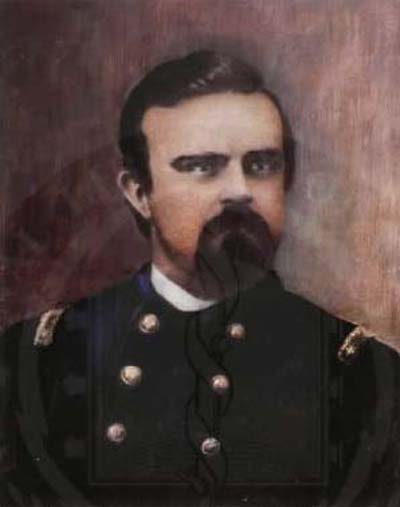
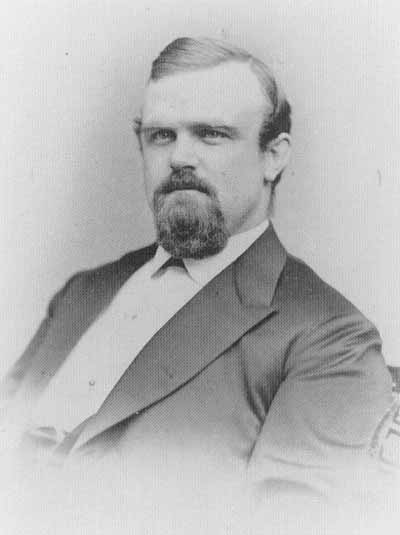
BAXTER, JEDEDIAH HYDE
BRIG CEM SURGEON GEN USA
- DATE OF DEATH: 12/04/1890
- BURIED AT: SECTION 1 SITE FRONT SL
ARLINGTON NATIONAL CEMETERY

Michael Robert Patterson was born in Arlington and is the son of a former officer of the US Army. So it was no wonder that sooner or later his interests drew him to American history and especially to American military history. Many of his articles can be found on renowned portals like the New York Times, Washingtonpost or Wikipedia.
Reviewed by: Michael Howard