
WEBMASTER MESSAGE:
Was Lieutenant Sutton the victim of a suicide, an accidental killing or a victim of murder? Read through the following stories which report on the second inquiry into the Lieutenant's death and decide for yourself!
Please also note that the following items are the result of our own research and that none was contributed to, or authored by, Ms. Robin R. Cutler, whose fine new book, “Soul on Trial,” is mentioned at the bottom of this remembrance and which is now available at all book stores and at Amazon.Com. We highly recommend the book for visitors who wish to learn more about the circumstances surrounding the death of Lieutenant Sutton.
Errata:
Some of these materials were originally published in newspapers of the day across the Nation, but principally the the New York Times, The Washington Star, The Washington Post, The New York Evening Journal, The New York Evening World and the The New York Evening Post. Sadly, all but the New York Times and the Washington Post are long defunct. In our haste to post Lieutenant Sutton's remembrance here prior to the 100th anniversary, the original remembrance failed to give proper credit to these fine publications. For this, the webmaster takes full responsibility. Without their coverage of the second Board of Inquiry, the story of Lieutenant Sutton could not have been told and we are grateful that these publications covered this thought provoking story.
LIEUTENANT SUTTON PUTS BULLET IN BRAIN
Marine Corps Officer Commits Suicide At Annapolis
He Fought To Kill Himself
Discovered About To Shoot Himself, Sutton Was Disarmed,
But He Snatched Another Revolver From Blouse And Fired
ANNAPOLIS, Maryland – October 13, 1907 – Second Lieutenant James N. Sutton, Jr., United States Marine Corps, is dead at the Naval Academy Marine Barracks, his death resulting from a 32-caliber bullet fired into the right side of the head.
A board of inquiry detailed by Superintendent Badger, of the Naval Academy, has prepared a report which will be submitted to the Navy Department. From the best information obtained, Sutton, in company with Second Lieutenants R. E. Adams and E. P. Roelker, returned to the Marine Camp at 1:30 this morning, after having attended a dance at the Academy.
Shortly afterward Sutton is said to have been discovered on the road nearby with a revolver in his right hand and several officers attempted to disarm him. This they succeeded in doing, but not before the weapon was discharged in some manner and Lieutenants Adams and Roelker received slight wounds. Quick as a flash, it is said, Sutton took from his blouse another revolver and with this fired the fatal shot into his brain.
Lieutenant Sutton was 22 years old and the son of James N. Sutton of Portland, Oregon. He was formerly a Midshipman in the present senior class but resigned in his third class year.
SERGEANT TO TELL OF SUTTON'S DEATH
Sad Quarrel On Annapolis Parade Ground, Where The Lieutenant Died
Witness At First Hearing
But Was Not Asked About All The Circumstances – One Officer Gave Him A Revolver To Hide
WASHINGTON, July 10, 1909 – Sergeant James DeHart of the Marine Corps is looked to as the man who can solve the mystery that shrouds the death of Lieutenant James N. Sutton, who was found dead on the parade grounds at the Naval Academy in Annapolis in October 1907, and who subsequently was adjudged a suicide by a board of inquiry.
Sergeant DeHart was present at the time of the fight in which Lieutenant Sutton died, whether by his own hand or at the hands of another. He was a witness before the Board of Officers that inquired into the affair, but he was not called upon to testify to all he knew.
DeHart, who is now stationed at the Marine Barracks here, was returning from a lark on the town with Lieutenant Roelker. The officer had made his way to his tent while DeHart was striving to get to his quarters without arousing the suspicion of the sentries. As he was slipping down a company street, his attention was attracted by the sounds of fighting and, his curiosity getting the better of him, he returned to see what was the trouble.
Four men were struggling in the darkness, which was only partly relieved by the light from the lamps of two automobiles. Subsequently, DeHart recognized the quartet as being Lieutenants Sutton, Utley, Adams and Ostermann. Just before he arrived on the scene, a shot was fired, and as he put it in an appearance one of the officers thrust a service revolver upon him with instructions to dispose of it. It was of .38-calibre and the regular Navy pattern.
DeHart, thoroughly frightened, flung the weapon from him. It must have fallen far out on the parade field, and immediately he wheeled and made his way quickly back toward his quarters. On his way there he met the Officer of the Day and told him of the fight and the disposition he had made of the revolver. He was instructed to seek out the weapon the first thing in the morning and to report with it at the officers' tent. The next morning when DeHart went to seek it, the revolver had disappeared.
Although he had been a witness before the first board of inquiry, DeHart was not questioned as to which of the officers handed him the weapon or which one ordered him to dispose of it. The board contented itself with interrogating him as to his impressions of the affray and his connection with it. It went no further.
It is now believed that DeHart's testimony at the coming hearing will throw a new light on the tragedy. The Marine will not divulge anything of his conversation on the parade ground when the officers were struggling and after the shot was fired, but his companions say he will talk freely on the witness stand when the Court is convened week after next.
Miss Margaret Stewart of Pittsburgh is present at Annapolis. She is generally reported at the young woman whose charms prompted the officers to engage in the fight that resulted in Lieutenant Sutton's death. It is declared, however, that Miss Stewart was not along with Sutton on the night of the tragedy, but that she went to Carvel Hall in company with a Professor in the Naval Academy, and that Lieutenant Sutton was a casual caller.
This being the case, a new motive is being sought for the tragedy. It has been declared that the fight between the officers started over a young woman whose affections they all sought and who favored Sutton. The overthrow of this theory make the case all the more difficult, and the hearing before the court beginning July 19 promises to be exhaustive.
MERRY PARTY BEFORE SUTTON WAS KILLED
But He Drank Less Than Others, Says Clerk At Annapolis Hotel Where Officers Met
Chauffeur Heard Shot
Had Been Sent Away In Charge Of A Sentry Before It Was Fired, His Family Says – He's To Be A Witness
From The New York Times Archives
ANNAPOLIS, July 11, 1909 – Two important stories were told today bearing on the mystery that shrouds the death of Lieutenant James N. Sutton of the Marine Corps, who was found dead on he parade grounds of the Naval Academy in October 1907, and whose death, declared by a naval board of inquiry to have been by his own hand, is laid at the door of his brother officers by his family. These were that the young officer had not been drinking unduly on the night of the tragedy and that he was set upon in the automobile by four officers. These officers had been imbibing too freely, according to eye witnesses who saw the five leave Carvel Hall Hotel together.
These two stories will be brought out prominently at the hearing before the new board of inquiry, which convenes at the Academy one week from tomorrow. In the meantime, the opinion among the civilians of this quaint little Maryland city of that Lieutenant Sutton was murdered.
In naval circles, the utmost reticence is being observed and no opinions are expressed. The imminence of the meeting of the investigating board would have been enough to seal the lips of officers, but it was evident that the word had been passed that nothing shall be said that will tend to prejudice the court.
According to the clerk in the Carvel Hall Hotel, who was the last to see the five officers leave the place, Lieutenant Sutton was distinctly the most sober of them all. He did not have any opportunity to drink much that evening, for he spent it with Miss Margaret Stewart of Pittsburgh, who was stopping at the hotel, and was in the company of a Professor in the Academy. The little party remained in the lounging room on the main floor of the hotel, which is situated immediately behind the hotel office. The clerk noted them there from time to time during the evening.
“The effort to drag Miss Stewart's name into the case is unwarrantable,” he said. “Lieutenant Sutton apparently had just been introduced to her, and, so far as I was able to discover, and I had plenty of opportunities, the other officers connected with the shooting had not met her. If the unfortunate officer was killed by one of his own fellows, it was not as a result of jealousy arising out of his intentions to Miss Stewart. Of that I am certain.”
The bar in the Carvel Hall closes at midnight, and shortly before that house, Lieutenant Sutton left Miss Stewart and the Professor, after bidding them good night. The hotel clerk witnessed the leave-taking, and saw Sutton hurry down stairs to the buffet, where Lieutenants Utley, Adams, Roelker and Ostermann had been for sometime. They had had numerous drinks and were in high spirits when Sutton appeared. Sutton, according to the bartender, drew his watch and noted the time.
“Hello,” he exclaimed. “It is five minutes to twelve. If you fellows want another drink you will have to hurry.”
Following his words, Lieutenant Sutton ordered a quart bottle of whiskey, together with a quantity of cracked ice, and several siphons of seltzer. The five then applied themselves to the liquor, and when they emerged to enter an automobile previously engaged by Sutton, the clark saw that they carried no bottle with them. Apparently they had finished it.
As they left the hotel the five seemed to be the best of friends. The hotel clerk would not admit that the four officers with Sutton were intoxicated, but he admitted that they appeared to be considerably exhilarated. They passed down the broad steps arm in arm and with a lot of laughter and apparently good natured chaff climbed into the waiting motorcar, which promptly shot off in the direction of the Marine Barracks.
William Owens was the chauffeur. What follows, the narrative of what he saw and heard is told by members of Owens' family:
The car had but proceeded very far on its way before the four officers turned on Sutton, whose guest they were. Profane language was used, and when the machine reached a dark spot in the parade ground one of the officers ordered the chauffeur, Owens, to bring it to a stop. The four sprang out, dragging Sutton with them, cursing him as they did so.
Owens was alarmed at the situation, but he was quickly relieved of his anxiety when one of the officers called a sentry, “Get in there,” he commanded, “and take this man of off the grounds. Hurry up”
When Owens and the sentry were about a quarter of a mile away from the scene they heard a shot. Owens did not know what it meant. The next morning be learned of Sutton's death.
The chauffeur slipped away into hiding today and could not be found. It was said that in the last two days no fewer than thirteen officers have called at his home to caution him against saying anything until the new board meets.
The old investigating board did not call upon him to appear, and his testimony was not sought. The fact that so much precaution is being taken now to prevent his being reached, either by newspaper men or friends of the officers under suspicion, leads to the belief that he knows much more than is generally supposed.
Owens has been in Washington three times within the last two weeks, and no secret was made at his home that he has been in consultation with Mrs. Sutton, mother of the dead officer.
These frequent consultations strengthen the opinion that Owens has knowledge that will lead to sensational developments. He undoubtedly knows the name of the officer who commanded him to stop at the lonely spot where Sutton lost his life, and likewise he must have identified the officer who disposed of the disquieting presence of the sentry under the pretense of sending him to take Owens and his machine to the gate. These two facts will be of the greatest importance, and especially so if the officers in both instances happen to be the same.
Very few officers remain at the academy who were there when the tragedy occurred. The few who are still on duty declined today to say anything about the case or to advance any opinions as to the real story of Sutton's death. At the present time there are no officers of the Marine Corps at the academy, and those who belong to other branches of the naval service protest their complete ignorance of the matter because of their not being connected with the Marine Corps.
There are numerous stories afloat around this city as to Sutton's peculiarities. None of them, however, can be substantiated, and they may have been set afloat by his enemies to discredit him. The dead Lieutenant, from all that can be learned, was not popular with his fellow officers.
One of these rumors is to the effect that Sutton was fond of posing as a “bad man” and of boasting of his prowness with a gun and his readiness to use one when provoked. It is said that on one occasion the young officer, while in uniform, cleaned out a resort. He did this at the point of a revolver, the report runs, and afterward boasted of it. Officers of the Marine Corps at the time resented this rumored action, as they believed it brought discredit on their organization.
Members of both the Marine Corps and the Regular Naval establishment are thoroughly incensed at the sensational stories being sent out from here. The dragging of the name of Miss Stewartt into the case is universally regretted, while the alleged confessions of the late Lieutenant's bother officers that they hated him ardently are said to be made out of whole cloth. Such stories as that which declared Sutton's rage to have been stirred to murderous heat by a blow that showed his nose to have been built up out of paraffin officers consider beneath notice.
Mrs. Sutton Parker, sister of Lieutenant Sutton, is expected here the latter part of this week. It is not known now just where she is, but it is generally understood that she is gathering further evidence to lay before the inquiry board. It was due to her activity in getting together additional evidence that Secretary Meyer ordered a rehearing of the case.
Dr. J. J. Muroht, head of the Emergency Hospital of Annapolis, who has served in the Regular Army in the Philippines, pointed out today that, although Sutton was called a suicide, he still was buried with military honors. “I have always understood,” said he, “that an Army man who ends his own life never had military honors at burial. In this case, however, the unfortunate man was buried with the honors of a Captain, when his rank was that of Lieutenant. When the body was removed from the Naval Academy grounds to the railroad station, a company of Marines accompanied it, and at the station a volley was fired from the rifles of these men.
This was done after the Naval Investigating Board had declared Lieutenant Sutton a suicide, and up to the present time I have not been able to understand or learn why this was done.
SUTTON INQUIRY PUBLIC
Secret Only If Evidence Points To Some One Man
From The New York Times Archives
WASHINGTON, July 14, 1909 – Secretary Meyer today decided to have the hearings of the board of inquiry which will investigate the death of Lieutenant James N. Sutton public. No attempt will be made to take testimony in secret unless the testimony points to some individual as the murderer of Lieutenant Sutton. In that case the proceedings will be secret in order that the man under suspicion may have a chance to clear himself before he is openly accused.
Mrs. Sutton, mother of the Lieutenant, has declined to make any further comment ton the rehearing. She talked freely tonight, however, concerning the case of her other son, a cadet at West Point, who is in the hospital there as the result of what is said to have been hazing.
“I have dropped my investigation of the matter,” she said.”My son insists he received his injuries in a fall and although I am convinced he is taking this stand because of an exaggerated belief in the traditions of the academy, I cannot disprove his declaration. The academy authorities have endeavored to get at the bottom of the matter, but without success. As no proof can be had there is nothing on which we can work, and the matter, so far as I am concerned, has been dropped.”
Young Sutton's injuries are of such a character, according to reports, that he could not have sustained them in a fall. He sticks to his story, however, and as he declined either to make charges or admit that he was the object of attack by upperclassmen, the authorities can take no action.
Mrs. Sutton was in conference today with her two attorneys. They went over the evidence carefully and framed the questions they were to put to the various witnesses that have been called. The drift of these questions was not made public. Neither Mrs.. Sutton nor her attorneys would talk. The former spent the evening in her apartments resting, she said, in anticipation of the hearing which begins on Monday.
Mrs. Sutton's attention was called to the interview with Miss Elizabeth Stewart of Pittsburgh, printed in the New York Times this morning. In the interview, Miss Stewart denied that she had received the attentions of young Sutton, and that she was well acquainted with him. Mrs. Sutton accepted Miss. Stewart's statement as being absolutely true. She acknowledged that, so far as she knew, there was no attachment between Miss Stewart and her son at the time of his sudden death. The elder woman regretted the connection of Miss Stewart's name with the case.
Certain members of the court arrived in Washington today in preparation for reporting at Annapolis on Monday. They will confer tomorrow with Assistant Secretary of the Navy Winthrop to ascertain the procedures to be followed in the rehearing.
NO SUTTON “WHITEWASHING”
Navy Department To See That The Investigation Is Thorough
From The New York Times Archives
WASHINGTON, July 15, 1909 – Secretary of the Navy and the Judge Advocate of the Navy, it became known today, will maintain complete jurisdiction over the rehearing the case of Lieutenant James N. Sutton, the young Marine Corps officer who met a mysterious death on the night of October 13, 1907 at the Naval Academy.
While authority has been given to the members of a special board of inquiry to reopen the case, the Secretary will interfere if he sees the slightest inclination on the part of any one to strive to gloss the affair over. There is to be no “whitewashing.”
CHALLENGED SUTTON TO FIGHT A DUEL
Letter Found Among Dead Lieutenant's Effects Said To Show Plan Was To Use Revolvers
Punishment For Officers
Members Of Sutton's Party, If Cleared Of Murder Charge, Likely To Be court-martialed On General Conduct
ANNAPOLIS, Maryland – July 15, 1909 – Evidence that Lieutenant James N. Sutton received a challenge to fight a duel has come to light. Two prominent men of Annapolis confirm the existence of documentary evidence showing almost conclusively that Sutton had been challenged to fight a fellow officer. The statement of Owens, the chauffeur, makes it probable that this is the explanation of the attack which the latter declares was made on Sutton when the party alighted from the automobile on the night of Sutton's death.
One of the Annapolis men said tonight that a letter found in Lieutenant Sutton's effects, and now in the possession of Mrs. Parker, his sister, showed that an arrangement for a fight or duel existed between Lieutenant Sutton and another officer, whose name was signed to the communication, but which he could not remember. The letter closed, he stated, with these words: “Lets call the gun-play off.” This is understood to indicate that there was an intention to have a duel with revolvers, but the foe of Sutton did not favor it.
Reports that young women of Annapolis, in society or out, have left town on the eve of the second investigation into the circumstances surrounding the death of Lieutenant Sutton do not seem to be borne out by he facts. Some of the young women here who knew Sutton, and these include practically all those who attended academy hops, are naturally on their vacations, but none has hurriedly left Annapolis since the reopening of the case.
Further it is stated authoritatively here tonight that with the possible exception of Mrs. Sutton, mother of the dead officer, and Mrs. Rose Sutton Parker, his sister, whose work has been largely instrumental in reopening the case, not a single woman has been seriously considered as a possible witness by the board which convenes on Monday.
Mrs. Sutton and Mrs. Parker will arrive in Annapolis tomorrow night and will stop at Carvel Hall, where Lieutenant Sutton and Miss Stewart spent the evening prior to the tragedy which closed the young officer's career. The members of the court of inquiry, Captain Hood, senior member, and Lieutenant Jenson, the other naval representative on the board, are already in Annapolis, but have persistently refused to talk about the probable procedure of the court further than to say that they both favor an open court, so that the Navy and Marine Corps may clear themselves of any intimation that effort was made to hush up the matter or to hide any side of the question.
From reliable sources it was learned tonight that unless the family of the dead officer, through unimpeachable and clearly responsible witnesses, can show that he was murdered the young officers who were with him when he met his death will be cleared of any deliberate part in his death. From the same authority it was ascertained almost positively that Lieutenant Adams, and possibly, Ostermann, would in all probability be forced to face a general court-martial following the close of the second Sutton investigation.
That the young officers who were Sutton's companions on the night he met his death were clearly guilty of serious breaches of naval discipline, and should have been promptly punished for their actions, aside from their connection with his killing, is the growing opinion in naval circles here. Officers will talk, but with the clear understanding that they are not to be quoted or their identification hinted at, and this is the consensus of their talk.
They say that had Adams and Sutton's other companions been punished for their participation in that night's doings the Navy Department would have then and there vindicated itself and the coming investigation been something that the department could have refused the family of the dead officer without laying itself open to any charges of hushing matters up.
Officers, particularly those of the Marine Corps, feel that their service is now on trial before the American people, and that in view of the fact that neither Adams, Utley nor Ostermann was punished or even summoned before a court now is the time to clear the service of hiding anything in the first investigation and to see that those who were in the mess are punished.
OWENS TELLS HIS STORY
Saw Adams Rush At Sutton And Heard The Latter Say He'd Fight
ANNAPOLIS, Maryland – July 18, 1909 -With Major Henry Leonard of the Marine Corps, the Judge Advocate, the principal witnesses and an array of counsel here tonight, the Naval Board of Inquiry that will investigate the circumstances to determine whether Lieutenant James N. Sutton of the Marine Corps committed suicide, was murdered, or was the victim of an accidental shooting is ready to begin its sessions tomorrow morning.
Mrs. James N. Sutton and Mrs. Hugh A. Parker, mother and sister respectively, of the dead Lieutenant, with Henry E. Davis and Henry Van Dyke of their counsel, were among the first to reach the city here tonight. They are staying at Carvel Hall, as are all of the other persons who are connected with the inquiry, with the exception of Lieutenant Robert E. Adams, who is said to have taken a prominent part in the brawl that led to Sutton's death, and Lieutenant Ostermann, who was also of the party of officers on the night of the tragedy.
Mrs. Sutton and her daughter reached the city shortly before 8 o'clock, and immediately went to the dining room with Mr. Van Dyke and took dinner. Dr. J. J. Murphy of Annapolis dined with them. Dr. Murphy attended Miss Mary E. Stewart, in whose company Sutton was a few hours preceding his death, when on the day following Sutton's death she became ill.
A peculiar coincidence occurred upon the arrival of Mrs. Sutton and her party. William Owens, who was the chauffeur of the automobile that took Lieutenant Sutton and the other officers to the Marine Camp Grounds on t he night of the killing, and who is now a driver of an express company, had the job of taking their luggage to the hotel.
Owens told his story today in an interview.
“Sutton had hired me,” said Owens, “to take him out to the Camp in my automobile from Carvel Hall that night and when he came out of the hotel Lieutenant E. S. Adams and two other officers were with him. Sutton invited them to ride in his car. Adams got on the front seat with me, and the other three men sat in the rear seat.
“We went along King George Street ot he Oklahoma Gate of the Naval Academy grounds, where the sentry held us up. When told there were officers in the car he let us through, and we took the lower road across College Creek out toward the Marine Camp.
“Sutton and his companions in the rear seemed to be most friendly, chatting and laughing most of the time. When we got to within a short distance of the camp, I was told to stop.
“Adams jumped from the front seat and taking off his coat and hat, threw them on the ground. He made a rush for Sutton as he and the other officers got out of the car. The two officers grabbed Sutton by the arms, and I heard Sutton say: ‘Go away, Adams. I don't want any trouble.'
“Then one of the officers told me to ‘beat it.' As I turned the car around I saw Adams starting for Sutton again and heard Sutton say: ‘Well, if he wants to fight, I will fight him.'
“Then I went down across the bridge and met Griffith, another chauffeur, coming back with his automobile.”
Owens said that he did not hear any shots. In crossing the bridge on the return trip, he said he told the sentry stationed there of the trouble between the officers and that Sutton and Adams were two of the men.The sentry replied, according to Owens, that if they gave Sutton a fair fight, he would lick them all.
The Board of Inquiry will sift thoroughly every little detail in connection with Sutton's death, according to Major Leonard, the Judge Advocate. He said that all together fifteen witnesses had been summoned to appear before the court. He said others would likely be summoned.
The court will open tomorrow morning at 10 o'clock, but Major Leonard said he wished to begin the sessions on the following days at 9 A.M. and to continue until 6 P.M. In this way, he said most of the work should be disposed of in three or four days.
There will be a hitch, however, in connection with the appearance of Lieutenant Utley, who Major Leonard is a material witness. Lieutenant Utley is assigned to the battleship North Carolina, which has just sailed from Naples for Providencetown, Massachusetts, and the cable message summoning him to appear at Annapolis did not reach the North Carolina before she sailed for the foreign port. Major Leonard said that it would probably be necessary for the court to take a recess for about two weeks, until histestimony could be obtained.
Lieutenants Adams and Ostermann have established their quarters in a boarding house directly across the street from Carvel Hall. Just after Mrs. Sutton and Mrs. Parker entered the hotel dining room the room was deserted, except for Adams and Ostermann. Mrs. Parker, who spent sometime at Annapolis at the former inquiry recognized Lieutenant Adams and spoke to him courteously. Mrs. Sutton was not informed of Adams' presence in the dining room until after she had finished dinner. Then she expressed some surprise, but made no comments.
Lieutenants Adams and Ostermann were not in uniforms. Adams told a reporter that he had retained as counsel Arthur E. Birney, a former United States District Attorney of Washington. Neither Adams nor Ostermann would talk further than to deny absolutely all that has been credited to them in interviews. Lieutenant Ostermann said: “If Owens has any friends they had best warn him to be careful how he talks otherwise he may lay himself open to charges of perjury.”
Lieutenant E. S. Willing of the Marine Corps reached Annapolis today as a witness and is at Carvel Hall. During the course of a talk, Willing claimed that he was among those who reached the scene of the tragedy early after the shooting, and that he took a pistol, supposedly the one that killed Sutton, from the hand of the officer.
This was an entirely new development and created comment through the fact that Willing appears to have been a material witness in the first investigation but, not withstanding this fact, he was appointed recorder of that board and in a measure became a part of the inquest before he was a witness. Lieutenant Adams saw Willing's name on the register and expressed pleasure that he was here. He and Ostermann made an effort to get in communication with him, but were unsuccessful. Later, however, Adams and Ostermann entered and automobile and went to the Marine Barracks to hunt up their former companion.
In an interview tonight attorney Van Dyke said that there had been no new material developments.
“I have come here, he said, “as one of counsel for Mrs. Sutton. We have laid no real plans, Our prime purpose is to clear the name of young Sutton from the stigma of suicide.”
Mrs. Sutton strongly reiterated her former statements that her son did not commit suicide, but was either shot by one of his fellow officers, or was accidentally killed.
Mrs. Sutton, Major Leonard says, may call any one she chooses at the inquiry.
SAW SUTTON SHOOT HIMSELF IN HEAD
Lieutenant Bevan Tells Court of Inquiry Story of Suicide, Upholding Lieutenant Adams
Threatened His Comrades
Tried To Get Guns To Protect Themselves – Once Shot Up The Camp, Officers Declare
ANNAPOLIS, Maryland – July 20, 1909 – The proceedings at today's session of the inquiry which is investigating the death of Lieutenant James N. Sutton, U.S.M.C., of Portland, Oregon, took a sensational turn when First Lieutenant W. F. Bevan, U.S.M.C., now attached to the battleship New Jersey, took the witness stand near the adjournment of the court and reintered his part in the tragedy in the early morning of October 13, 1907, when young Sutton met his death. Lieutenant Bevan was Officer of the Guard in the Marine Camp on that night and was one of the first men to reach the scene of Sutton's death.
Like Lieutenant Adams, he testified that Sutton deliberately shot himself, but beyond that cardinal fact his description of Sutton's alleged suicide varied in important details from the story told by Adams, the man who said he had participated in a life and death struggle with the young Lieutenant just prior to his act of self-destruction.
The most glaring disagreement with Adams's story came when Bevan testified that two officers were on top of Sutton trying to hold him down, to prevent his using his revolvers, when Sutton freed and arm from under him and fired a bullet into his own brain after some one remarked that Sutton had killed Lieutenant Roelker. Adams testified that he had risen from Lieutenant Sutton's body and that Sutton lay exhausted and along on the ground when he raised his right hand and fired the shot that ended his life.
Bevan's testimony also revealed that a situation bordering on a Wild West rampage had existed in the Marine Camp just prior to the shooting, when Sutton had been trying to make Lieutenant Roelker dance by leveling two revolvers at his feet and afterward rushed from the camp, disregarding his arrest, by the officer of the guard, and shouting that he would quit the Marines for good and all.
In addition to Lieutenant Bevan, Lieutenant Adams and Lieutenant Ostermann were on the stand today. Lawyer Davis, Mrs. Sutton's counsel, completed his cross-examination of Adams in quick order after court opened and then Lieutenant Ostermann took the stand and his direct and cross-examination took up most of the day. Ostermann was a member of Sutton's automobile party on the night of October 12 and corroborated Lieutenant Adams's story except to add that he believed that Sutton was badly intoxicated that night.
Commander John Hood, senior member of the board of inquiry, was called upon to make rulings today on objections raised to the questions by both Major Leonard and Mr. Davis. As the proceedings advance more caution is being exercised by the Judge Advocate as well as the other interested attorneys, to sub the latitude hither to allowed the witnesses in testifying. Major Leonard said at the adjournment of court today that he did not expect the inquiry to be completed this week.
Lawyer Davis began to question Adams today about an interview he had with Sutton's sister, Mrs. Hugh A. Parker, shortly after young Sutton's death. Mrs. Parker, who is attending the hearings with her mother, had wanted to question all the young officers who were supposed to know something about her brother's death. She has asked Adams to grant her a talk along, and tell the truth about the matter, according to the testimony.
“I want you to state again if you saw Lieutenant Sutton kill himself,” Mr. Davis asked.
“As I have said, I saw Sutton draw a revolver from under him in his right hand, like this (illustrating the motion), turn his head, like this (illustrating the motion), saw the flash jump about six inches,” Lieutenant Adams replied.
Mr. Davis pressed the question as to whether Sutton fired the fatal shot with the large service revolver or the small one.
“It wasn't very light around there,” said Lieutenant Adams, “but it was my idea that he shot himself with the small revolver.”
Mr. Davis called the witness's attention to his testimony of yesterday, in which he said quite positively that it was the small weapon.
“I have told you half a dozen times already this morning that I did not positively identify the gun,” said the witness. “It didn't seem as if it was as large as the service gun.”
Mr. Davis referred to a reported interview with Adams in a New York paper of July 7, in which Adams was quoted as saying the Suttons were trying to “trump up a murder charge against two who were innocent,” and asked the witness if he had said anything like that.
“Major Leonard, the Judge Advocate, objected to this line of questioning.
“This witness knows what he is charged with,” said Major Leonard. “He knows there are no charges against him as far as the Department is concerned.”
Mr. Davis argues that, if besides obtaining counsel Adams had made a statement that he considered himself accused of murder, it had a direct bearing upon his credibility as a witness to show whether he was testifying under a veiled sense of guilt or as any ordinary witness might do to enlighten the court truthfully upon all the facts.
Commander Hood, presiding, ruled that Adams did not have to answer the question.
Mr. Davis questioned the witness in regard to his interview with Mrs. Parker, Sutton's sister, soon after Sutton's death.
“Did Mrs. Parker ask you at that time to make a statement of the truth of this whole affair?” asked Mr. Davis.
The witness said he believed she did.
“Did you make such a statement?”
“No sir,” replied Adams.
“Assuming that you di make a statement, did not Mrs. Parker afterward tell you that it was not the truth?” asked Mr. Davis.
Adams said he did not remember making such a statement. “I have told you before that I told Mrs. Parker to look up the records for the testimony of the first hearing if she wanted to find out anything, and furthermore, Mrs. Parker was willing to talk with the other officers in two and threes or bunches, but she wanted to see me alone.”
Mr. Davis read from the assumed interview with Mrs. Parker, and asked the witness if he remembered making the statement. Adams said he could not remember making any such statement to Mrs. Parker.
The statements Mr. Davis credit the witness with having made to Mrs. Parker gave a somewhat different version of the tragedy to what which Adams has given on the witness stand.
Mr. Davis thereupon announced he was through cross-examining Adams for the present.
Major Leonard asked the witness a number of questions in regard to the interview with Mrs. Parker. Lieutenant Adams caused a burst of merriment on the part of Mrs. Parker, her mother and counsel when he declared that Colonel Doyen, senior officer, had told him that Mrs. Parker was “a very shrewd looking woman.”
Lieutenant Edward A. Ostermann was called as the next witness.
“Where were you and what were you doing from 8 P.M. to 2 A.M. on October 12 and 13, 1907” was the first question Major Leonard asked the witness.
Starting with the hop at the Academy and meeting with Sutton later, about midnight, at Carvel Hall Hotel, the witness told substantially the same story as told by Lieutenant Adams.
“We were in a room at Carvel Hall about 12 o'clock,” he said, “when Lieutenant Sutton appeared at the door with a bottle of whiskey in this hand and asked us to have a drink. We told him we were not drinking whiskey and he went away. About twenty minutes later he came back and said he had an automobile outside, and asked if we did not want to ride to camp. I don't think any one made an answer, but we all went out and Lieutenants Adams, Utley and Sutton and myself got into an automobile and started for the camp.”
From that point on Lieutenant Ostermann told of the fist fights with Sutton by Adams and himself near the Marine Camp, and later running down to where the shots were fired he found Lieutenants Adams and Bevan standing near where Lieutenant Sutton and Lieutenant Roelker lay on the ground.
“Someone said Sutton has killed Roelker and then killed himself,” the witness said.
In answer to further questions my Major Leonard, Ostermann said the reason he and his friends refused to take a drink with Sutton at Carvel Hall was because Sutton was not wanted in the party.
“He was unpopular with his classmates,” the witness said. “Then, too we had been drinking beer all day and didn't want to drink whiskey.”
Ostermann told of an incident about a month prior to Sutton's death, when Sutton “shot up the camp.”
“I was awakened by the bullets whizzing through our tent,” said the witness, “and stepping our on the camp street, saw Sutton standing in the door of his tent firing his revolver. Major Fuller came along and asked Sutton to give him his revolvers and he finally handed them to Major Fuller.”
“How long did it take you to get from where you heard the shots to the point where the altercation occurred?” inquired Major Leonard.
“About a minute.”
“Who did you see there?”
“Lieutenants Adams, Bevan, Utley, Roelker and Sutton.”
“What did Adams do so say?”
“He showed me his finger and said Sutton had shot him. It was bleeding profusely.”
The witness said Roelker was lying in the road and just picking himself up as he got there. “It was pretty dark where the shooting occurred,” the witness proceeded, “but you might be able to see a revolver fifteen yards away.”
On cross-examination by lawyer Davis, Lieutenant Ostermann was asked about Miss Stewart of Pittsburgh, the young woman with whom Sutton is said to have spent the evening prior to the shooting. Ostermann admitted seeing Sutton and a young lady at Carvel Hall, but could not remember having been at their table.
“Something was said by Adams and Utley about going into a private room to have some beer,” said Ostermann, and in answer to further questions he admitted that the party had been cautioned twice to be quiet.
Ostermann insisted that no argument took place in the automobile on the way to camp until Lieutenant Utley suggested that if Sutton were to do any beating he had better do it now.
Ostermann said he knocked Sutton down at least three times in the fight that they had on the way to the camp and the last time Sutton got up he started up the road and disappeared. Ostermann, Adams and Utley remained there for a few minutes discussing the possibility of Sutton carrying out his threat to shoot them all, and then went to the guardhouse to get some guns. They did not find anyone at the guardhouse and all three started for the barracks to report to the Officer of the Day, when Utley ordered Adams to go down to the scene of the fight and see if he could find any clothes. Soon after Adams started down the road. Ostermann and Utley heard the shots and ran to the scene of the shooting.
First Lieutenant William F. Bevan, U.S.M.C., now attached to the battleship U.S.S. New Jersey, was the next witness. The witness was Officer of the Guard on the night Sutton was shot. Major Leonard asked him to relate the incidents of the night of October 12-13 from midnight on. In response Lieutenant Bevan said:
“Some one reported to me about 1 o'clock that a fight was going on in the Marine Camp. I went up there and found Lieutenant Sutton in his tent door, with a revolver in each hand, pointing them at Lieutenant Roelker's feet, who was remonstrating with Sutton and trying to get him to put up his guns. I placed Sutton under arrest and ordered both men to their tents.
“Sutton made some remark about disregarding arrest and ran down the walk, exclaiming he was going to leave the camp for good. Shortly afterward I heard several shots fired and Lieutenant Utley and I ran down toward the parade grounds where we saw several figures. There we found Lieutenant Ostermann and Sergeant De Hart sitting on Lieutenant Sutton's body. Lieutenant Adams was standing nearby and trying to get at Sutton to hit him. Some one had pulled him away from Sutton and was holding him.
“I stooped down and took hold of Sutton by each shoulder, intending to hold him down on the ground so that he could not use the two revolvers he had when I last saw him. Some one said ‘My God! He has killed Roelker.' and then I felt a movement under me and saw Sutton extend his arm from under him to the right side of his head and shoot. Then his body relaxed.”
“Lieutenant Willing reached down and took the revolvers.”
SUTTON SHOT IN TOP OF HEAD, SAYS DOCTOR
Could Have Killed Himself, But Witness Shows It Would Have Been Difficult
Disputed By Colonel Doyen
Declares The Wound was Lower –
Willing Threatened With Arrest For Being Late At Trial
ANNAPOLIS, Maryland – July 22, 1909 – The remarkable variance in the testimony of some of the several officers who are witnesses before the court of inquiry which is investigating the death of Lieutenant James N. Sutton at the Naval Academy two years ago, was emphasized at today's hearing by contradictory evidence as to the location of bullet wound which caused Sutton's death.
The question of the location of the wound has assumed importance. It would appear that it would have been a much more difficult matter for Sutton to have shot himself, lying prone on the ground with three men on top of him if the bullet entered the top of his skull, as Surgeon George Pickrell, in charge of the Marine Hospital at that tine, who examined Sutton’s body, testified it did.
Colonel Charles A. Doyen, Commandant of Marines at that time, and holds the same post now, testified that he examined Sutton’s body immediately after the shooting, felt the wound in his head, and that it was located on the right side of his head a little behind and on a line with the top of the ear. Dr. Pickrell thought Sutton might have inflicted the wound upon himself, but he made an unconvincing and awkward demonstration in court with the revolver, although he had a free right arm.
Considerable progress was made today and three more witnesses were disposed of. Despite Surgeon Pickrell’s and Colonel Doyen’s testimony, Mr. Davis, counsel for Sutton’s mother and sister, finished the cross-examination of Lieutenant Willing, who was on the stand a part of yesterday.
Willing made an unsatisfactory witness under cross-examination. The few discrepancies which Mr. Davis showed by reading the record of his description of the scene of the shooting at the former inquiry were readily conceded by Lieutenant Willing, with the remark that he testified from the best of his recollection on both occasions.
Mr. Davis tried to find out from all the witnesses today what became of Sutton’s two revolvers after the shooting.
Colonel Doyen testified that he saw them and ordered Lieutenant Willing to take charge of them, but he did not know what became of them until they finally got into his hands at the inquest. It was apparent that no one of the officers wanted to assume the responsibility of having the weapons about him immediately after the shooting. Sergeant James De Hart of the Marine Corps, the last witness at today's session, testified that some officer at the scene of the shooting handed him a revolver with the curt command to “take this.” It was dark and he could not see who the officer was. De Hart soon afterward threw the revolver into the bushes on his way to the barracks, and on going out to look for it next morning could not find it.
An incident of the forenoon was a rebuke administered by Commander Hood to Lieutenant Willing for being late for the second time, and he was expected to take the witness chair. He could offer no excuse, and the commander threatened him with arrest for contempt of court if there was a repetition of the offense.
A large number of women attended the hearing today. The young girls in their light gowns, accompanied by white uniformed officers, gave the courtroom a Summer background.
Lieutenant Edward S. Willing resumed the stand at the opening of the court. Mr. Davis, counsel for Sutton’s mother, continued his cross-examination of the witness. Willing, according to his testimony reached the scene of the tragedy in time to see Lieutenants Adams and Sutton in a fisticuffs prior to the shooting. Mr. Davis took the witness over and over the scene of the fight between Adams and Sutton but could not materially shake the officer’s story.
Mr. Davis read from the records of the former inquiry, bringing out some discrepancies in Lieutenant Willing’s testimony. The witness said in his present testimony was correct.
“The former testimony was given on the same day of the shooting, and some of it was reckless,” was the Lieutenants explanation.
Once he answered: “I can’t remember what everybody said and did on that night. No one could.”
Mr. Davis handed a rusty 38-calibre revolver to the witness and asked him if he could identify it as the one he picked up on the edge of the parade ground the night that Sutton was shot. Willing broke the revolver, looked it over carefully, and said it might be the same one, as its caliber and appearance were the same. The members of the board also examined the revolver. Mr. Birney, Lieutenant Adams’s counsel, questioned Lieutenant Willing at the conclusion of Mr. Davis’s cross-examination.
Commander Hood showed the witness the rules in the Navy Blue Book, pertaining to Willing’s duty as Officer of the Day at the time of the shooting, and asked him if he did not know he should have arrested anyone who was unruly. Lieutenant Willing said he did not recall whether or not he knew the rule at that time.
“Did you tell one of officers to let Adams go ahead and knock Sutton’s head off?” asked Mr. Davis.
“Yes, I think that I made such a remark,” Lieutenant Willing answered.
Lieutenant Willing was excused and Surgeon George Pickrell, who was in charge of the Naval Academy Hospital on the night of the shooting testified. Dr. Pickrell heard the shots while he was standing in a window of the hospital, which was but a short distance away, and hurried to the scene. He examined Sutton’s injuries and made a careful examination of the bullet wound in his head after his death.
The bullet entered Sutton’s head on top, near the back of the head and a little to the right, the witness said. This has been a much disputed point as other physicians have testified that the wound was just back of the right ear. Dr. Pickrell stated that the shot was fired within two feet of Sutton’s head and in his opinion could have been self-inflicted. He said that Sutton’s body showed no other injuries which might have caused his death.
Surgeon Pickrell said that he treated Lieutenants Adams, Ostermann, Roelker and Potts at the hospital shortly after the shooting. They had insignificant injuries. They were all very much excited and talked about the shooting. Lieutenants Adams and Ostermann, as he recalled it, told him about the fight and said Sutton had shot himself while he was lying on the ground.
The witness identified a belt and holster he said was strapped on Sutton’s leg the night of the shooting.
In answer to Mr. Davis’s questions on cross-examination the surgeon said he had made a thorough examination of Sutton’s wound, although he had been careful not to disturb anything which should have been there for the inquest.
At Mr. Davis’s request the witness demonstrated with the revolver in the manner in which he believed Sutton might have shot himself. Dr. Pickrell was first careful to see that the revolver was not loaded. He took the revolver in his right hand, extended his arm above his head, with his elbow bent at an awkward angle, and pointed the muzzle directly at the top of his head toward the middle and rear of the skull.
The women spectators in the courtroom seemed to enjoy the exhibition. There was an audible giggling among them. Mrs. Sutton and her daughter among them. Mrs. Sutton and her daughter smiled as Dr. Pickrell broke the revolver to see if it was not loaded.
Colonel Charles A. Doyen, senior officer of the Marine Corps at Annapolis at the time of the Sutton affair and now, was the next witness. Colonel Doyen said Lieutenant Utley approached him that night and told him that Sutton had killed Roelker and then shot himself.
Mr. Davis objected to the testimony as hearsay.
“I want to save time,” said he.
“We have all the time we want,” retorted Major Leonard.
“Of course,” said Mr. Davis. “The United States Marine Corps is eternal; I am mortal.”
When Colonel Doyen reached the scene, he said, he picked up Sutton’s right hand, which was extended directly in front of his body, and felt for his pulse. He found he had a pulse, and ordered one of the officers nearby to hurry and get the Naval Academy Physician, Dr. McCormick. Sutton was dead before they could get him to the hospital.
Colonel Doyen described the incidents of the shooting as they had been reported to him by the young officers concerned in the fights. He said the officers had special leave on that night because of the hop, but were due in the camp at 1 o’clock.
Major Leonard questioned Colonel Doyen on redirect examination. The witness said that subsequent to the time Lieutenant Willing brought the two revolvers to him after the shooting he did not know who had them until they were returned to him at the inquest. He had told Lieutenant Willing to take charge of them.
Colonel Doyen told of a report made to him in May 1907 that Lieutenant Sutton had been placed under suspension for ten days for being under the influence of liquor and creating a disturbance in the camp. He said he knew Sutton spent much of his time alone. This attracted his attention and he made inquiries and was told that Sutton did not seen to be popular.
“I was told he was overbearing and assumed a manner of superiority toward his brother officers,” Colonel Doyen said.
Colonel Doyen said the bullet wound in Sutton’s head was on the right side one inch back of the right ear on a line with the top of the ear. He said he felt of Sutton’s head as he lay on the ground. Dr. Pickrell’s location of the wound earlier in the day had placed it on top of the ear near the rear.
Sergeant James De Hart was the last witness of the day.
De Hart created considerable amusement in court by frankly admitting he had been out with friends and was “slightly under the influence of liquor” On the night in question. He said, however, he knew what was going on around him. When Mr. Davis presses the questions about his mental condition that night, Major Leonard asked that judicial notice be taken of the fact that De Hart was intoxicated. The young Sergeant’s mind was quite hazy in regard to anything that was said or done that night but he was positive that he was not one of the men sitting on Lieutenant Sutton. Lieutenant Bevan previously testified that he was.
He was making his way to camp by “a back entrance” when he met Sutton prior to the shooting. De Hart said that Sutton carried two revolvers and that he, De Hart, did not stop to talk with him long. The witness did not know about the trouble Sutton had in camp, but thought something was up when he saw the two revolvers. Soon afterward De Hart heard the shots and ran back to the scene of the shooting. He could not remember recognizing any officers then except Lieutenant Utley, who ordered him to the barracks.
“I did not go then,” he said, “but stayed in the grass near by out of curiosity.”
Mr. Davis had not finished his cross-examination of De Hart when at 4 o’clock court adjourned for the day. Commander Hood, senior member of the board of inquiry, announced this afternoon that court would adjourn tomorrow afternoon until Monday morning.
In answer to the request of the Judge Advocate before adjournment, Mr. Davis announced that his clients had one witness outside of those already subpoenaed by the Government, whom they would like to call. He is Charles Kennedy, a Private in the Marine Corps at Norfolk, Virginia.
NAVY RESTS ITS CASE IN SUTTON INQUIRY
Coming Witnesses For Some Days Regarded As Those For The Suttons
De Hart’s Memory Fails
Can’t Remember Who Were About Sutton – Expect New Light
On Shooting From A Witness
ANNAPOLIS, Maryland – July 23, 1909 – The Navy practically rested its case today in the investigation of the circumstances surrounding the death of Lieutenant James N. Sutton. After a short session today, Commander John Hood, U.S.N., President of the Court of Inquiry, adjourned the hearing until Monday. With the exception of Lieutenant Harold H. Utley and Surgeon F. F. Cook, recently attached to the battleship North Carolina, and now on the way to this country from Europe, nearly all the remaining witnesses are considered to be witnesses for the interested parties outside of the service. As Utley and Cook are not expected here before August 1, the inquiry next week will take the color of “the other side.”
It was said today that the Suttons would call an eye-witness to the shooting who would throw an entirely different version on the affair. Counsel would not disclose the name of this witness, but it was thought that it would be Private Charles Kennedy of the Marine Corps, now stationed at Norfolk, Virginia. Kennedy has been subpoenaed at the request of the Suttons.
Mrs. Rose Sutton Parker, the sister, is not expected to testify before next week. She will probably tell in detail the interview that she had with Lieutenant Adams shortly after her bother’s death, which Adams practically denied in his testimony. Mrs. Sutton will also take the stand.
Henry E. Davis of Washington, counsel for Sutton’s mother, expressed himself as satisfied with the developments in the case this week.
“Nothing has developed to change our judgment and theory of the case,” he said.
Most of today's session was occupied with the testimony of the two chauffeurs, William L. Owen sand Edward Griffith. Owens testified that he drove Sutton and a party of young officers from Carvel Hall Hotel to the Marine Camp on the night of the shooting and witnessed an altercation and interrupted fist fight between Sutton and Lieutenant Adams as he left his passengers near the parade grounds, adjacent to the camp. He was told to “beat it,” he said, came back to town and did not learn of the shooting until the next morning. Griffith, who had driven Lieutenant Potts and another officer to the camp just ahead of Owens, testified that he met the Sutton party on his way back. He did not see any fight or hear any loud words, he said. His testimony in other details corroborated that of Owens.
Lieutenant Roelker, who is supposed to have been hit with a bullet from Sutton’s revolver during the quarrel, has not yet been located, although his testimony is considered most important. The list of witnesses remaining to be examined consists of Lieutenants Utley, Surgeon Cook, Lieutenant Templin M. Potts, Jr., Professor Gilbert P. Coleman of the Naval Academy, Frank Fogg of Washington, Mrs. Sutton and her daughter, Mrs. Parker.
Owens testified that in the automobile from Carvel Hall toward the camp, Lieutenant Adams sat on the seat with him and Sutton and the other two officers, whose names he did not know, on the rear seat. This was about 1 o’clock. Sutton and his two companions talked and seemed to be friendly only the way out. Adams did not have anything to say. They went through the Naval Academy grounds and nothing happened until they got across the cemetery bridge on the” dump” when some one told him to stop.
Lieutenant Adams jumped from his seat and threw off his collar and coat and made a rush at Lieutenant Sutton as the latter got out of the car, Owens said. The witness heard no argument which might suggest trouble before that. The other two officers grabbed Sutton, and the witness heard Sutton say, “Go away, Adams, I don’t want any trouble.” Then someone told him to “beat it.” He turned his car around and lingered.
“Why didn’t you go then?” asked Major Leonard.
“I wanted to stay and see the fight if there was to be one,” said the witness.
Owens said he saw Adams make another rush at Sutton, and heard Sutton say, “If he wants to fight, I will fight him.”
The one of the officers called “Orderly.” Owens was sure that they did not say “Sentry” or “Patrol,” and he started back with his car. He told the sentry on the bridge about the trouble and sentry said, “If they give Sutton a fair fight, he will whip them all.”
He did no hear of the shooting until the next morning, the witness said. He did not think any of the officers had been drinking or that his car made enough noise to drown the lowest voice.
Questioned by Mr. Birney, Lieutenant Adams’s counsel, Owens said he did not think the two officers were holding Sutton to restrain him from attacking Adams but it was his impression that they were trying to make it easier for Adams.
On cross-examination Owens told of taking Lieutenant Sutton, another young man and a young woman (Miss Stewart) from Carvel Hall to the Maryland Hotel at 7:30 that evening. The young man got out and Lieutenant Sutton and the young woman returned to Carvel Hall in his car.
Adams was excused until Monday. Lieutenant Adams took the witness stand at the opening of the afternoon session to make some corrections in his testimony in the records. They were principally of a typographical nature.
Edward Grittith, the chauffeur who took Lieutenant Potts and another officer to the Marine Camp just ahead of Sutton’s party, testified. He partly corroborated Owens’ story. Griffith was with Owens at Carvel Hall and saw Sutton there before the automobile started for the camp, he said. Later, on his way back, he met Owens and his party, who had stopped on the dump, and he recognized Sutton, Adams and Utley. He did not see or hear any fight.
Griffith was excused and an adjournment was taken until Monday morning.
SUTTON’S SKULL FOUND FRACTURED?
Said In Annapolis That Doctor Who Made Autopsy Will Testify That It Was
Other Injuries Reported
Mrs. Sutton Goes To Washington On Report That Her Trunk Had Been Robbed –
Finds It Safe
ANNAPOLIS, Maryland – July 24, 1909 – In support of the theory of Mrs. Sutton and her daughter that Lieutenant Sutton was practically beaten to death, it is said today that the report of the physician who performed an autopsy upon the body of Lieutenant Sutton will show that Sutton’s skull was fractured, that there was a large lump under the cheek, and that his forehead bore evidences of a terrific blow. A gash, evidentially inflicted with the butt of a revolver, will, it is said, be proved to have been found on the top of Sutton’s head. Dr. McCormick, who performed this autopsy, is to be one of the most important witnesses of the coming week.
Pending the resumption of the investigation into the death of Lieutenant James N. Sutton of the Marine Corps before the Naval Board of Inquiry here Monday, counsel for Sutton’s mother and sister are occupied today in examining the voluminous records of the testimony taken already, with a view to a more rigid cross-examination of the remaining Naval witnesses.
The testimony of chauffeur Owens yesterday, which indicated that young Sutton had tried to avoid a fight with Lieutenant Adams and the other officers who were taken to the camp in Owens’s car on the night of the shooting, has thrown the first light on the affair from a witness outside of the service.
Sutton’s mother and sister, Mrs. Rose Sutton Parker, were very emphatic in their declarations today that the facts would yet be brought to light to show that Lieutenant Sutton was beaten to death on the night of October 12, 1907.
Charles Kennedy, the Private in the Marine Corps at Norfolk, Virginia, who is said to be an important witness of the Suttons, arrived here today. The nature of his testimony has not been disclosed, but it is thought he was an eyewitness of the shooting, and that he will give a different version of the affair from that of the witnesses who have thus far testified that Sutton committed suicide.
SUTTON INQUIRY ON TODAY
Witnesses Will Be Called To Disprove Suicide Theory
ANNAPOLIS, Maryland –July 25, 1909 – “I am not vindictive; all I desire is to clear my brother’s name from the disgrace of suicide,” said Mrs. Rose Sutton Parker, sister of Lieutenant James N. Sutton, tonight.
With the opening of the second week of the investigation into Sutton’s death tomorrow witnesses will be called on “the other side” to refute the theory of suicide.
Mrs. Parker will perhaps be the principal witness in that respect. Her testimony is expected to disclose several important points in refutation of the suicide theory, based on the facts obtained by her and her mother in their work in the past two years, which resulted in the reopening of the case. She will probably not testify until the remaining two or three Navy witnesses on hand are disposed of.
Professor Gilbert P. Coleman of the Naval Academy and Lieutenant Templin M. Potts, Jr. of the Marine Corps, will probably be witnesses tomorrow. The inquiry is likely then to occupy two or three days now and then adjourn until August 1, when Surgeon F. C. Cook, U.S.N., and Lieutenant Harold H. Utley of the Marine Corps, who have been subpoenaed as witnessed, are expected to arrive from abroad.
SENTRY SAW SUTTON AND ADAMS FIGHTING
Sutton Called Him To Hold Cap And Blouse, Witness Tells Inquiry Court
Says Utley Found Pistol
Willing And Ostermann Deny They Handed Revolver To De Hart
Mrs. Sutton May Testify
ANNAPOLIS, Maryland –July 26, 1909 – Testimony that Lieutenant James N. Sutton and Lieutenant Adams were in a hot fist fight on the night of Sutton’s death, and that this fight once interrupted, was resumed, was presented unexpectedly at today's session of the naval inquiry into Sutton’s death. These happenings were described by Charles W. Kennedy, a Private in the Marine Corps, now stationed at Norfolk, Virginia, but a sentry on post at the Marine Camp on the night of Sutton’s death.
Kennedy dropped into the situation like a bolt from a clear sky, and told a frank, straightforward story of some of the incidents prior to the shooting which has not been mentioned by any of the officers who have already testified. Thought he was a witness to the encounter between Sutton and Adams on the night the former was shot, Kennedy’s name has not been mentioned by the witnesses concerned in the affair.
His testimony supported the contention of Sutton’s mother and sister that Sutton did not seek the fights with Adams and the other officers. In attacking his credibility, Major Leonard, the Judge Advocate, , went into the Private’s record, and showed that he had been disciplined on several occasions in the service.
Kennedy said that he had been reluctant to mention his parting the affair because Lieutenants Utley and Adams, his superiors, had both admonished him on the morning of the shooting to “keep quiet.”
On his way to relieve a sentry at o’clock on the morning of the shooting he had come upon Sutton, Adams, Ostermann and Utley in an angry argument, the witness said. Adams was in his shirt sleeves read for a fight and Sutton accosted Kennedy and asked him to hold his blouse, cape and cap.
“All right, Adams, if you want to fight I’ll fight you,” he heard Sutton say.
They fought hard for a few minutes and Sutton’s face was bloody, when Lieutenant Utley intervened and stopped the fight, saying the guard would be out if they did not stop.
A second time he saw Adams and Sutton come together, as he was returning to his post. Half an hour later Kennedy heard the shots from his post at the Naval Hospital, and soon after Adams appeared at the hospital and volunteered the information to Kennedy that Sutton had shot himself, and that Adams had had his finger shot off.
Utley also told him at the time that Sutton had killed himself, the witness said. Next morning both officers cautioned him not to say anything about the affair. At early drill the following morning the witness said he saw Utley go up to the edge of the parade grounds and pick up a .38 caliber Colt service revolver, which Utley carried into the barracks with him. The incident had been observed by other Privates in the company the witness said.
Kennedy’s testimony was shaken neither by the cross-examination of Adams’ counsel, Mr. Birney, nor by that of Major Leonard.
Dr. McCormick, who as present at the autopsy held on Sutton’s body and examined the bullet wound back of and slightly above the right ear. Dr. Pickerel has testified that it was the top of the head.
To test Kennedy’s testimony, lawyers Davis and Van Dyke, Mrs. Sutton and Mrs. Parker, and several newspaper men went to the parade grounds after and adjournment of court and took the various positions from which the witness said he saw and heard the fights. Lawyer Davis said afterward that their case would rest principally on the testimony of Kennedy and Mrs. Parker.
Mrs. Sutton, mother of the dead officer, will probably be called as a witness. It is understood that she will be able to identify a written challenge and a subsequent apology from one of Sutton’s brother officers in the Marine Corps written but a short time before Sutton’s death. The young officer who challenged Sutton to a duel has not yet been subpoenaed as a witness, but it is expected he will be summoned as a result of Mrs. Sutton’s testimony. This, it is said, would tend to show that young Sutton was not of quarrelsome mind and after receiving a challenge he persuaded the sender to exchange mutual apologies instead of having any open trouble.
Several former witnesses were recalled at the morning session and questioned by Mr. Davis as to whether any of them had handed a revolver to Sergeant De Hart on the night of the shooting, as De Hart had testified. They all denied it.
The first of those witnesses as Lieutenant Edward A. Ostermann. Ostermann said he did not see a revolver given to De Hart and did not know who gave it to the Sergeant.
“But I have a recollection that some one did hand him one of the revolvers,” added the witness.
Lieutenant Edward S. Willing was recalled and denied having handed the weapon to De Hart. He said that he heard afterward that somebody had given De Hart a revolver, but he never heard who the officer was.
William L. Owens, the chauffeur who drove the officers to the camp on the night of the tragedy, was then recalled. He corrected his testimony. He desired to say that he had heard one of the officers call for the sentry instead of orderly after Sutton and his companions got out of his car.
Owens said he thought that “orderly” and “sentry” meant the same thing when he testified previously. Owens said that has had not been told since he testified that they were different ranks.
Major Leonard closely questioned Owens on this point when the chauffeur testified last week. At that time Owens insisted that the call was for an “orderly.”
Edward Griffith's, the other chauffeur, was recalled and testified that he heard the cry of “sentry.” Owens’ and Griffith’s testimony did not agree as to the relative locations of their cars on the night in question.
Mr. Davis, Mrs. Sutton’s counsel, suggested to Commander Hood that as the witnesses on hand would not carry the proceedings beyond tomorrow, an adjournment might be taken until next week when Surgeon F. C. Cook and Lieutenant Harold H. Utley of the Marine Corps, the two witnesses now abroad, are expected to arrive.
The court, however, decided to continue the sessions from day to day until all the witnesses who might appear were examined.
There are no other naval witnesses at hand now, and it is thought that Mrs. Sutton and Mrs. Parker will testify tomorrow.
MRS. SUTTON NOW CHARGES OFFICERS
Government Forces Her To Accuse Lieutenants And Sergeant De Hart Of Her Son’s Death
Case Adjourned For Week
Lieutenant Utley Will Return Before Hearings Are Resumed
Mrs. Sutton’s Letter to Secretary of the Navy
ANNAPOLIS, Maryland – July 27, 1909 – When Mrs. Sutton was called as a witness by the Judge Advocate, her own counsel being undesired of putting her on the stand at this time, she was asked to identify a letter which she wrote to the Secretary of Navy last February, urging a reopening of the inquiry into her son’s death. In it she expressed the belief that new evidence could be adduced to show that Lieutenant Sutton was killed by one of his brother officers.
As soon as this letter was introduced in evidence, Major Leonard requested the court to place Mrs. Sutton on the stand as complainant against Lieutenants Adams, Bevan, Willing, Ostermann and Sergeant De Hart of the Marine Corps, all of whom were at the scene of the tragedy on the night young Sutton was shot.
Mrs. Davis insisted that Mrs. Sutton’s sole objective was to clear her son’s name of the stigma of suicide and not to direct the finger of suspicion against any particular person or persons. The court sustained the Judge Advocate’s position. All the officers named were called into court and notified that they had been made parties defendant to the inquiry and henceforth had the right to be present and cross-examine witnesses.
They all took seats at the long inquiry table where Lieutenant Adams and his counsel have sat throughout the proceedings. Because Lieutenant Utley was also a witness to the shooting and had the right to be present as a defendant, the court was adjourned by Commander Hood until he should return.
Mr. Davis said afterward the only thing which had prevented a Federal Grand Jury inquiry in the first instance was Mrs. Sutton’s desire to have the record of the former brand of inquiry changed.
Mrs. Sutton’s letter which formed the basis of the Government’s new attitude was written on February 8, 1909, and referred to the petition for a new investigation made by Senator Jonathan Bourne of Oregon. The letter thus spoke of her petition:
“That is it should be found that one of the other participants in the affray, in which my son lost his life, was criminally responsible for his death or probably so responsible, such further action as may be deemed appropriate may be taken for the purpose of bringing the person so thought to be responsible to trial and punishment if convicted.”
Mrs. Sutton added that he own investigation convinced here that her son was killed by one of Sutton’s brother officers.
NAVY WON’T CHANGE SUTTON RULING
Usual To Make Person Placed On Defensive A Defendant
Withrop Tells Davis
Board Not A Trial Court
Mrs. Sutton’s Lawyer Wrote To Navy Department That
The Situation “Smacks Of The Scandalous”
WASHINGTON, July 30 – The ruling of the court of inquiry investigating the death of Lieutenant James N. Sutton at Annapolis, Maryland, will not be interceded with by the Navy Department. In a letter addressed today to Henry E. Davis, counsel for Mrs. Sutton, mother of the dead officer, Beekman Winthrop, Assistant Secretary of the Navy, stated that the department, in view of the facts, declined to accede to his request to vacate the ruling of the court by which Mrs. Sutton was declared to be regarded as a “complainant of accuser” while all persons present at the time of the death of Lieutenant Sutton were regarded a “defendants.”
In his letter, Winthrop said that the ruling did not change the nature of the court.
“It is the invariable practice of courts of inquiry that if during an investigation any person is placed on the defensive by the evidence adduced, or by any of the circumstances of the case, to notify each person of the fact that to explain to him his rights in the premises.
“In considering this action it should not be lost sight of that if the court finds that Lieutenant Sutton’s death was not the result of his own act, but was caused by another person or persons, such other person or persons, so accused, will undoubtedly be brought to trial for the offense.
“This is no way shifts the burden of proof, as you apparently assume, as the court is in no respect a trial court, nor does it place upon Mrs. Sutton or her counsel the burden of determining who was responsible for Lieutenant Sutton’s death.”
Mr. Davis, in his letter to Secretary Meyer, protesting against the ruling of the court, said:
“By its action the court has undertaken to relieve Lieutenant Utley from his obligation to refrain from conference with the witnesses who have preceded him and has put it in his power either to stand mute or else have the benefit of full and free conference with the witnesses who have presided him and of access to the testimony before the Board of Inquest, a situation which I am constrained to say so strongly smacks of scandalous as of itself to call for your intervention.”
MISS NEEDED RECORD IN THE SUTTON CASE
Page That Would Show If Kennedy Was Sentry Is Stolen, Say Officials
Harriman Aiding Suttons?
Lieutenant Sutton’s Father Is A Division Superintendent
On A Harriman Railroad In The West
ANNAPOLIS, Maryland –August 2, 1909 – Unless corroborative evidence other than of a documentary nature can be found the question of whether Private Kennedy of the Marine Corps was or was not on duty as the cemetery patrol the night that Lieutenant James N. Sutton was killed will never be answered. A Government record which would settle the question is missing.
When he was grilling the man on the witness stand, Judge Advocate Leonard attacked Kennedy’s record and said that he would prove that the Private of Marines was thoroughly unreliable. Mrs. Sutton and Mrs. Parker at once said that the authorities here would attempt to show that Kennedy was not on duty as a sentry as he had testified and therefore did not pass by the scene of the fight or see the firing from the high hill overlooking the ground where Sutton died.
“But they will never be able to prove this,” they said.
Their prediction has come true – probably not as they intended. One page of the record of men on sentry duty at any given hour for years past is missing. It is the page which covers the twenty-four hours in which Lieutenant Sutton’s death occurred.
The Marine Corps and the Naval authorities here say boldly that the record was stolen. The fact that Kennedy’s story that he was on duty that night is absolutely uncorroborated will be brought our when the investigation reopens on Thursday, and this will be made a part of the official report of the board.
The Suttons appeal to the Taft administration for a reopening of the case was granted quickly, while a fight of over a year, when Roosevelt was in the White House, was unavailing. It was said that E. H. Harriman is backing their fight not only morally but financially. Mr. Sutton, father of the dead officer, is the division superintendent of one of Mr. Harriman’s Western Roads and the two are close personal friends as well as business friends.
After an absence from Annapolis since the adjournment of court last week, Lieutenants Adams and Ostermann, defendants in the case, returned to Annapolis today. Since the adjournment Captain Hood and the other members of the court have visited the locality of the tragedy and have gone over the ground carefully, with particular reference to the testimony of Private Kennedy. The trip was made late at night, that the circumstances surrounding the inspection might resemble as nearly as possible those of the night of the shooting.
SUTTON INQUIRY TODAY
Lieutenant Utley, Now A Defendant, May Refuse To Answer All Questions
ANNAPOLIS, Maryland – August 4, 1909 – Mrs. James N. Sutton of Portland, Oregon, and her daughter, Mrs. Rose Sutton Parker of St. Paul, Minnesota, with Henry E. Davis, their counsel, arrived here tonight from Washington, determined, they say, to fight to the bitter end to remove the stigma of suicide from the name of James N. Sutton of the Marine Corps, Mrs. Sutton’s son, when the naval board of inquiry resumes the investigation of young Sutton’s death tomorrow.
Lieutenant Harold H. Utley and Surgeon Frank C. Cook, who returned Tuesday from the Mediterranean on the United States cruiser North Carolina, reported at the Naval Academy tonight. They will be the principal witnesses for the Navy at the continuation of the hearings. When the inquiry was abruptly adjourned a week ago because of their absence the alignment of the entire proceedings was changed, and Lieutenant Utley and the other officers of the Marine Corps who have already testified were made parties defendants instead of merely interested parties, at the request of Major Henry Leonard, the Judge Advocate.
Though Lieutenant Utley is considered a most important witness in clearing up many of the incidents surrounding Lieutenant Sutton’s encounter with brother officers on the night of October 12-13, 1907, when he met his death, it may happen that in the new role of defendant he will claim the usual privilege of refusing to answer questions tending to incriminate him as a witness, and tell very little.
Mrs. Sutton and her daughter both content Lieutenant Sutton was attacked and shot by some of his brother officers.
UTELY NOT POSITIVE OF SUTTON’S SUICIDE
Lieutenant Saw Victim Raise Pistol Near His Head In Heat Of Struggle And Fire
May Have Shot At Others
Utley Waives Defendant’s Privilege And Answers All Questions
Testified He Saw Sutton Fire On Roelker
ANNAPOLIS, Maryland – August 5, 1909 – Lieutenant Harold H. Utley of the Marine Corps was subjected to an exacting examination and cross-examination for five hours today in regard to his connection with the death of Lieutenant James N. Sutton or Oregon, which is the subject of investigation before the Naval Board of Inquiry at the Academy. The hearings were resumed today after an adjournment the early part of last week pending the arrival of Lieutenant Utley and Surgeon Frank C. Cook, who were aboard the United States Cruiser South Carolina, which reached Providencetown Tuesday.
The new alignment in the proceedings, whereby five of Sutton’s brother officers, who have already testified, and Lieutenant Utley, appeared in court as defendants accused by Mrs. Sutton, the dead boys mother and her daughter, Mrs. Parker, of causing Lieutenant Sutton’s death, had no effect in curbing the testimony of Lieutenant Utley. Notified of his privilege as a defendant by Major Leonard, the Judge Advocate, that he need not answer any questions which he thought, might tend to incriminate him, Utley waived the privilege and answered all questions put to him.
His story in substance was corroborative of the testimony of the other officers who were present at the fight between Lieutenant Adams and Sutton in the early morning of October 13, 1907, when young Sutton was shot. While Utley said he was under the impression at the time of the shooting that Sutton, in the heat of the struggle with him and the other officers, who were attempting to disarm Sutton, directed the shot against himself, he was not nearly as positive about the suicide theory as the preceding witnesses.
In answer to Major Leonard’s questions, the witness said he would consider a man committed suicide who was attempting to shoot some one else and shot himself by mistake. And later, under cross-examination by lawyer Henry E. Davis, counsel for the Suttons, he admitted that he was reaching for Sutton’s hand to disarm him when the latter freed his arm from beneath his chest and the revolver flashed.
“Our subject at this inquiry is to remove the stigma of suicide from Lieutenant Sutton’s name, and not to point the finger of suspicion toward any one of these defendants,” said Mrs. Davis at the adjournment of court today, “and Lieutenant Utley’s testimony must be considered important in that light.”
Utley was the senior officer in the party with Sutton on the night in question. Mr. Davis frequently jogged the witnesses’ memory from the testimony he gave at the inquest, but Lieutenant Utley pleaded a lapse of memory over the interim of two years. Some of the pointed questions directed at the young officer made him straighten himself in the chair and answer curtly.
A large crowd gathered in the auditorium of the Academy building where the court is sitting. Many women and girls in Summer gowns, accompanied by brightly uniformed officers and midshipmen were present.
Lieutenants Robert E. Adams, William F. Bevan, Edward A. Ostermann, Edward S. Willing, Utley and Sergeant James De Hart, all of the Marine Corps and now the defendants in the case, were conspicuous in court in their white service uniforms. Arthur E. Birney, former United States District Attorney of Washington, continued as counsel for Lieutenant Adams. None of the other defendants was represented by personal counsel.
Mrs. James N. Sutton and her daughter, Mrs. Rose Sutton Parker, sat at the inquiry table, directly opposite the defendants.
Henry E. Davis, their counsel, stated that he remained in the casein the same capacity as at first, not as a prosecutor, but as assisting Mrs. Sutton in finding the facts. He said he had a communication from the Secretary of the Navy which declared the status of the inquiry had not been changed, although under the Navy rules it was deemed proper to designate Mrs. Sutton as complainant and the young Marine Corps officers as defendants.
The examination of Mrs. Sutton, who was on the stand at adjournment, was suspended at the suggestion of the Judge Advocate, and Lieutenant Utley was called as the first witness.
Following the line of questions to previous witnesses Major Leonard led the witness over the incidents of the night of October 12-13, 1907. Utley had been to a “hop” at the Naval Academy and afterward went over to Carvel Hall Hotel with Lieutenants Adams and Ostermann, where they met Lieutenant Sutton, and later started with him in an automobile which Sutton had hired, for the Marine Camp, which Sutton never reached alive.
The witness described the altercation and fist fight between Adams and Sutton on “the dump” near the Camp, where Utley ordered the automobile to stop. As senior officer of the party, the witness said he ordered the others to stop fighting, and they did so at that time. Then Sutton and Ostermann began fighting and Utley intervened and “untwisted” Ostermann from Sutton, the witness said. Sutton got up and was knocked down twice by Ostermann, and then lay on the ground, refusing to fight or say he had had enough.
“The fight was all one-sided; Ostermann had the best of it from start to finish,” said Utley.
Sutton lay on the ground, refusing to get up, and threatened to go to camp and get his guns and “shoot their heads off before sunrise,” the witness declared.
Utley said he told Sutton to consider himself under arrest and then left him and went into Camp. Later, on his rounds in camp, he saw Lieutenant Roelker standing in front of Sutton’s tent, and Sutton inside, pointing a revolver at Roelker. Sutton and Roelker ran out of the Camp, and Lieutenant Utley followed them down toward the parade grounds. Sutton began shooting with his revolvers, and Roelker pitched forward on his face and lay still, the witness said. Then he saw Adams loom up in front of Sutton, and call out that he (Adams) was shot. The shooting ceased and Adams closed in on Sutton and threw him face downward. The witness came up at this time, he said, and knelt on Sutton’s left shoulder to help hold him down.
Sutton had one hand free, and some one either took or knocked the revolver out of it, the witness said. Sutton’s other hand was under his chest. Someone called out that “Reddie” was killed, meaning Lieutenant Roelker, and just then Sutton freed his other hand toward his head and shot.
“It was my opinion that he committed suicide,” said Lieutenant Utley.
“How do you define suicide,” asked Major Leonard.
“When a man kills himself,” replied the witness.
“If he was trying to shoot some one else and shot himself would you call that suicide,” asked Major Leonard.
“Yes, sir,” Utley replied.
Utley testified that Sutton has “shot up the camp” atone time and that he had head him threaded to commit suicide. The witness said he had as little to do with Sutton as possible, for he did not like him. Asked why he did not like him, Lieutenant Utley said Sutton had an exaggerated opinion of himself, was overbearing and had tried to stab a man when he (Sutton) was a Midshipman.
Mr. Birney, counsel to Lieutenant Adams, examined Leeann Utley at the beginning of the afternoon session. Private Kennedy was rough into court long enough for the witness to identify him. Kennedy formerly testified that Utley picked up a revolver at the edge of the parade grounds on the morning after the shooting. Utley denied this and explained that Kennedy might have some animus against him as he, Kennedy, lost his striped as a Corporal on Utley’s recommendation.
Mr. Davis went at the witness on cross-examination with a zeal which incenses Lieutenant Utley to such an extent that he responded curtly to many questions. The examiner for Utley to admit that he did not know Sutton in the Naval Academy before they joined the Marine Corps, and then wanted to know if Utley menthe had taken a dislike to Sutton merely on rumor, when he testified that he had disliked Sutton “as far back as Academy days.”
The witness said that he had heard things about Sutton at that time which made him feel that he did not care to know him. Mr. Davis wanted to know it Utley had ever hazed Sutton. The witness said he might have hazed him and not known it, as he had hazed many plebes whom he did not know.
Lieutenant Utley was still under cross-examination when the hearing adjourned today and the testimony of Surgeon Cook, Mrs. Sutton and Mrs. Parker and the summing up on both sides, which is to follow, is expected to prolong the inquiry well into next week.
TILT OVER LETTERS MRS. SUTTON WROTE
Contain Serious Charges Against Officers And Will Be Read Today In Court
Utley Doesn’t Remember
Can’t Recall The De Hart Asked Him About The Revolver
Or That He Saw The Sergeant
ANNAPOLIS, Maryland – August 6, 1909 – The appearance on the witness stand today of Mrs. James N. Sutton, mother of Lieutenant Sutton, whose death is being investigated by the Naval Board of Inquiry here, was the signal for a heated controversy between the lawyers. This led to a prolonged conference of the members of the Board behind closed doors and brought the day’s proceedings to an abrupt ending.
Several witnesses had been disposed of during the day when Judge Advocate Leonard called Mrs. Sutton to the stand. Major Leonard offered for identification and to read into evidence several letters which he said Mrs. Sutton had written containing serious charges against the officers of the Marine Corps who appeared as defendants.
“The United States has been put to a large expense in bringing witnesses here from all parts of the world,” said Major Leonard, “and it becomes my painful duty to offer those letters in evidence in order to enlighten this court as fully as possible on all matters pertaining to this inquiry.”
Henry E. Davis, counsel for Mrs. Sutton, made strenuous objection on the ground that Mrs. Sutton was not present to make any accusations, and that the letters in question were irrelevant to the inquiry and of a personal and incompetent nature as evidence.
“It is inconceivable that the Judge Advocate should attempt to force Mrs. Sutton into such a position before this Board of Inquiry,” said Mr. Davis. “These letters are not offered to assist this court in finding out how Lieutenant Sutton met his death. They have nothing to do with the precept.
“That these letters, containing perhaps the extravagant statements of a mother with a stricken heart over the death of her son, should be read before a curious world in indeed unique and cruel.”
Mr. Davis characterized Major Leonard’s proposition to introduce the letters as” preposterous” and entirely without jurisdiction of this present board of inquiry and done in bad faith.
Mrs. Sutton broke down and buried her face in her handkerchief during Mr. Davis’ remarks.
Major Leonard declared that Mr. Davis had misconstrued the Judge Advocate’s position in the matter, and asked that the lawyers remark implying bad faith on his part be stricken from the record.
“I would have Mr. Davis remember,” he said, “that the hallowed grave of a dead son is no more sacred than the reputation of a living officer, and there are many such reputations at stake here. I think Mr. Davis owes it to himself and to the court to withdraw some of his remarks.”
“I do not apprehend that I have said anything that should be withdrawn,” said Mr. Davis.
The Judge Advocate said the court had the right to inquire upon what grounds Mrs. Sutton had made the statements in the letters.
Mr. Birney, counsel for Lieutenant Adams, protested that Mrs. Sutton had consistently tried to avoid her true position in the proceedings, and urged that the letters be reading evidence. At this point Commander Hood, President of the Board, ordered court closed, and went into conference with his associated on the board and the Judge Advocate.
Upon returning from an adjoining room, Commander Hood announced that the letters would be read in closed court tomorrow to the interested parties and their counsel. Then an adjournment was taken until tomorrow.
Lieutenant Harold H. Utley of the Marine Corps was recalled at the morning session. Mr. Davis continued his cross-examination of the witness.
Major Leonard arose to make a statement before Utley began to testify.
“I want to go on the record,” said he, “that under the law and regulations I had to instruct Lieutenant Utley of his rights as a defendant and that he did not have to answer questions which might tend to incriminate him. Some of the newspapers have said that I tried to stop the mouth of this witness, and I want this statement to appear here in justice to myself.”
Mr. Davis questioned Utley closely about the incidents leading up to the shooting. He read from the testimony of the other officers at times in order to show that Utley’s testimony of yesterday varied from that of the others.
Reading from the testimony of Lieutenants Willing and Bevan and Sergeant De Hart, Mr. Davis brought our many things which they testified that Utley did and said on the night that Sutton was shot, of which the witness had no present recollection.
“Did De Hart come to you after the shooting and tell you that someone had handed him a revolver and that he had thrown it away, as he testified?” Mr. Davis asked.
“I do not remember any such conversation,” answered Utley.
“Didn’t De Hart ask you the next morning to tell him who had handed him the revolver and you said that you didn’t?” asked Mr. Davis.
“No I don’t recall any conversation like that.”
Utley could not remember that he had seen De Hart on the scene of the shooting and ordered him to report to the barracks and afterward to go for the hospital surgeon, as De Hart had testified. Mr. Davis has the witness stand up and illustrate the position and the motions he made in the struggle with Sutton on the ground just before Sutton was shot. Mr. Davis read from Utley’s testimony at the inquest following Sutton’s death.
“You said then,” said Mr. Davis, “that you saw someone wrench a revolver from Sutton’s hand, heard someone say’ Get the other gun,’ and in your effort to do so you went toward Sutton’s feet and then turned and saw the flash. Now you say that you were kneeling on Sutton’s left shoulder and feeling under his chest for his had when you saw him raise his arm and fire the shot that killed him, which is right.”
Utley said he was testifying from his best recollection at the inquest and was doing so now.
Commander Hood, President of the Board, asked the witness which was correct according to his present recollection.
“As I recollect now, I was feeling for the gun when the flash came,” replied Lieutenant Utley.
Both Commander Hood and Mr. Davis dwelt on this point for some time.
Referring to the revolver which disappeared on the night of the shooting and of which all the witnesses so far have disclaimed any knowledge, Mr. Davis asked the witness if he knew who had taken it. Utley said he did not, and that the next time he saw it was when he made an inventory of Sutton’s effects just before the inquest. This was the small revolver and not the large service revolver.
“That was the revolver which was the dumb witness of Sutton’s death, wasn’t it?” asked Mr. Davis.
“Yes, sir, I believe so,” responded Utley.
“Unless someone afterward placed it in the holster,” added Mr. Davis.
Mr. Davis finished his cross-examination. Major Leonard asked the witness if he were positive that no other hand intervened except Sutton’s to fire the shot which killed Sutton.
“I know I didn’t touch his hand, and no one else did, as I recollect it,” replied Utley.
Before the incident of the letters of Mrs. Sutton and during the afternoon session Surgeon F. C. Cook of the battleship North Carolina took the stand. Dr. Cook was the medical officer on the former Board of Inquiry which investigated Lieutenant Sutton’s death and pronounced him a suicide. The witness testified that he performed an autopsy on Sutton’s body and traced the course of the bullet wound in the head. It entered near the top and rear and passed downward through the brain. There were no traces of other injuries except a few minor bruises about the face, and no bones were fractured.
“Doctor, in your opinion could that wound have been self-inflicted if a man were lying on the ground face downward holding a 38-caliber revolver in his hand?” asked Major Leonard.
“It is possible”, the witness replied.
Questioned further Dr. Cook said it would have been very difficult for Sutton to have shot himself under the circumstances and that it would have been necessary for him to twist his hand and pull the trigger with his thumb.
Dr. Cook took a service revolver and was unable to hold it in a natural position so that it would inflict a wound such as Sutton’s. Holding it with the barrel upside down and pulling the trigger with his thumb or forefinger, he showed how he believed the wound might have been self-inflicted.
MRS. SUTTON READY TO BACK UP LETTERS
Says That Startling Statements May Be In Her Epistles, Which Court Considers Secretly
Open Session Tomorrow
Lieutenant's Mother Asks That Her Examination On Her Letters Continue In Public Sitting
ANNAPOLIS, Maryland – August 7, 1909 – The Naval Board of Inquiry which is investigating the death of Lieutenant James N. Sutton of the Marine Corps today held a two-hour session behind closed doors, and adjourned until Monday, when it was announced, the hearing will again thrown open to the public.
The secret session today was for the purpose of examining Mrs. Sutton, mother of Lieutenant Sutton, in regard to the contents of several letters which she wrote to Colonel Charles A. Doyen, senior officer of the Marine Corps at the Naval Academy, and to her persons. These letters, the board rules yesterday, should be admitted in evidence, but should not be read in open court.
Major Leonard, the Judge Advocate, had not finished interrogating Mrs. Sutton in regard to the letters when the adjournment was taken today, it was said, and her own urgent request that the examination be continued publicly on Monday, and the contents of the letters for the most part be made known at that time, was not determined as to the full session.
Commander Hood, presiding officer of the board, enjoined all the interested parties not to discuss the letters out of court. It is known, however, that they contain bitter and pointed allegations against some of the officers of the Marine Corps who are now appearing as defendants in the case.
A part of the secret session today, it was said, was occupied with reading yesterday’s record and listening to argument to expunge certain parts of it. This part pertained to the charge of bad faith on the part of Major Leonard in offering Mrs. Sutton’s letters in evidence, made by Mrs. Sutton’s counsel.
Mrs. Sutton expressed her disappointment at the secret session when seen after court today. She said that as long as her letters were placed in evidence she had no objection to having them made public. Henry E. Davis, her counsel, made a strong fight to keep the letters from being admitted when Major Leonard offered them in evidence.
“There may be some startling declarations in the letters,” Mrs. Sutton said, “but I am prepared to repeat whatever I said to the world and back up my statements. I do not want any secrecy about this investigation. I am perfectly willing to have my examination conducted publicly, and shall use every effort to have all the remaining session open to the public.”
Besides Mrs. Sutton, her daughter, Mrs. Rose Sutton Parker of St. Paul, remains to be examined as a witness. Mrs. Parker’s testimony promises to be somewhat sensational. She is expected to tell the results of her personal investigation of her brother’s death, and relate her conversations with several officers of the Marine Corps who now stand before the court as defendants.
Other witnesses may be call before the court completes its work. Mr. Davis will sum up the Sutton’s side of the case, former United States Distinct Attorney Birney of Washington will have something to say in behalf of his client, Lieutenant Robert E. Adams of the Marine Corps, and Major Leonard will make the final argument for the Government. The inquiry is expected to last until near the end of next week.
Commander Hood said today that the letters printed in a newspaper were not the letters of Mrs. Sutton considered by the court.
SUTTON CASE ON TODAY
Only Mrs. Sutton, Mrs. Parker And One Other Witness Remain
ANNAPOLIS, Maryland – August 8, 1909 – The inquiry into the death of Lieutenant James N. Sutton, Jr., of the United States Marine Corps, will be continued at the Naval Academy tomorrow morning. Mrs. Sutton will again go on the stand, this time it is understood in an open session of the court, though this will doubtless be preceded by a closed session of sufficient length to permit the reading and correction of the testimony taken during the closed session yesterday.
Mrs. Sutton has expressed indignation that she was not permitted to give her evidence yesterday in public and it is estimated that attempts may be made to bring out much of it during her further examination in open session.
Mrs. Parker will undoubtedly follow her mother on the stand, and from her some interesting testimony is expected, especially with reference to her interviews with Lieutenant Adams and other officers of the Marines subsequent to her brother’s death. Lieutenant Adams on the stand remembered little of his talk with her, though he did testify that he told Mrs. Parker nothing of consequence about the tragedy.
The one other witness known to have been summoned is Frederic Fogg of Washington, but it is not expected that his testimony will be of any considerable moment. Indeed there is some doubt tonight about his being placed on the stand.
SUTTON LETTERS IN EVIDENCE IN COURT
Mrs. Sutton Wrote That Spirit Of Her Son Came To Her
After Death And Accused Officers
Asked Vengeance of Her
In The Letters Mrs. Sutton Says That Some Of The Officers’ Faces Are
Enough To Convict Them
ANNAPOLIS, Maryland – August 9, 1909 – The statement that her son, Lieutenant James N. Sutton, had appeared to her after his death and had told her that his fellow officers had beaten him to death and that Lieutenant Adams had then shot him to hide the crime, was contained in a letter written by Mrs. Sutton, which became public at today's session of the naval inquiry into the death of Lieutenant Sutton.
The letters, which were read in a closed session of the court on Saturday, were read today together with the record of that day’s proceedings. This followed a motion made by Judge Advocate Major Henry Leonard.
“They are sundry other mothers,” said he” who are entitled to know why their sons are accused of crime.”
Henry E. Davis, Mrs. Sutton’s counsel, did not formally object to having the letters read, though he failed to see the necessity, he said, as they had no bearing on the evidence in the investigation.
The letters wee four, written by Mrs. Sutton to H. M. Swartz, a clerk in the Marine Corps Paymaster’s Department in Washington, whom Mrs. Sutton expected to aid in her inquiry. She referred to the officers as “brutes” and “beasts.” The faces of Adams, Utley and Ostermann, she wrote were enough to convict them, and “Shearer looks like an ex-convict.”
In the first one she wrote: “I want to speak to you in confidence, but don’t feel that I can do so until I hear from you, and if you were not Jimmie’s friend I will admire you for the more for you to say so than not to be and make believe that you were. These brutes that killed him are alive and seemingly doing well, while my boy is dead five months today. Tell me I can trust you and that you would have liked Jimmie and I will write you.”
In the second letter, which was written on April 9 in evident answer to Swartz, Mrs. Sutton says: “After Jimmie was killed, Captain Marix and Lieutenant Utley took his keys and went through his truck and everything. Can yon tell me if they had a right to touch anything? TO make it more horrible, Utley was with Adams and Ostermann when Jimmie was killed. I believe he engineered that fight that was all planned.”
Mrs. Sutton then describes the meeting of the officers at Carvel Hall on the night of Sutton’s death, and lays emphasis on the fact that, while her son was talking to Miss Stewart and Dr. Coleman of the Naval Academy, Ostermann and Adams withdrew and had a talk. Her letter continues:
“Now at 1 o’clock Sunday morning Jimmie was beaten to death. The shot was fired to hide the crime. His forehead was crushed, nose broken, lip cut open, teeth knocked out and an incision in the head one and one-half inches long. Just think what my poor boy’s sufferings must have been as he was beaten to death by those wild beasts. Good God! Mr. Swartz, the work of wild men, and this on their own sworn testimony, and still they are walking the streets today while my poor boy lies in the grave stamped a suicide.”
Referring to the automobile ride, Mrs. Sutton declared that if “Jimmie” had been himself he never would have asked them (Adams, Utley and Ostermann) to ride with him. Adams and Utley hated him, she wrote. Mention is also made of Lieutenants Potts, Sumner and Shearer, who were in another automobile on the night of the tragedy. She speaks of a money transaction between her son and Shearer, and several times during her correspondence with Swartz expressed a strong dislike for him in uncomplimentary terms. She wrote:
“On October 1, Jimmie borrowed $211 from the bank. On October 3, he gave Shearer a check for $130, and I wrote Shearer and asked him what it was for. He said that he had just cashed it for Jimmie. I don’t believe him and wrote and told him what I thought of such men who would let a man in a helpless condition be taken out and beaten to death.”
On subsequent occasions when she had written Shearer his replies were curt, one letter said. She used to scold her son for being generous, and his answer was “Mamma, my greatest happiness is when I’m making others happy.”
“It was Jimmie,” she wrote” who loaned him his linen, and it was Adams that sent him to his grave.”
On May 4 Mrs. Sutton promised to send Swartz a copy of the first inquest testimony and a copy of what evidence he had later obtained. She recites her difficulty in obtaining anything definite about her son’s death. She adds: “Do you man to say, if we prove what we know, these men cannot be punished simply because they belong to the Navy? These men know why they are so secret about the affair, but we are not sleeping, and I think the United States will be compelled to sit p and take notice of what kind of men run the Navy and shield a pack of low brutes.”
Shearer then comes in for further attention. She suggests to Swartz: “Just get a coup of and A and N Journal of October 19 and see the expression on Pott’s face. Adams and Utley and Ostermann’s faces will be enough to convict them. You will see Jimmie is the smallest in the class, and yet it took three big men to do him to death. Shearer looks like an ex-convict. Willing turns in the picture a little from Jimmie, showing that they were on good terms.”
On the cross-examination, Mr. Birney insisted that Mrs. Sutton explain why she made these deprecatory remarks. She retorted that she could express an opinion about Potts’ face without intending to mean that everyone criticized was implicated in her son’s death.
She further insisted that the contents of her letters to Swartz had been arrived at through reading the testimony and a sense of deduction and that she still held to her original belief.
In this same letter to Swartz, Mrs. Sutton says that her son came to her and told her that he did not kill himself, but that Adams had done so. She wrote: “The love between Jimmie and myself was the greatest that could exist between two persons. If Jimmie met with an accident, I felt it at once. Well, the night those beasts were laying their plans for Jimmie an awful feat came over me and my two daughters so we could not talk and each kept away from one another from fear of betraying our feelings. The next day Mr. Sutton came in and asked if I could stand some awful news. He told me that Jimmie was reported to have killed himself. Oh, God, Mr. Swartz, if Jimmie had not spoken to me I would have died. Then Jimmie came to me and said ‘Mother, dear, don’t you believe it, I never killed myself. Adams killed me, they beat me to death and then Adams shot me to hide the crime’ He told me how they laid a trap for him and how we talked into it; how Utley grabbed him to pull him out of the automobile, how they held him and Ostermann beat him about his forehead being broken, his teeth knocked out and the lump under his jaw, and how, when he was lying on the ground, some one kicked him in the side and smashed his watch. He begged me not to die, but to live and clear his name. Well, after three weeks, I proved some things he told me were true, and after repeatedly demanding the evidence, after four months I got it, and within the last month I have proved everything he told me. Nothing could separate Jimmie from me, not even death, and Adams, Utley, Potts, and Ostermann will never know a moments rest on earth. Why should they?”
Mr. Birney demanded to know upon what evidence Mrs. Sutton based her acquisitions. She replied that the testimony to her mind proved it together with certain letters that she had in her possession.
She asked Swartz to make a confidence of no one, unless he was sure of the person to whom he spoke, saying that she did not want anyone to suspect anything until she was ready. She criticized the fact that the officers after the tragedy had been sent to difference posts. She wrote: “I cannot understand why everyone cannot see they are trying to hide the real crime and protect those men. If we cannot get justice through the courts, every newspaper in the United States shall view these facts as we have them and then see what the opinion of the world will be.”
The fourth letter was dated May 16. In it, Mrs. Sutton told of having received a letter from Owens, the chauffeur, and said she would enclose a copy of that letter to Swartz. She adds: “You can see from that Adams sat on the front seat. I suppose he thought by stopping the car it would start a fight, and when he found it would not he started at Jimmie any way. I firmly believe it was Jimmie who called “Sentry!” when he saw Owens leaving, and realized what those wild beasts were up to, and I suppose the blow to the forehead was what silenced him. Speaking of hazing at the Academy, he used to say, ‘You are perfectly safe out on the grounds, for if any one jumps you, all you have to do is to call a sentry.’ and that is why I believe it was Jimmie who called when he saw what they were up to.”
She enclosed a copy of the letter which Owens had written which was in line with the testimony that Opens gave on the stand. Mrs. Sutton wept quietly when her letter which said her son appeared to her was being read.
The reading of the record of Saturday’s proceedings showed that Mrs. Sutton had been asked many questions as to the evidence in her possession. She referred to letters received by her from Miss Stewart, Professor Coleman and to the testimony taken in the first inquiry as sufficient evidence.
After the record of Saturday’s proceedings had been read yesterday, Mrs. Sutton was cross-examined by Mr. Birney, and said she got her information relative to the wounds she believed her son had from the testimony at the first investigation which believed was given under oath.
Following a recess the cross-examination of Mrs. Sutton was resumed by Mr. Birney, after certain papers called for during the morning had been read into the record. These were a letter to Mrs. Sutton from Colonel Doyen, Commandant of the Marines, and an affidavit as to the automobile ride, by Owens, the chauffeur. Mr. Birney’s cross-examination ended after two or three minor questions.
Mr. Davis, her counsel, then questioned Mrs. Sutton as to her acquaintance with Swartz and brought out the statements that she had never given him permission to part with the letters put in evidence this morning and that on their last meeting he had wished her all success in her efforts to bring to punishment those responsible for her son’s death.
Commander Hood, President of the Court, questioned Mrs. Sutton as to newspaper interviews attributed to her, which she denied.
It was brought out in evidence that Swartz is an enlisted man in the Marine Corps and might, under certain circumstances, be required by his superior officers to give up the letters sent to him by Mrs. Sutton.
At 3:30 P.M. the court adjourned until tomorrow morning.
SKULLS AS EXHIBITS IN THE SUTTON CASE
Doctor, Prone On Table, Demonstrated Lieutenant Could Not Have Shot Himself
Sergeant Todd A Witness
Says Adams Asked For Guns – He Saw A Figure Running
Heard Cries of “Halt!” And Then Shots
ANNAPOLIS, Maryland – August 11, 1909 – Dr. Edward M. Schaeffer of Washington, as expert on gunshot wounds, was placed on the stand at today's session of the Naval Court of Inquiry into the death of Lieutenant James N. Sutton. The people in the room, spectators and interested parties alike, crowded around the table and gazed with the keenest of interest on the doctor while he placed on the table skulls, to the exterior of one which he affixed, in little lumps of was, steel rods, intended to indicate to the members of the court the course of the bullet in the skull of Lieutenant Sutton. Lieutenant Adams had illustrated the position of Lieutenant Sutton when the fatal shot was fired. The doctor stretched himself upon the table and showed by pantomime how, in his opinion, it was quite impossible that Lieutenant Sutton could ever have fired the shot that put an end to his life.
One of the points upon which the witness dwelt with special stress what that Lieutenant Sutton was unable, under the circumstances described in the testimony, to exert sufficient pull on the trigger of the revolver to bring down the hammer of the weapon upon the cartridge.
Illustrating upon himself the witness assumed on the table the position ascribed to Sutton at the time of the shooting. Dr. Schaeffer declared that he himself was unable to pull the trigger of the small revolver he was using as his demonstration. With anyone sitting upon his shoulders, he said, it would have been utterly impossible for a man in Sutton’s position to have shot himself.
Mr. Birney cross-examined Dr. Schaeffer, questioning him with an apparent intention to show that a man of Sutton’s age might have done what one of D. Schaeffer’s could not.
Dr. Schaeffer was still on the stand at adjournment. He was been connected with the Army Medical Museum for nine years.
The evidence of Sergeant Todd, who went on the stand at the afternoon session, aroused considerable interest. Todd’s testimony did not confirm totally an alleged interview with him, but Todd did say that on the night of Sutton’s death he was a figure running, heard cries of “Halt!” threats to fire, and finally shots.
The morning session began with the testimony of H. R. Taylor, an undertaker, and James N. Wiedefeld, who prepared Lieutenant Sutton’s body for burial. Both testified that there was no evidence that either of Sutton’s arms was broken. Wiedfeld said that there were no indications that he had been beaten, though the witness had made no examination for such bruises.
Professor Gilbert P. Sullivan of the Naval Academy stated that he was in the company of Lieutenant Sutton from luncheon time until about midnight on the night of Sutton’s death. He then left the Lieutenant with Miss Mary E. Stewart of Pittsburgh, in the assembly room of the hotel. Lieutenant Sutton, he said, was perfectly sober then.
Lieutenant Allen M. Sumner, U.S.M.C., said on the stand he saw at the hotel on the same night Leeann’s Adams, Ostermann and Utley and that all of them were perfectly sober at that time. Lieutenant Sutton, he said, entered the room and offered those in the party a drink from a bottle of whiskey, which all declined. Lieutenant Sumner said afterward he went to the camp. After his arrival there he saw Lieutenant Sutton leaving the camp armed and without his coat. Later he heard shots and going in the direction from which they appeared to come saw Lieutenant Sutton on the ground. He also saw Lieutenant Roelker who appeared to have been injured. Taking him to camp, he found his clothing penetrated by a bullet, which he found in his clothing.
The witness identified as his own a card on which he had written: “Sutton, I am a fool. Consider the gun business cut out.”
This he had signed. He said that this was written by him for the purpose of humoring Lieutenant Sutton on an occasion when the latter was very intoxicated. The witness hoped that it would be a means of inducing him to go to his hotel peaceably.
Lieutenant Sumner testified that Lieutenant Sutton was not of good reputation among the other student officers, and that he did not believe Sutton to be a truthful man. Mr. Davis declined to ask the witness any questions.
After a recess, Sergeant A.P. Todd, who was Corporal of the Guard on the night of Lieutenant Sutton’s death, took the stand. He said he heard an unusual noise in the guard room and there found Lieutenants Adams and Ostermann, who asked him for weapons, saying there was trouble in the camp. They got no weapons.
Shortly after he heard shots fired. Later Lieutenant Roelker, in civilian attire, came to him and said he had been shot. The witness said he found in Roelker's pocket a drill regulation book, in the pages of which he found a bullet. There was a mark as from a blow of some sort over Roelker's heart. He also found holes in Roelker's clothing and underwear. He knows nothing of the finding, the next morning, of a revolver on the parade grounds. He denied portions of an interview attributed to him, but said that he did see the figure of a man running and heard commands to halt, and threat to fire, and shots.
Before the shooting, Todd had seen Lieutenant Roelker pass the guard room. After the shooting, he said Lieutenant Roelker came into the guard room and said, “My God, Arch, I've been shot!” The finding of the bullet followed.
The witness had beard four shots fired. He acknowledged having said he had often wondered why he was not summoned. He believed it was not his place to speak until summoned, but said he had never made any effort to make known to any officer his knowledge of the events on the night of Lieutenant Sutton’s death.
Mr. Birney, Lieutenant Adams’ counsel, took the witness in detail over the events of the night. The running figure, he said, was going from the vicinity of the camp toward the bridge over College Creek. After the shooting he saw Lieutenants Adams and Ostermann in the room of the Officer of the Day.
In response to questions by Mr. Davis, Todd said that it was Lieutenant Adams who asked him “If he had any spare guns,” saying he wanted them for protection. Ostermann said nothing whatever.
Two shots preceded the first cry to halt, which was not replied to. After the second cry, “Halt! You are under arrest, or I’ll shoot,” there were two more shots fired after a brief interval. He had aroused Sergeant Mahoney, Sergeant of the Guard, as soon as heard the first two shots. The other two shots had been fired before Mahoney started in the direction from which the noise of the shots came. He had gone only a short distance when the witness heard some one challenge Mahoney and tell him the trouble was all over and that he might as well return to his room.
When the witness put on the desk the bullet that struck Roelker, Levant’s Adams, Willing, Bevan and others were in the room of the Officer of the Day. Roelker said nothing whatever as to how or where he had been shot, and, the witness said, made no attempt to find out.
Todd said that he did not hear until next morning that Lieutenant Sutton had been shot. He was asked by anyone if he knew anything of the trouble.
To the Judge Advocate, the witness said he understood that as his superior officers knew of the firing of the shots his duty did not require him to make further report to anyone.
FINISH TESTIMONY IN SUTTON INQUIRY
Summing Up Today –Government Will Make No Argument
Judge Advocate Announces
Prompt Verdict Expected
Dr. Schaeffer Insists Lieutenant Sutton Could Not Have Shot Himself
Though Lieutenant Adams Re-Enacts Scene
ANNAPOLIS, Maryland –August 12, 1909 – After an investigation extending over a period of more than three weeks, the Naval Court of Inquiry into the death of Lieutenant James N. Sutton, U.S.M.C., here on October 12, 1907, finished the taking of testimony today. Tomorrow will be given over to the summing up, and it was stated by counsel that the arguments would be completed tomorrow. The court will then prepare its report and forward it to the Navy Department as required by the precept.
In connection with the closing hours today, Major Leonard, Judge Advocate, stated that he would have no opening address to make in behalf of the Government unless something might be said by the attorneys or other parties to the investigation that would require explanation or reply. Commander Hood, President of the Board, said tonight that he did not think that the Court would consume much time in arriving at its conclusions.
The cross-examination of Dr. E. M. Schaeffer of Washington, D.C., called as expert in gunshot wounds, was finished this morning, and hypothetical and technical questions figured largely in his examination by Mr. Birney, counsel to Lieutenant Adams.
Mr. Birney had Dr. Schaeffer take a position on the counsel table and repeat, with a service revolver, a demonstration the witness gave yesterday of the difficulty of firing under the circumstances said to have existed in Lieutenant Sutton’s case.
Dr. Schaeffer again declared that with a service revolver and under the conditions give, Lieutenant Sutton could not have shot himself.
Mr. Birney sought to learn from the witness whether the bullet may not have plowed the scalp would which was found on Lieutenant Sutton’s head and then turned and penetrated the skull. Dr. Schaeffer said that he had never known of such a case, and that while he would not say it is an impossible one, hoe would have to be convinced by ocular demonstration of its possibility.
The Judge Advocate, Major Leonard, asked if the course of a bulletin a wound could be at an angle to the line of fire. It would depend, the witness said, upon the location of the wound and whether any bone or other hard substances were encountered. If the bullet struck the scalp at an angle of 45 degrees, it would be most unlikely to them turn and enter the skull, but that this might be possible.
Lieutenant Adams re-enacted the scene as he had described it, lying on the floor of the court room, Lieutenants Utley and Ostermann and Sergeant De Hart placing them upon him. Lieutenant Adams pulled the trigger of a service revolver, but Dr. Schaeffer declared that he could not thus have inflicted a wound duplicating the one which killed Lieutenant Sutton.
This closed the testimony. Thereupon Major Leonard, after stating that the Government had no argument to submit, outlined the efforts of the Government to lay before the court every shred of testimony touching the case.
BLAMES LIEUTENANTS FOR SUTTON’S DEATH
Adams Changed His Testimony And Had Guilty Knowledge
Says Mrs. Sutton’s Counsel
Birney Attacks Sutton
Adams’ Lawyer Calls Him A Rank Coward And Says He Shot Himself By Accident Or Design
ANNAPOLIS, Maryland – August 13, 1909 – The largest audience that has attended a session thus far was present this morning at the beginning of the last day of the open sessions of the court of inquiry investigating the death, October 13, 1907, of Lieutenant James N. Sutton, Jr., U.S.M.C. Henry M. Davis, counsel for Mrs. Sutton and A. E. Birney, counsel for Lieutenant Adams, summed up. Mr. Davis’s argument, led the Judge Advocate, Major Leonard, to speak briefly, but what he said was not in the nature of argument touching on the case.
Mrs. Sutton was not present at the afternoon session. It was explained that she had been so affected by the referenced of Mr. Davis to her son that she did not feel able to appear in the afternoon. Mrs. Rose Sutton Parker, her daughter, was present throughout the proceedings.
The court will sit tomorrow in private to discuss the findings, which will be forwarded to the Navy Department, at Washington, whence the announcement of the inquiry will be made. The Judge Advocate said that he would request that this announcement be made at the earliest possible moment.
Mrs. Sutton said tonight that if the findings of the court of inquiry declare, as did those of the original inquest, that her son committed suicide, she will carry the case still further, though in just what way she is not now prepared to say
The announcement of the Judge Advocate that he would present no argument, Mr. Davis said, beginning his summing up, placed upon him a burden he had not expected to be called upon to bear. He would review the testimony only in the broadest manner, he said.
Mr. Davis went back to the coming of Lieutenant Sutton to Annapolis, and alluded to him as a “mother’s offering to her country’s service.” He referred to the Lieutenant's hopes and aspirations, as shown by his letters to his mother and brother, and to the events of the day prior to the tragedy, and his companions arguing that everything tended to negative the idea that Lieutenant Sutton contemplated suicide.
He criticized the composition of the original Board of Inquest, of which the recorded was Lieutenant E. S. Willing, but for whose dereliction, Mr. Davis said, Lieutenant Sutton might still be alive.
The Board of Inquest, he said, acted with indecent haste, with no notice to Lieutenant Sutton’s family, placing upon him the brand of suicide, thus denying him Christian burial according to the family faith and consigning him to an unconsecrated grave. They stripped his parents of hope of a reunion with him hereafter and condemned him, as they were compelled to believe, to eternal punishment.
Mr. Davis spoke of the interviews Sutton’s sister, Mrs. Rose Sutton Parker, had with her brother’s fellow officers, to Lieutenant Utley’s “brutal” assertion of “hatred” of Lieutenant Sutton, and to Mrs. Parker’s plea to Lieutenant Adams for help only to remove the stigma of suicide from her brother’s name.
He ridiculed the idea that Sutton killed himself was an inquiry such as the one just closed, that he outlined the months of effort on the part of Sutton’s mother and sister to bring this about. Mrs. Sutton’s suspicion, he said, grew with the delay. It was intensified by rebuffs and disappointment, and turned into conviction which found expression in denunciation, which could not, he said, be thought strange.
Mr. Davis said that the tragedy did not follow a drunken brawl; that Sutton’s alleged former escapades shed no light upon the case, and these and other matters should never have been brought into the case. He sketched the events of the evening and night as shown by what he declared were incontroroverted facts and criticized that part of the findings of the first board of inquest containing the words: “From a thorough investigation and from the evidence before it, which it believes, is all the evidence procurable.” He said that a vast amount of testimony had not been brought out by the board of inquest, though easy of access.
Mr. Davis declared that the fights that immediately preceded Sutton’s death were not sought by Sutton, but by the others who have been on the witness stand acknowledged bitter enmity against Sutton, He pointed out the marked difference in the testimony of Lieutenants Adams, Utley, Ostermann and others, and declared that Sutton, after going to camp and arming himself for self-protection, returned toward the scene of the fight merely to recover his clothing.
He ridiculed the idea that Sutton killed himself because he thought he had killed Roelker, saying that the evidence shows there was no appreciable interval between the exclamation “He has killed Roelker!” and the firing of the fatal shot.
Mr. Davis declared that parts of Lieutenant Adams’ testimony was pure invention, and instances what he considered conflicts in the testimony of to her of the Lieutenants and to inconsistencies and contradictions in the testimony of individuals.
Lieutenant Adams, he said, had twice changed his testimony to meet the exigencies of the evidence with which he had been confronted. Mr. Davis declared that Adams’ testimony that Sutton changed the two pistols from one hand to the other showed that Adams knew that the fatal bullet was from the smaller weapon. Adams, he insisted, had to all intents and purposes admitted the guilty relation to the death of Sutton.
Sergeant De Hart, he charged, committed before the court the most flagrant perjury. The mystery as to the whereabouts and possession of the smaller weapon belonging to Sutton between the time of the fatal shot and its coming into the possession of Colonel Doyen proved its close connection with the crime, and, he declared, that the unidentified hand that gave the revolver to Sergeant De Hart that night was stained with blood. According to De Hart’s testimony, only Lieutenant Adams or Lieutenant Willing could have handed him the revolver, the lawyer said.
There was, Mr. Davis declared, a manifest conspiracy of suppression and falsehood to help the living and blacken the dead. The only thing sought to be established by the witnesses involved was the suicide of Sutton, which Mr. Davis said the evidence wholly failed to show.
Taking up the description of the fatal wound given in the testimony of Surgeons Pickrell and Cook, Mr. Davis contented that the infliction upon himself of such a wound by Sutton was absolutely impossible. There was no justification, he said, for the supposition that the course of the bullet from the muzzle of the revolver to its stopping point in Sutton’s head was other than a straight one.
Every indication, Mr. Davis said, was against the fact of suicide, which the rules of law and reason made it necessary to establish beyond all reasonable doubt. The one pretended motive, he said, was Sutton’s supposed consciousness of having killed Roelker. This compelled the assumption that Sutton heard the remark about Roelker and believed it, and that he was in a condition to act on that belief, all of which was negatived by the evidence. Mr. Davis declared he did not believe that Sutton committed suicide, or that he fired the shot at all.
He maintain that it was not his place to point out the hand that did kill Sutton, that function belonging to the court, but simply to show that he did not kill himself.
A recess followed the completing of Mr. Davis’ summing up.
After the recess, A. E. Birney, counsel for Lieutenant Adams, addressed the court. He declared that the young Lieutenants involved would be relieved of all responsibility for Sutton’s death. He said the charges were based entirely on the “frantic ravings of a woman.”
Mrs. Sutton, Birney declared, had earned the designation of an accuser. He denied the possibility that Lieutenant Sutton had been beaten to death and then shot to conceal the crime, which, he said, Mr. Davis had charged, by imputation at least. Mr. Davis interrupted to deny this, but Mr. Birney insisted upon the accuracy of his statement.
Mrs. Sutton herself had cast the worst slur on the memory of her son, he said, when she said he would have “run and told the Colonel” if her were insulted and would not have replied with a blow. Mr. Birney placed Lieutenant Sutton in the attitude of a whipped coward. He referred to the automobile ride and the two first fights that followed it as described in the testimony of the officers, and declared Sutton had gone to camp and armed himself with the deliberate purpose of doing murder.
Again branding Sutton as a rank coward, Mr. Birney praised Lieutenant Adams for his bravery when, according to this testimony, Sutton fired on him. He fully justified the treatment to which according to his client and his brother officers Sutton was subjected, and said all variations in their testimony as to what had occurred were fully justified by the conditions, and that if they had agreed fully on all points they would have been open to suspicion o having conspired to prepare a false account of the affair.
That Sutton shot himself accidentally while drawing the pistol from under him, he said, was quite impossible. Either he deliberately committed suicide or shot himself while attempting to shoot someone else who was above him, perhaps upon him, and this, Mr. Birney declared, to be suicide. Either, he again insisted, Sutton deliberately committed suicide or killed himself while trying to kill another.
COURT FINDS SUTTON TOOK HIS OWN LIFE
Whether He So Intentionally Or Was Trying To Kill Another Not Determined
Young Officers Censured
Department Approves The Findings,
But Sutton’s Relatives May Take The Matter To Congress
WASHINGTON, August 18, 1909 – Lieutenant James N. Sutton of the Marine Corps was alone responsible for his death from a gunshot would at Annapolis, Maryland, on October 13, 1907, according to the findings of the Naval Board of Inquiry, made public today at the Navy Department. Whether he shot himself intentionally or accidentally in an effort to shoot the men who were trying to arrest him is left specifically an open question.
The findings completely exonerate Lieutenants Utley, Willing and Bevan – the three young officers who were present at the killing – of any criminal connection with the accident, though the report censures them for failing in their duty to disarm and arrest Lieutenant Sutton. A minority report signed by Commander John Hood, President of the Board, severely condemns the this failure on the part of the young officers, but in view of the lax discipline at the Marine School of Application at the time and the extreme youth and inexperience of the officers, he agrees with the findings of the full board in recommending that no further action be taken against the three Lieutenants.
So far as the Department is concerned, this recommendation will be observed, the report having been approved by Acting Secretary Winthrop. The family of the dead officer, however, is far from satisfied, and there is talk today of an appeal to Congress for a reopening of the case.
In its report the court says:
“After due consideration of the testimony, in the taking of which the widest latitude was allowed to all parties concerned, with the object of brining out every possible bit of testimony or fact that might bear on the subject matter under inquiry, and after carefully weighing all of the evidence, which, as might be expected after the lapse of time and in view of the excitement under which the principal witnesses were laboring that the time of the occurrence of the matter under inquiry, is peculiarly mixed and contradictory in details, the court finds certain facts standing our clearly, distinctly, and beyond dispute of cavil, and does so report. Accordingly at 2:30 P.M. the Judge Advocate was called before the court and directed to report:
FACTS:
1. That a quarrel took place in which filthy language, unbecoming an officer and a gentleman, was used by Second Lieutenant Sutton toward Second Lieutenant Adams in the presence of their senior, First Lieutenant Utley, about 1 A.M. October 13, 1907; that Lieutenants Utley and Ostermann intervened and prevented a fight.
2. That because of this interference a took place immediately between Lieutenants Ostermann and Sutton, in which Lieutenant Sutton was the aggressor, calling Ostermann a vile name, and striking Ostermann a blow from behind.
3. That Lieutenant Sutton was then ordered under arrest by his senior officer, Lieutenant Utley; failed to obey such order, ran away to his, Sutton’s, tent, threatening to shoot all present, and armed himself with two .38 caliber revolvers, one a Smith & Wesson commercial and one a Service Colt.
4. That Lieutenant Sutton, having possessed himself of two revolvers, ran amuck, threatening all who came in sight, after first defying his senior officer, Lieutenant Utley, and then the Officer of the Guard, Lieutenant Bevan, who had also ordered him under arrest.
5. That Lieutenants Utley and Roelker and Sergeant De Hart followed Lieutenant Sutton from the camp after his breach of arrest, and came on him the road leading from the barracks to the Naval Academy grounds, near the scene of the previous fight, and Lieutenant Utley and Sergeant De Hart tried to persuade him, Sutton, to disarm.
6. That Lieutenant Sutton broke away on hearing persons approach from the direction of the barracks, and ran in that direction, and while being chased by Lieutenants Utley and Roelker, met Lieutenant Adams and opened fire on him; in the general scrimmage that followed, shot Roelker in the breast and Adams in the hand, and when finally overpowered and thrown to the ground by Adams, was killed by a revolver shot, from a Service Colt revolver, held in his own right hand and fired by himself, without the intervention of any other hand.
Lieutenant Utley is declared to have failed in his duty as senior officer present in permitting Sutton to run away and arm himself instead of calling on those present for assistance and turning him over into the custody of the Officer of the Day. Lieutenant Bevan, Officer of the Guard, is help to have failed in his duty in not disarming Sutton by force while in front of Sutton’s tent. Lieutenant Willing, Officer of the Day, is blamed for not immediately assisting by force in helping to disarm Sutton when he arrived on the scene before the fatal shot was fired.
The court recommends however “in view of the youth and decided inexperience of Lieutenants Utley, Willing and Bevan at the time, and of the altogether unusual conditions of excitement, threats and danger during the aforementioned fray that no further proceedings be taken.”
“The charges of willful murder and conspiracy to conceal it, made by the complainant, Mrs. Sutton, mother of Lieutenant Sutton, are purely imaginary, and unsupported by even a shadow f evidence, truth or reason.
The verdict of the court is:
“Lieutenant Sutton is directly and solely responsible for his own death which was self-inflicted, either intentionally or in an effort to shoot one of the persons restraining him and his death was not caused by any other injury whatever.
The report is signed by Commander John Hood, President of the Board, and Major Henry Leonard, Judge Advocate.
Commander Hood’s minority report says he concurs in the majority report, and in addition he is of the opinion that Kiernan’s Utley, Adams, Ostermann, Willing and Bevan showed a deplorable lack of knowledge of their duties and obligations as officers of the Marine Corps; and the testimony concerning the whole affair indicates a state of discipline then existing in the Marine School of Application discreditable to the service. He argues strongly against the practice of commissioning and putting unto position of responsibility young men without proper previous training. He is also of the opinion that Lieutenants Willing, Bevan and Utley should have been brought to trial at the time for neglect of duty and Lieutenants Adams and Ostermann should have received milder punishments for engaging in a brawl unbecoming officers and gentlemen; and he concurs in the recommendation that no further proceedings be taken at this time, only because of their youth and inexperience at that time, and because of their being, in a sense, the victims of a system for which they themselves were not responsible.
In approving the findings and recommendations of the court previously approved by the Judge Advocate General, Acting Secretary Winthrop says:
“By its concurrence in the opinion of court and of that expressed in the minority report, the Department indicates its thorough disapproval of the lax state of discipline shown by the evidence to have existed at the Marine School of Application prior to, and at the time of, the death of Lieutenant Sutton.
The results of this laxity have brought serious discredit not only on the officers directly responsible for the efficiency of the institution, but unfortunately on the Marine Corps as a whole.”
Mrs. Rose Sutton Parker, Lieutenant Sutton’s sister, Mrs. James N. Sutton, his mother, and Henry E. Davis, their counsel, declared that the findings were all that could have been expected from the manner in which the investigation was conducted by Major Leonard, Judge Advocate. They intimate strongly that the fight for Lieutenant Sutton’s reputation has just begun.
“The Judge Advocate’s handling of the case,” said Mr. Davis, “is fitly supplemented by the court’s action, which makes the inquiry a mere curtain raiser to the main performance.”
“That is rather rough, isn’t it?” said Mrs. Parker when the verdict was read to her. “But I cannot say that I am surprised.” Then she added, “Neither my mother nor I can say anything about the matter at this time.”
Arthur E. Birney, who represented Lieutenant Robert E. Adams, expressed pleasure at the result. He said he did not see how the court could do otherwise.
CRITICIZES SUTTON VERDICT
Counsel For Dead Officer’s Mother
Says Suicide Theory Is Untenable
WASHINGTON, August 20, 1909 – Sharply critical of the conclusions of the Court of Inquiry which recently reinvestigated the death of Second Lieutenant James N. Sutton of the United States Marine Corps, Henry E. Davis, counsel for Mrs. Sutton, mother of the dead officer, in a statement issued today, declared that the Judge Advocate was derelict in his duty in not confirming the two legal propositions submitted by Mr. Davis.
Had he done so and court heeded him, Mr. Davis continues “it would have been absolutely obliged to exclude the hypothesis of suicide, and almost as certainly to exclude the hypothesis of a wound self-inflicted in any manner, as the explanation of the cause of Lieutenant Sutton’s death.” Of the two propositions referred to, Mr. Davis states that one of them related to the “quality and extent of evidence necessary to verdict of suicide, and the other respecting the condition of a given situation – in this case, the nature of Lieutenant Sutton’s wound – could be accepted.”
He refers to the language used in the decision of the court as “eminently unjudicial and unnecessarily harsh.”
Mr. Davis then takes up the sixth finding of the court, which declared that Sutton “was killed by a revolver shot from a Service Colt revolver, held in his own hand,” and after quoting extensively upon this point from the testimony of Lieutenant Adams, both before the board of inquest and the court of inquiry, he declared that it Adam’s statement to the effect that the weapon used was “the little revolver,” be true, “obviously the fatal shot was not fired from the Colt revolver.”
Pointed reference is made to the action of Major Leonard, the Judge Advocate of the court of inquiry, who, Mr. Davis states, placed Mrs. Sutton, who was originally only a party to the inquiry, first as a complainant before the court and next as a defendant, “against whom the energies of those interested in the accused officers were thenceforth directed. He dismissed the matter by saying that it is unnecessary for him to characterize the action of the Judge Advocate in the premises.
Mr. Davis declined to state what further action he would take, although it was made evident that the case would not be dropped. He is leaving the city today to be gone until October, and said that upon his return he would make an announcement of his purpose.
TO EXHUME SUTTON’S BODY
Secretary Dickinson Expected To Grant Permission To Mother
WASHINGTON, August 27, 1909 – In the matter of the application to exhume the body of her son, Lieutenant James N. Sutton, now buried in Arlington National Cemetery, it can now be stated as a fact that the only cause for the delay in giving Mrs. Sutton the necessary authority is that her request has been referred to the Secretary of War for his decision as to the details of the proposed autopsy.
In view of the great public interest in the proceedings of the Navy Department to ascertain the cause of the death of Lieutenant Sutton and the action of the Court of Inquiry in criticizing some of the officers of the Marine Corps for declared lack of discipline among the younger officers, the subordinate officials of the War Department were not willing to assume responsibility in the matter, and so referred the whole case to Secretary Dickinson for his determination. This is no question, it is said, that the permission asked for will be granted, but the details of the autopsy where and by whom to be performed, are expected to be settled within the next three or four days.
Neither the officers of the Marine Corps nor those of the Navy have protested against the proposed exhumation of the body of Lieutenant Sutton, nor have they expressed themselves as having any interest whatever in the proceedings.
Early next week it is expected that Secretary Dickinson’s reply to the department’s communication will have been received, when full authority will be issued to Mrs. Sutton to proceed with the autopsy.
WILL OPEN SUTTON’S GRAVE
Mother Of Late Lieutenant Gets Permit From Department
WASHINGTON, August 30, 1909 – A permit was granted tonight to Mrs. James N. Sutton to have the body of her son, Lieutenant James N. Sutton, which is buried in Arlington National Cemetery, disinterred and an autopsy performed. The permit was received by her tonight from the War Department. It was signed by the Secretary of War, and had no long list of restrictions and conditions appended to it, such as appeared on the permit of August 24, which was withheld. When Mrs. Sutton is ready for the autopsy, all that will be necessary for her to give the War Department one day’s notice in order to have the grave opened and the body transported to the Naval Hospital. Mrs. Sutton said tonight she would do nothing on the matter until the return of her attorney, Henry E. Davis, about Thursday. He is now in New York.
Dr. George Tully Vaughn of this city will look after the interests of Mrs. Sutton at the disinterment and at the examination at the hospital. Mrs. Sutton, Attorney Davis and are representatives of the Army and Navy, probably Surgeon Spear, will also be present. No crowd will be permitted to gather at the grave.
Mrs. Sutton said that her plans for the future would be governed by the conditions found to exist after the grave was opened and an examination made.
AUTOPSY FAILS TO CLEAR SUTTON CASE
Surgeons Do Not Find That Wounds Other Than That Of Bullet Caused Death
Mother Is Sure of Proof
“God Preserved The Body,” She Says
Convinced That Her Son Did Not End His Life
WASHINGTON, September 13, 1909 – The body of Lieutenant James N. Sutton, Jr., the young Marine officer who met his death at the Naval Academy in October 1907, was exhumed in Arlington Cemetery this afternoon for the inspection of Mrs. Rosa B. Sutton, the Lieutenant's mother; her attorneys; and several surgeons.
Mrs. Sutton, who has spent all her time since her son’s death in determined efforts to clear his name of the stigma of suicide officially placed against it, carefully scrutinized every feature of her son’s head that was exposed to view. Her examination, which was made through the glass of the hermetically sealed bronze coffin before it had been opened, confirmed her belief that her son must have been killed by injuries other than the pistol ball in the head, but surgeons, after a complete examination, were not so convinced. They said that, although there were severe wounds on the head in addition to that made by the bullet, it was not certain that any or all of them could have resulted in death.
Their autopsy disclosed the fact that no bones were broken, although a contusion was found over the right eye. It had been Mrs. Sutton’s contention that her son’s arm was broken in the fight which preceded his death, and that this being the case, the shot which ended his life could not have been self-inflicted.
Dr. George Tully Vaughn of this city, who represented Mrs. Sutton at the autopsy, said tonight that the bullet wound which is believed to have caused his death was three inches above the right ear and was clean cut. There was no indication that the hair and scalp had been burned by powder. Surgeon Spear, who represented the Navy Department, declined to make a statement tonight, saying he intended to make a report direct to the Navy Department.
Attorney Van Dyke, assistant counsel for Mrs. Sutton, said tonight that he was convinced that the shot had been fired from at least five feet from the officer’s head, and that the wound showed conclusively that it was a physical impossibility for Sutton to have fired the shot. While the Sutton attorneys are said to have made their plans for the next step in the case, they declined to discuss them tonight.
Dr. Vaughn will make a full written report of the findings at the autopsy to Mrs. Sutton tomorrow. He issued the following statement to the press:
“I found the body in a fair state of preservation. I found no broken bones. There was a contusion or bruise over the right eye, about two and a half inches by one and a half inches. The bullet wound in the scalp was three inches above the right ear. There was no sign of burning of the hair. There were two or three cuts in connection with the bullet wound; one in the scalp near the bullet hole and the other about the middle of the scalp. This last cut may have been made at the post mortem or by a blunt instrument before death.”
Mrs. Sutton spent several minutes in studying the features of her son. Emerging from the building, she asked the dozen newspaper men present to view the body that they might be convinces that he boy did not kill himself.
The autopsy being completed at about 6 o’clock, the body was taken back to the grave and lowered just as the evening gun at Fort Myer announced sunset. The Rev. Father Olds, Assistant Rector of St. Augustine Church, consecrated the ground, offering a blessing for the dead, and spoke the brief formal Catholic burial rites.
The litter gathering withdrew and Mrs. Sutton stepped to the grave. She carried two wreaths of flowers, one a crown and other a cross, which she placed on the grave.
“This crown is for a martyr,” she said, “and this cross an emblem of what I bear for my boy.”
After returning to the city Mrs. Sutton said: “The most remarkable thing of it all is how I was able to bear up through it. My physicians, attorneys and relatives all advised against my viewing the body. I would have done it had Know it meant my instant death.”
The surgeons commented on the fact that the body twenty-three months after death was so well preserved.
“That is not remarkable at all,” said Mrs. Sutton. “It is the mercy of God; it proves that Jimmie came to me after his death and told me he had been murdered. He said a view of the wound on the forehead would prove it. God has preserved the body that I might see for myself. I am now more than ever convinced my son did not kill himself, could not have done it, and I mean that justice shall yet be done for his memory.”
Other related files are:
Edward A. Ostermann, Major General, United States Marine Corps. Note In many reports, and official files, General Ostermann's name is incorrectly spelled “Ostermann.”
Harold Hickox Utley, Lieutenant Colonel, United States Marine Corps
William Francis Bevan, Major, United States Marine Corps
Frank Clarendon Cook, Captain, Medical Corps, United States Navy
Charles A. Doyen, Brigadier General, United States Marine Corps
Charles Johnston Badger, Rear Admiral, United States Navy
Again, please note that the author of “A Soul on Trial,” Ms. Robin R. Cutler, played no part in the research or the publishing of the foregoing remembrance to Lieutenant Sutton. Mrs. Cutler's book is the result of more than ten years' of research into this subject and, as such richly deserves your attention.
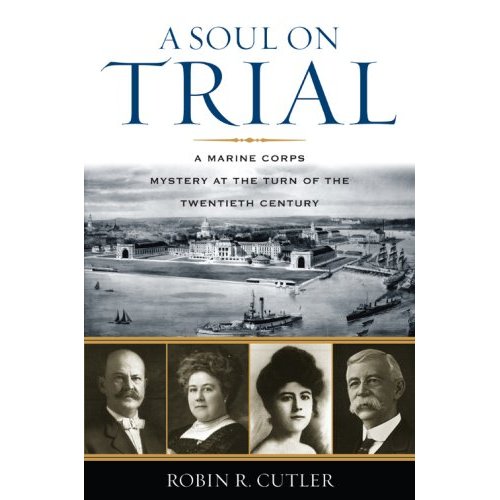
Marine Lieutenant James N. Sutton died on the grounds of the Naval Academy on October 13, 1907, and the Marine Corps would never be the same.
This is the true story of an Oregon mother's crusade to save her son's soul from the stigma of suicide and to confront venerated military institutions in her search for answers about her son's death. From the corridors of power to common city streets, Americans were fascinated by accusations of drinking, gunplay, romantic rivalry, cover-ups, wounded honor, and ultimately murder in Annapolis. Splashed across the front pages of newspapers nation-wide, the Sutton case commanded the attention of members of Congress, high-ranking military officials, renowned attorneys, the Cardinal of the American Catholic Church, and America's foremost psychical researcher.
Touching on lives great and small, A Soul on Trial is a rich portrait of Progressive Era America. Part murder mystery, part ghost story, and part courtroom drama – the book follows the stories of Rosa Sutton, her daughter Rose, and three Marine Corps lieutenants whose futures were at stake as the Naval investigation unfolded. It is a riveting tale of the power of the press, the secrecy of the military in times of crisis, and the lives of young officers whose private battles were often as difficult as their professional ones.
About the Author
Robin R. Cutler has spent most of the past two decades as a public historian both at the National Endowment for the Humanities and as president of two nonprofit organizations. She holds a doctorate in history from Columbia University and taught history for eleven years in universities in New York City. Cutler was the project director and co-producer of ROANOAK, an Emmy-nominated dramatic miniseries for PBS, and the producer/writer of the award-winning PBS documentary Indian America: A Gift from the Past. Ten years ago she discovered the extraordinary primary sources that make it possible to explore the century-old case of Jimmie Sutton's death for the first time. She lives in New York City.
SUTTON, JAMES N
LIEUT U S MARINE CORPS
DATE OF DEATH: 10/13/1907
BURIED AT: SECTION 3, SITE 2102
ARLINGTON NATIONAL CEMETERY
Memorial Services On The Occasion of The 100th Anniversary
of the Death of Lieutenant James N. Sutton, Jr.
October 2007 – Arlington National Cemetery
Photos By M. R. Patterson- Flowers Courtesy of Holly
Memorial Services Were Held By Holly, Michael Patterson, Lynne Patterson & Marcelle Manteria In Association With Robin Cutler
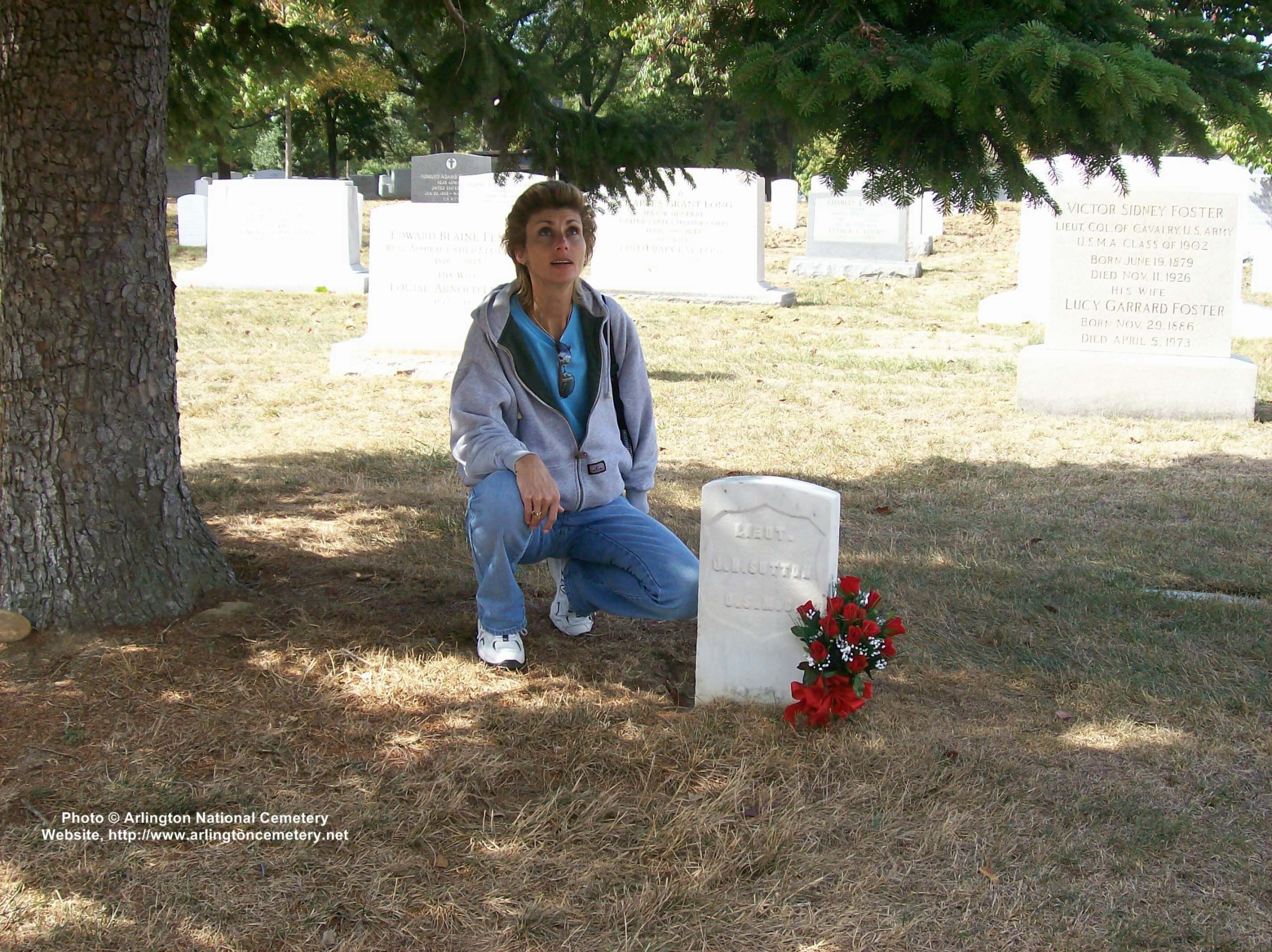
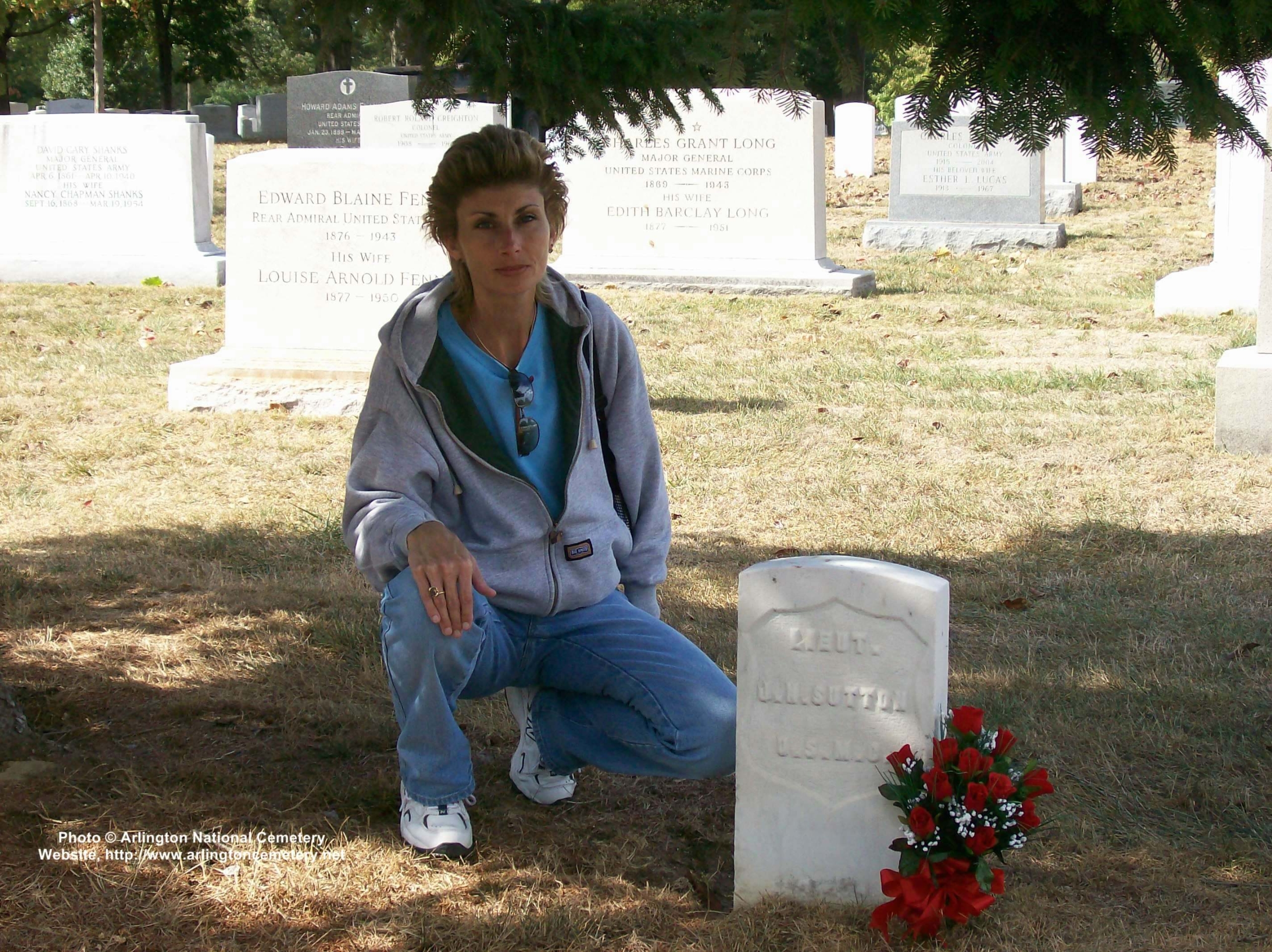
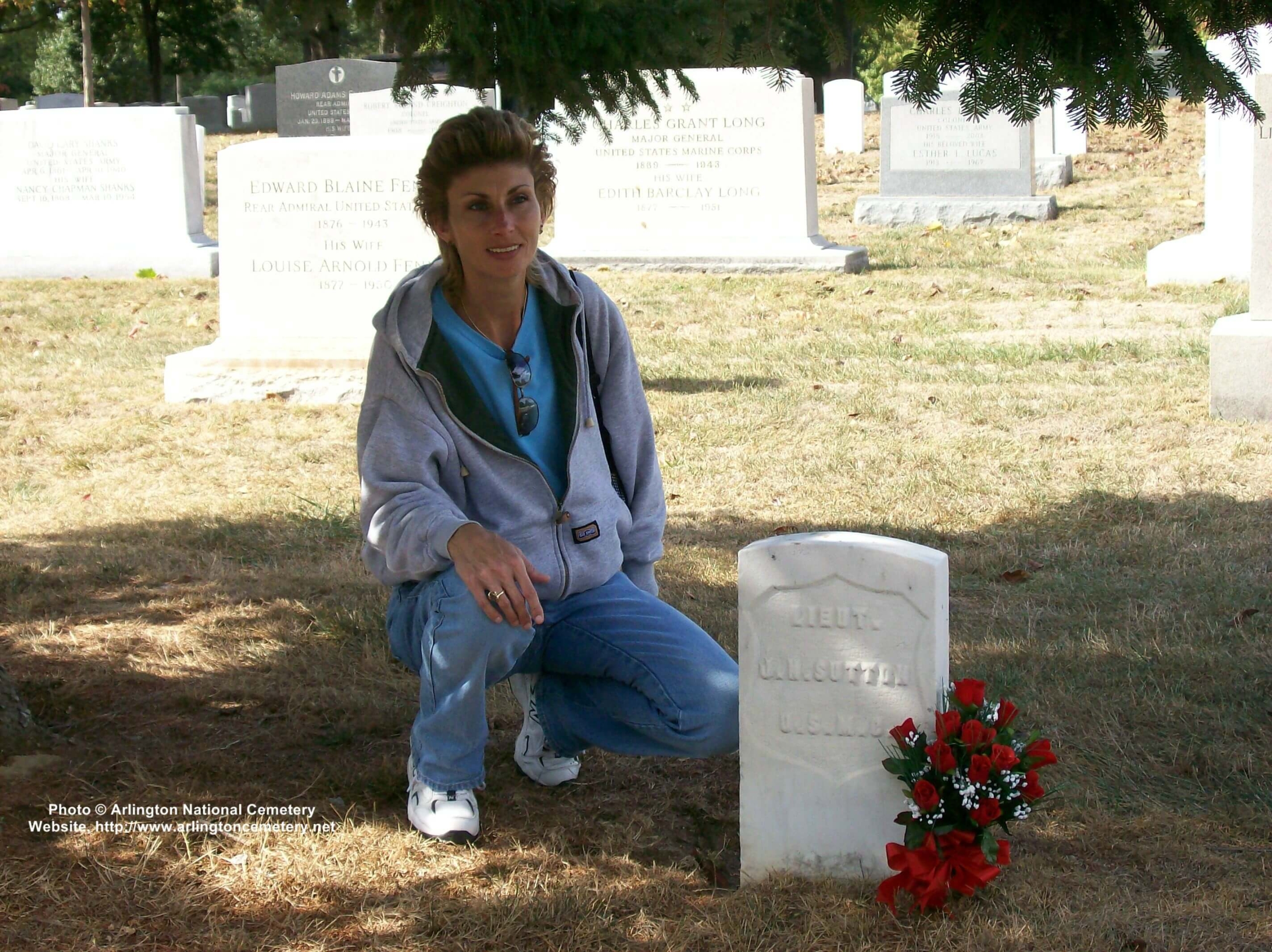
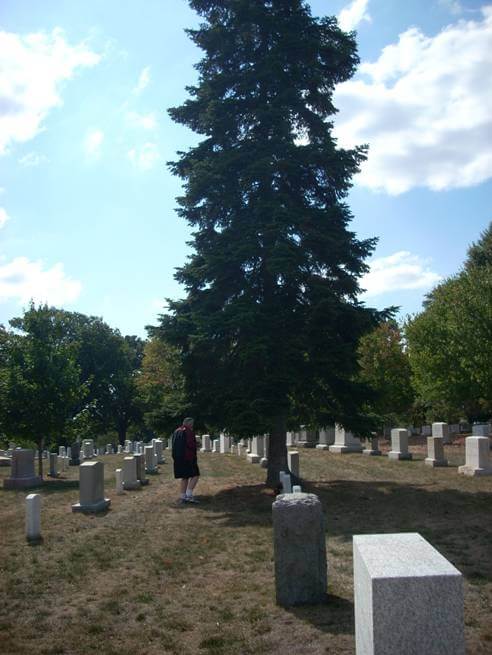
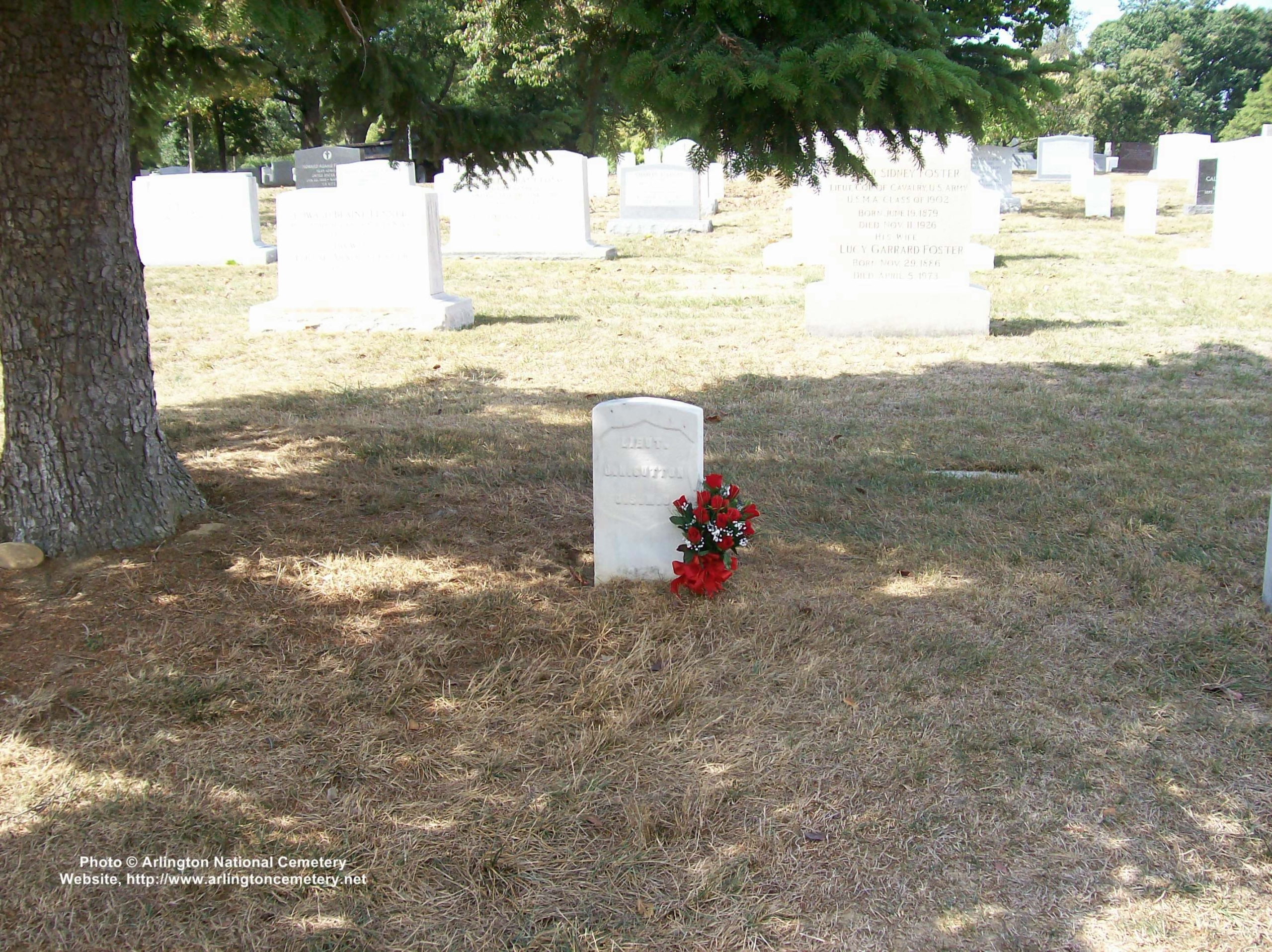
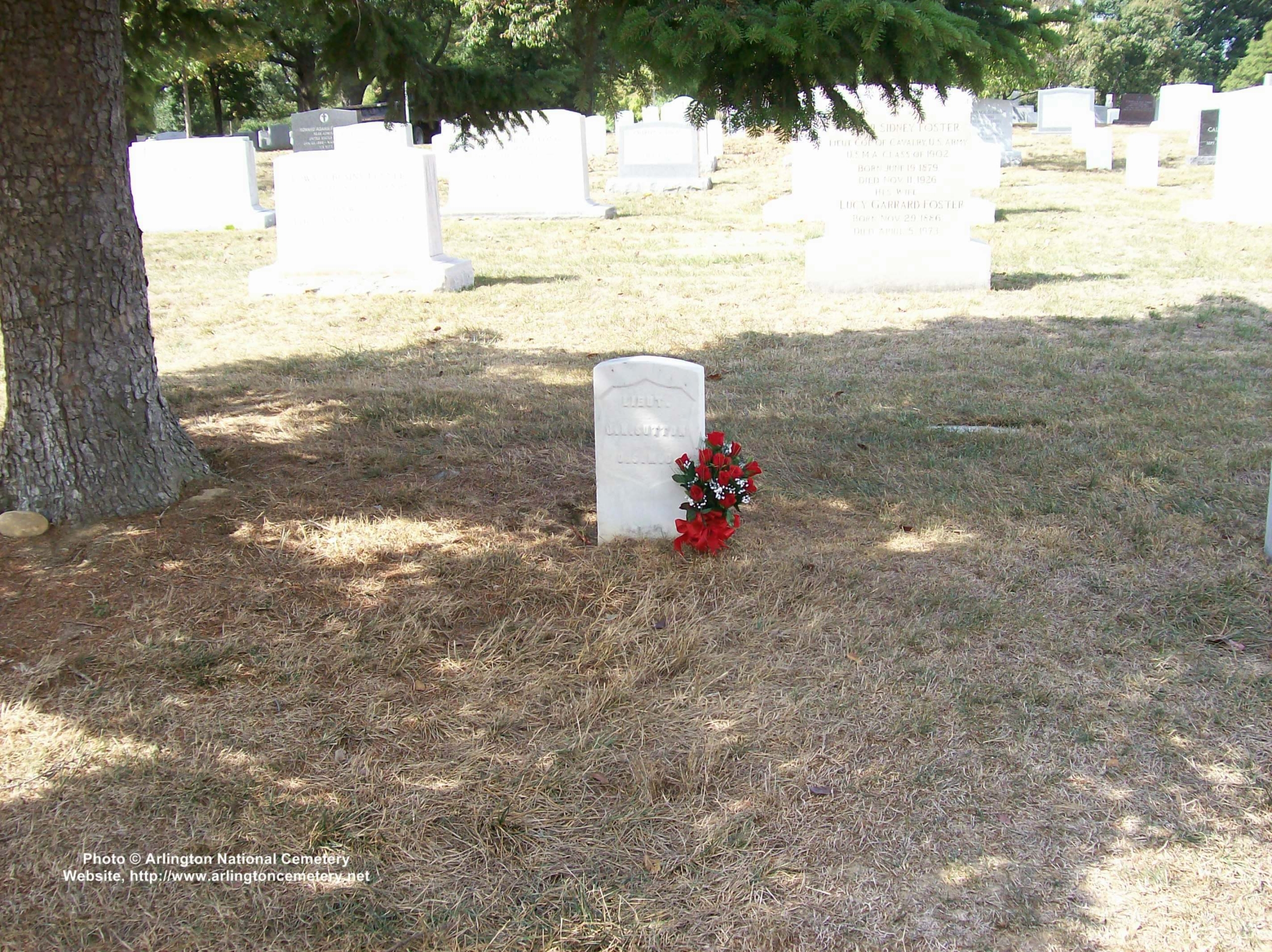
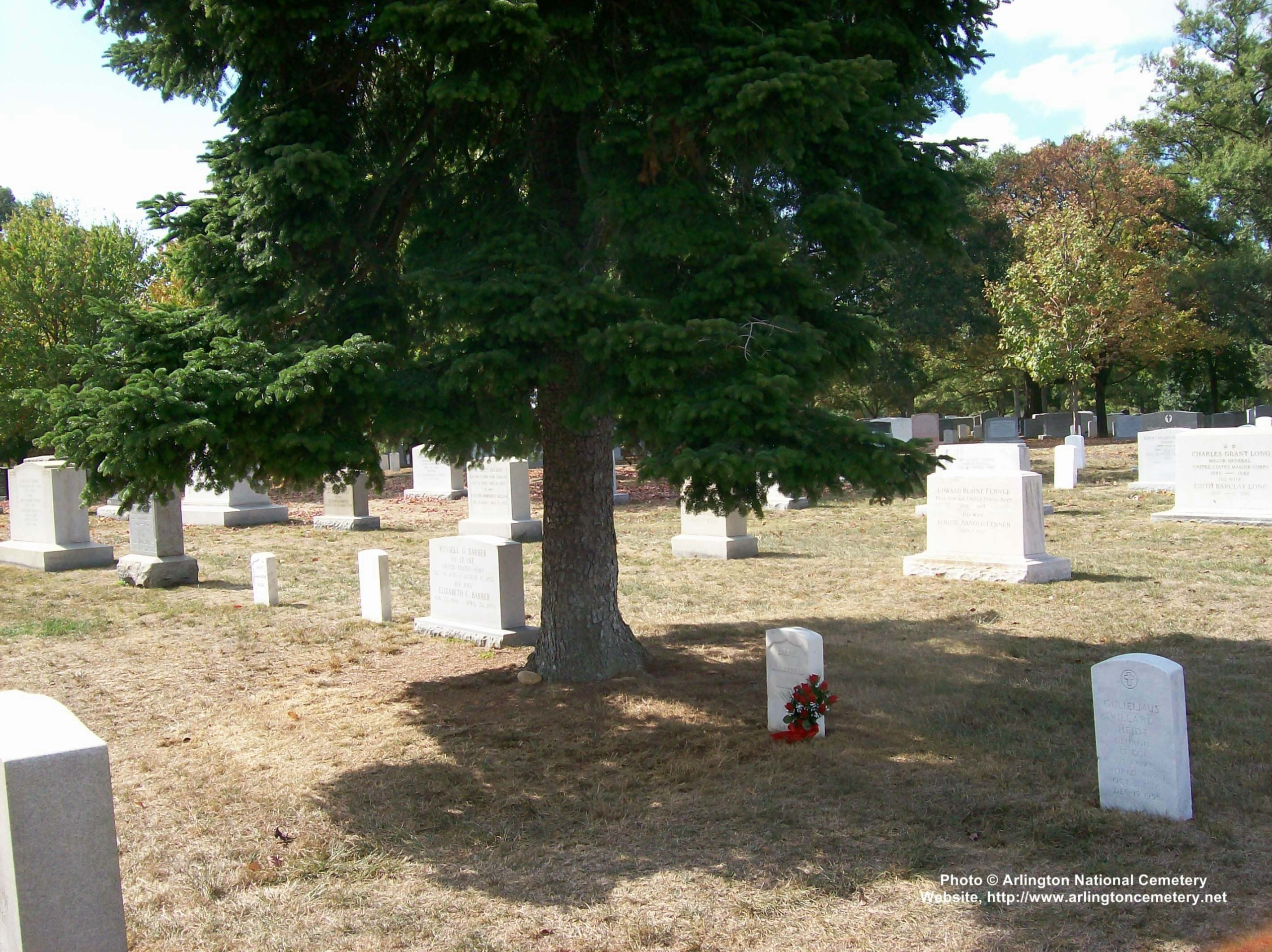
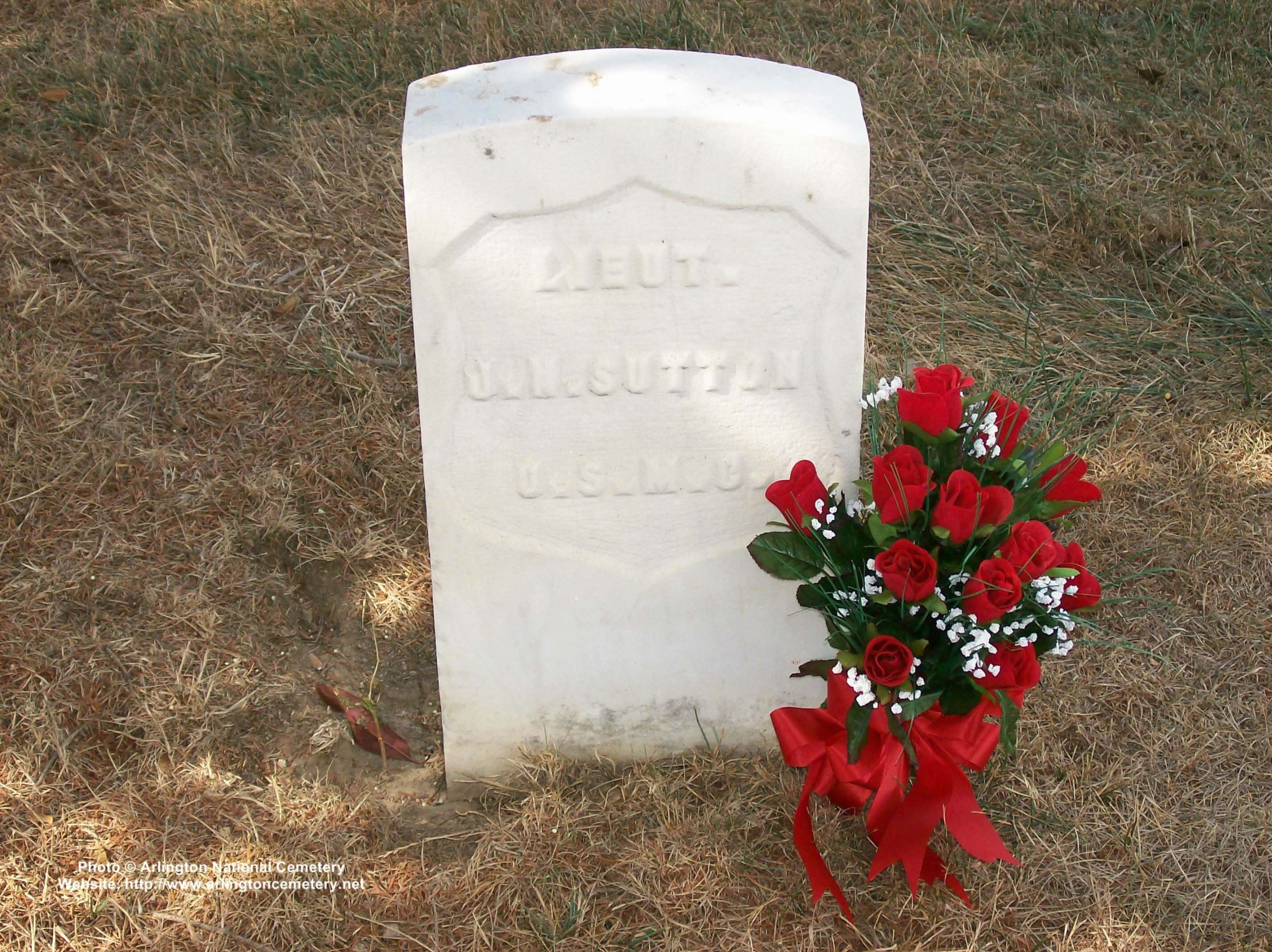
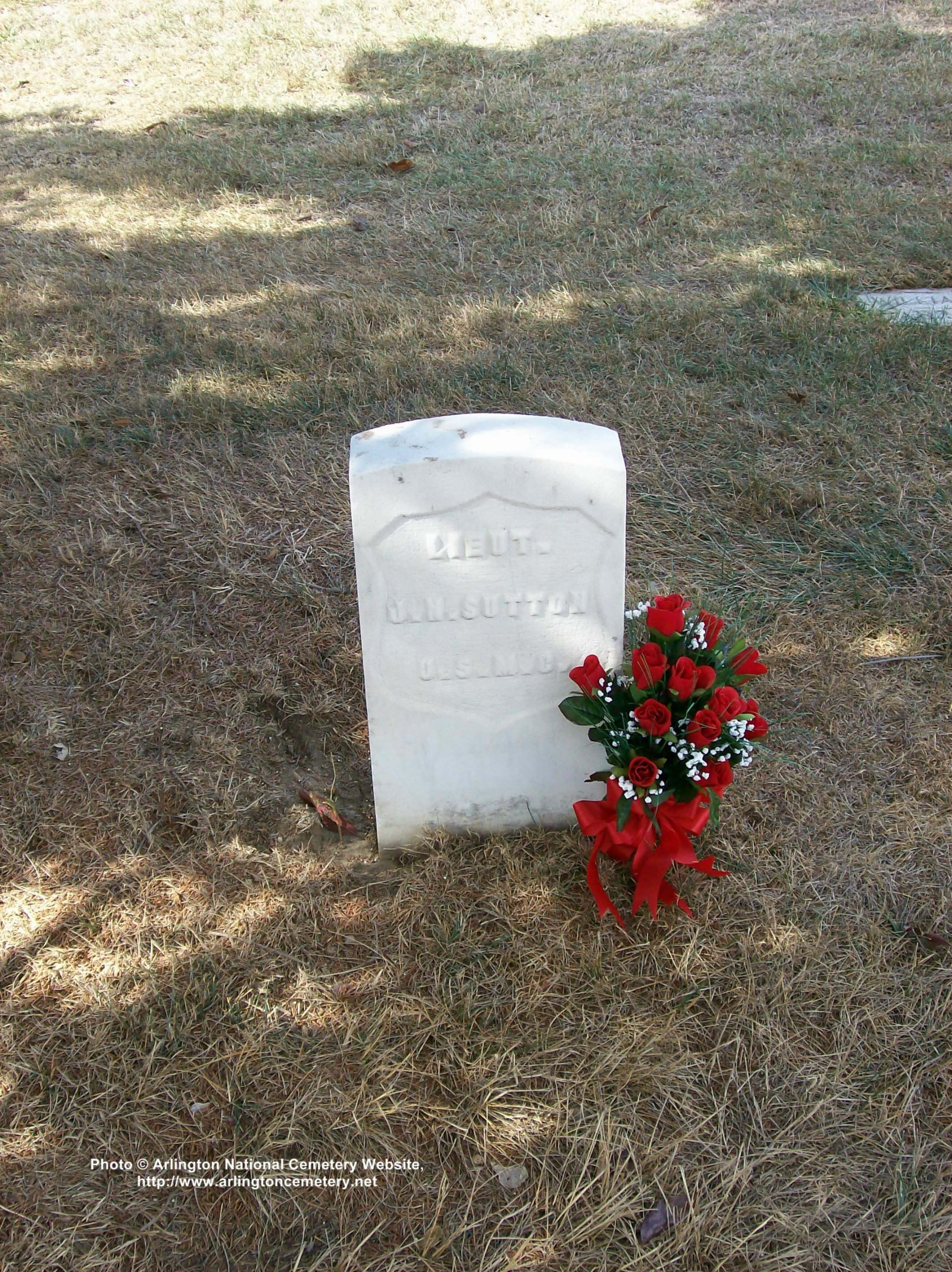
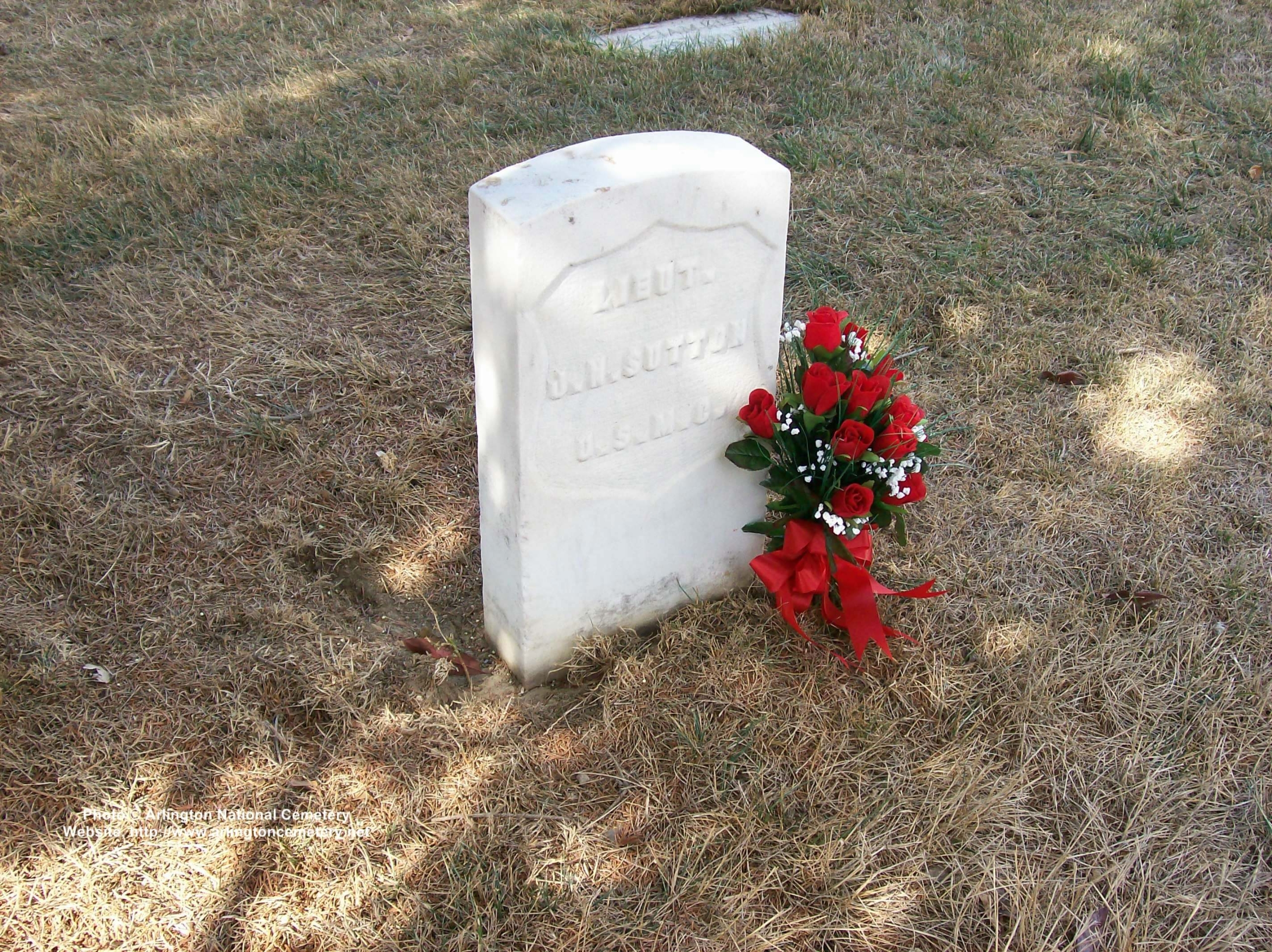
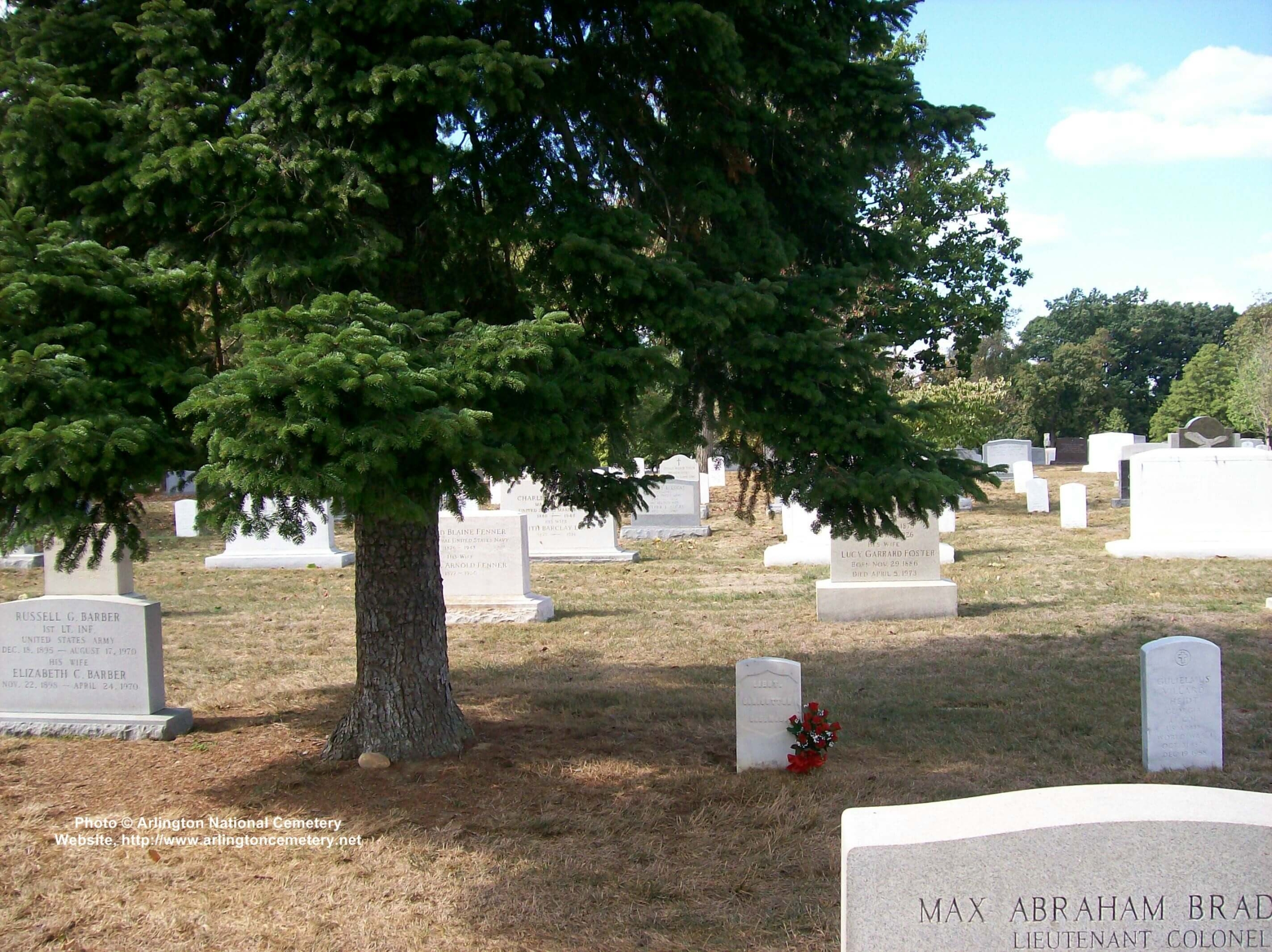
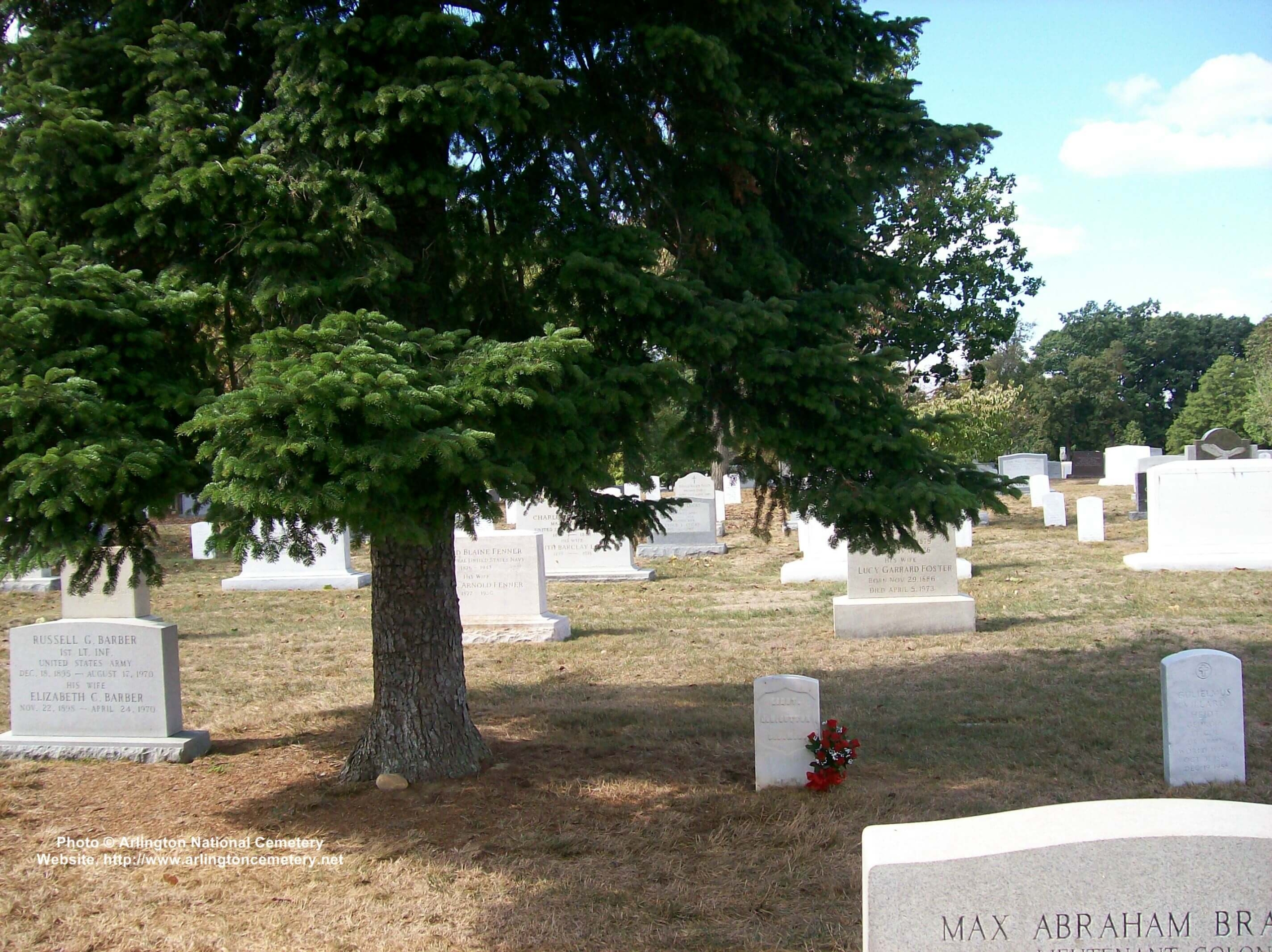
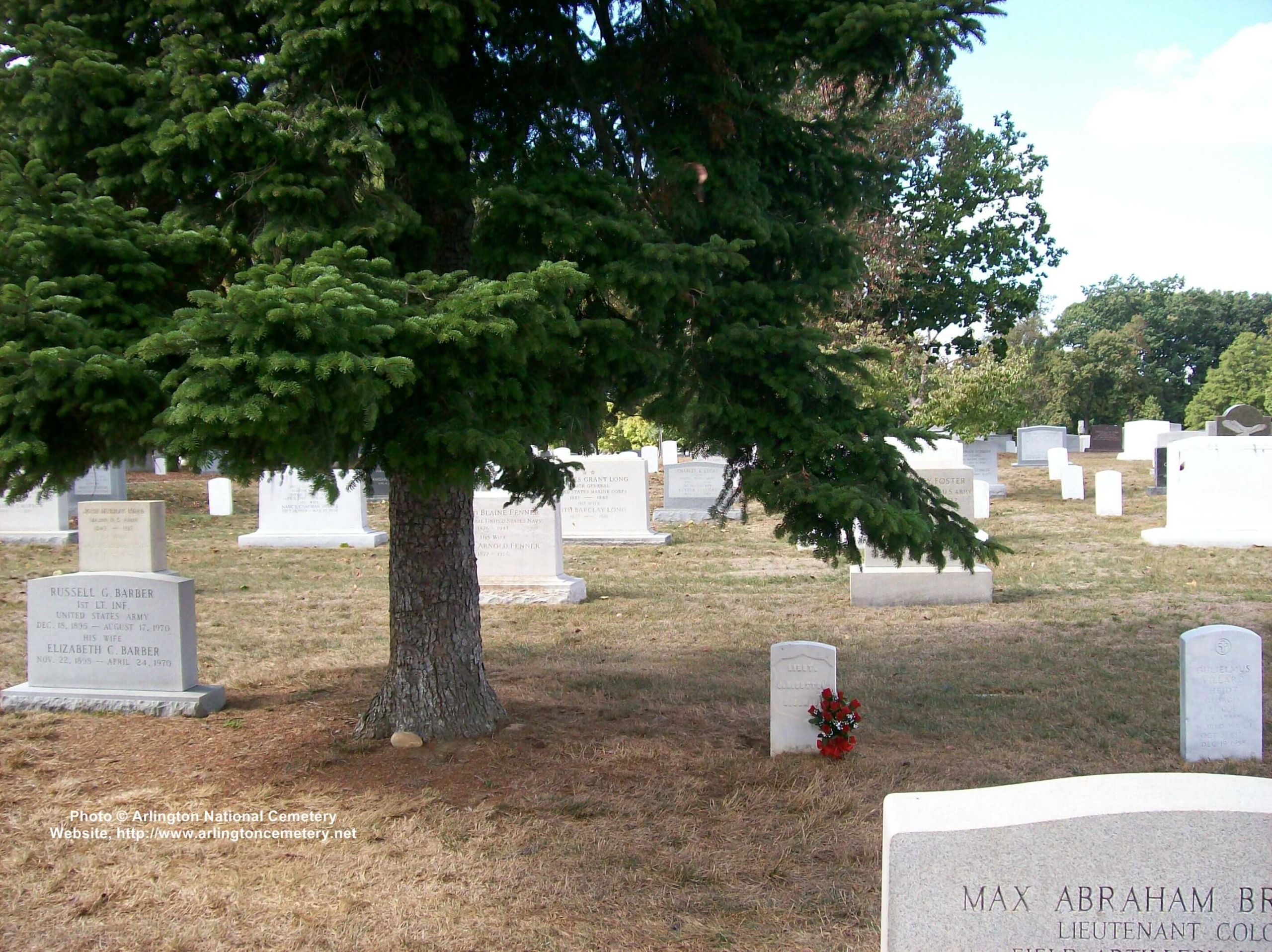

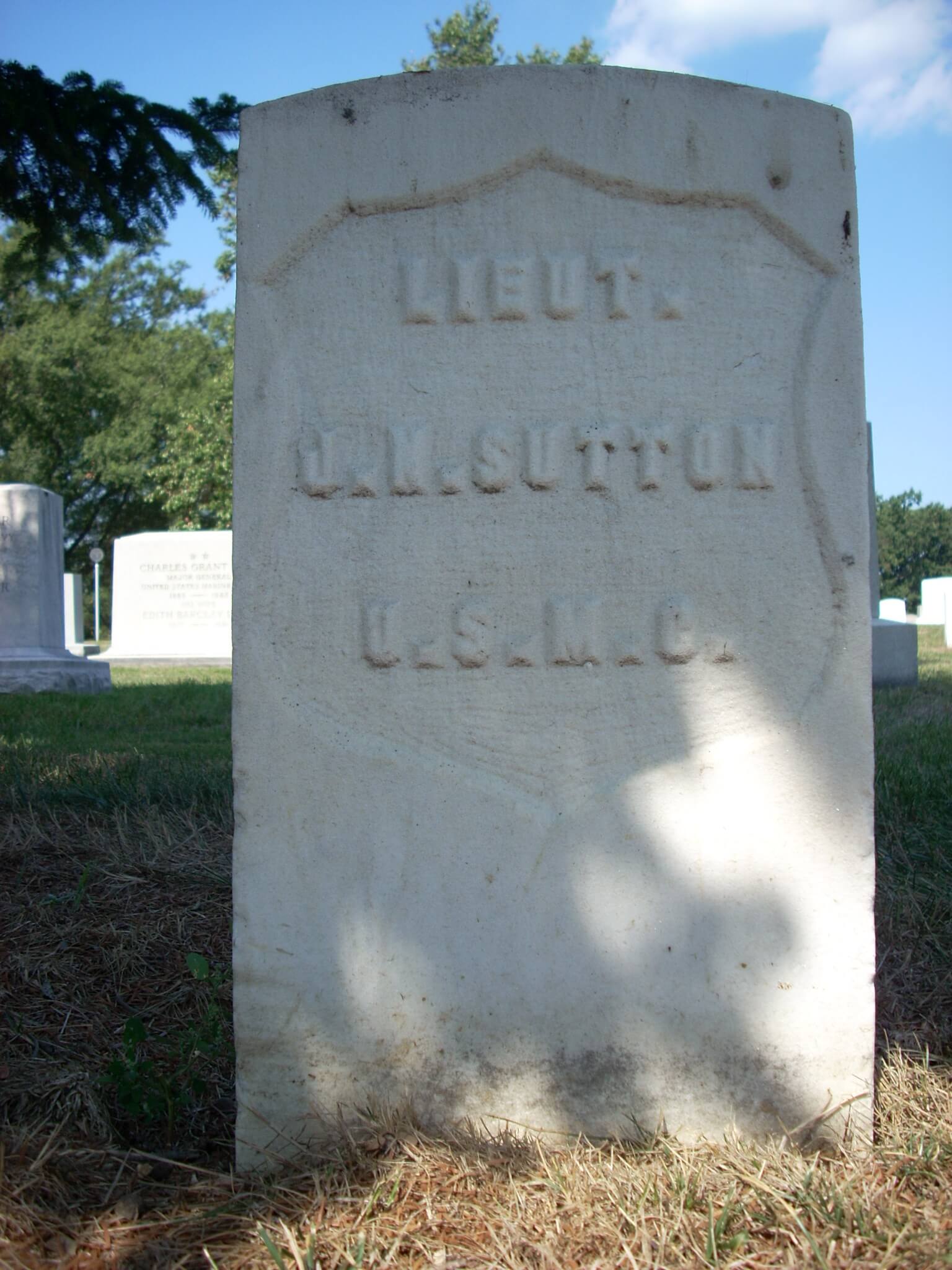
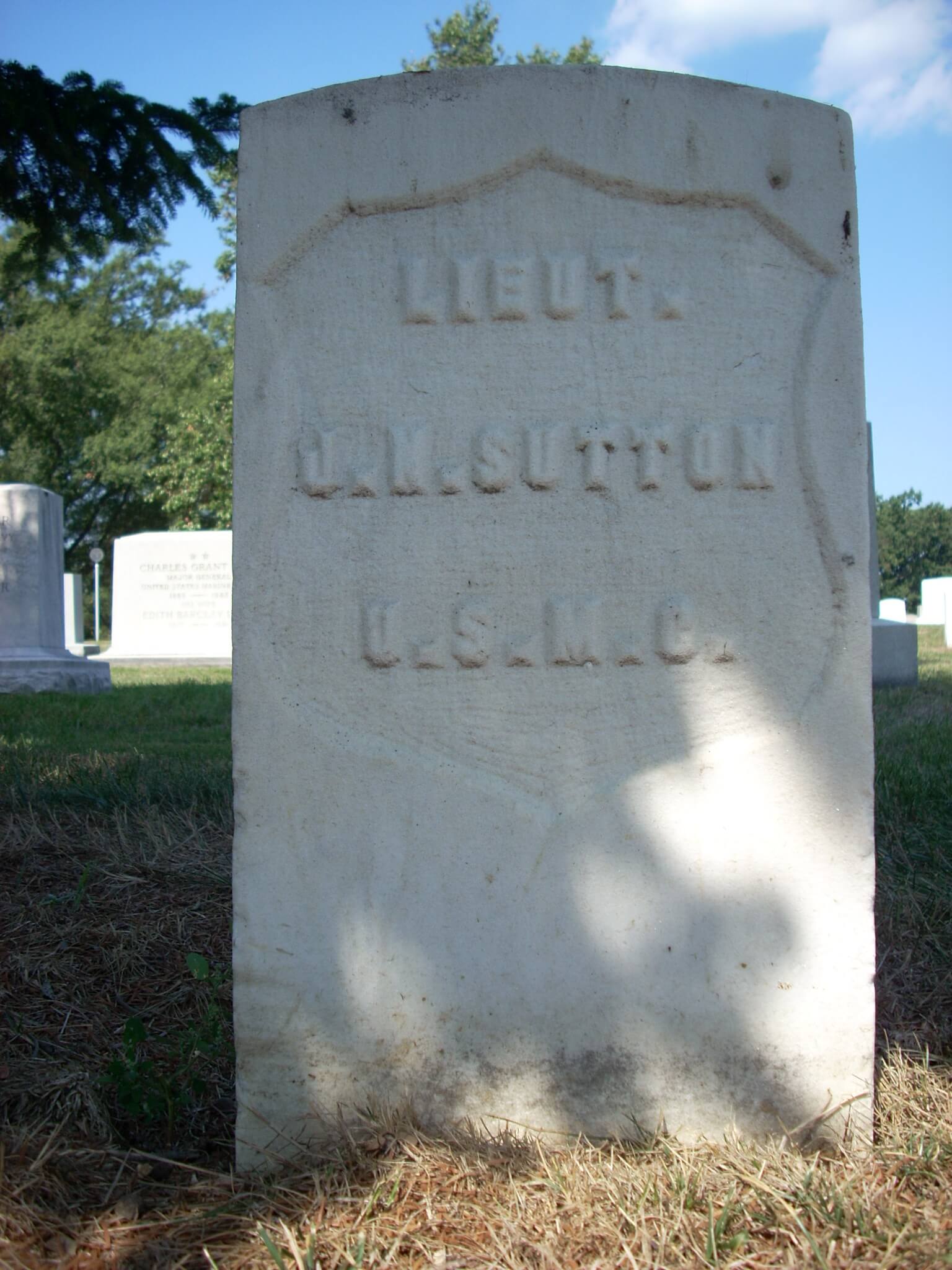

Michael Robert Patterson was born in Arlington and is the son of a former officer of the US Army. So it was no wonder that sooner or later his interests drew him to American history and especially to American military history. Many of his articles can be found on renowned portals like the New York Times, Washingtonpost or Wikipedia.
Reviewed by: Michael Howard