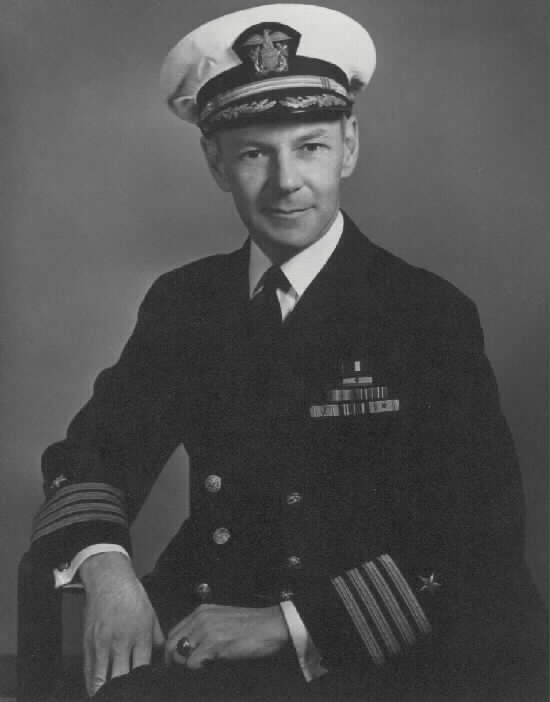
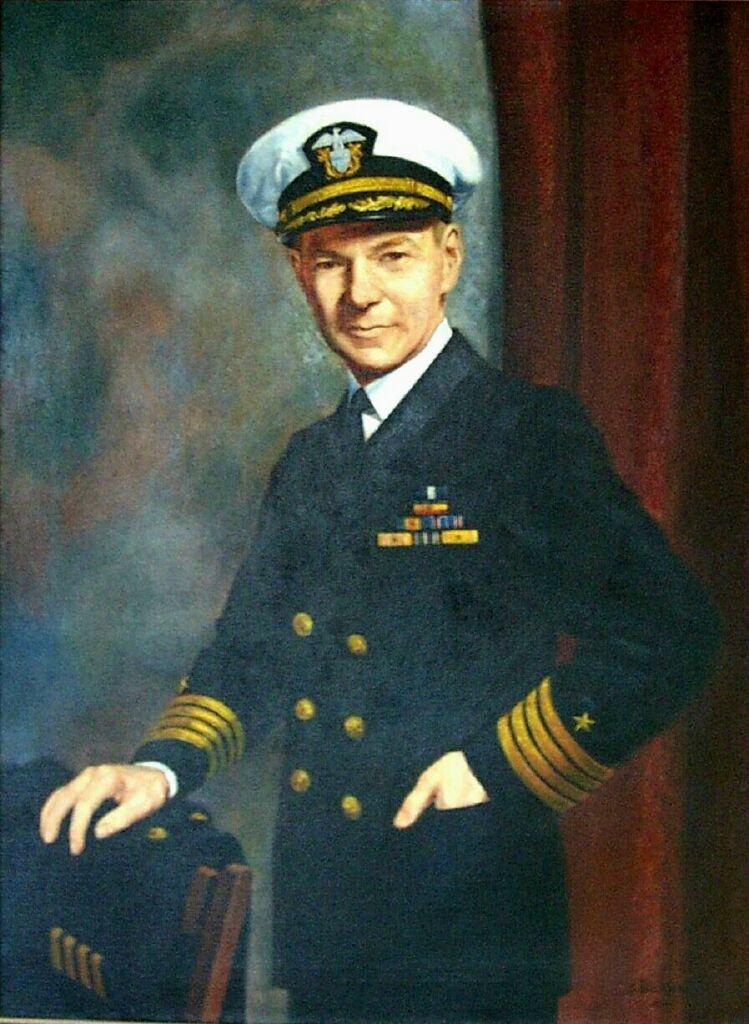
James Shepherd Freeman (born April 30, 1900 in Jasper, Alabama; died August 7, 1962 in Bethesda, Maryland) was a World War II Admiral in the United States Navy and the son of Alabama millionaire James Stanley Freeman.He graduated from the United States Naval Academy in 1921 before entering a career in the Navy. His assignments prior to World War II included serving as commander of the US Naval Base at Pearl Harbor in Hawaii.
While commander of the USS Alchiba, he was assigned to bring supplies and ammunition to Marines stationed in Guadalcanal. On November 28, 1942, his ship was torpedoed by two Japanese midget submarines. Freeman ordered the Alchiba's engines turned to full throttle and ran the ship ashore, saving the lives of the crew and ensuring that the much-needed ammunition was not lost. Freeman received the Navy Cross for his actions.
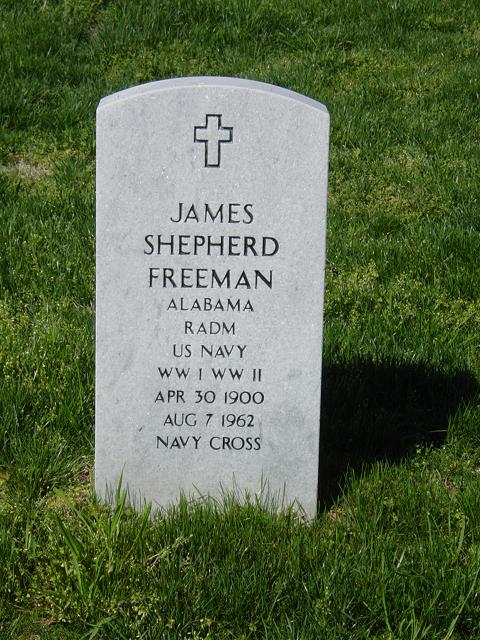
Freeman is buried at Arlington National Cemetery in Arlington, Virginia. He was married to Dorothea Steinmann Freeman, whom he widowed. He is often referred to as “James Freeman, Sr.” to distinguish him from his son, a prominent corporate and political figure of the 1960s and 1970s, also named Jim.
Courtesy of The Marion Institute:JAMES SHEPHERD FREEMAN, SR.
Rear Admiral, United States Navy – Retired
World War II
Period of Service: 30 years, June 1921-June 1951
Born: 30 April 1900 in Jasper, Alabama
Died in Marion, Alabama on 7 August 1962
A graduate of Marion Military Institute and the United States Naval Academy, Class of 1921, Admiral Freeman served with distinction in the U.S. Navy.
During World War II he was Commander of the USS ALCHIBA and assigned to carry supplies to Guadalcanal for the U.S. Marines landing and holding that strategic stronghold. Three trips later, and while nearing an unloading point to deliver much needed ammunition and gasoline, a Japanese submarine torpedoed his ship. Captain (Commander) Freeman, knowing the dire need of ammunition ashore, beached his ship in spite of many explosions and fires on board. After nine days of fighting fires, unloading cargo, and being attacked by enemy aircraft, the ship was once again afloat. Almost immediately two more Japanese torpedoes crashed into the engine room. The keel broke in two places and water rushed in through the two huge holes, 39 and 47 feet across. The USS ALCHIBA’s main engines were knocked out and the Navy declared her lost. Yet again, with the inspired leadership of Captain Freeman, the crew went back to work and within a month the ship moved off under her own power.
With only further minor repairs at an advance base, she made the 5800 mile voyage home for repairs safely and unassisted.
For extraordinary heroism and conspicuous devotion to duty Admiral Freeman was awarded the Navy Cross.
After his retirement from the Navy he served on the Staff of Marion Military Institute until his death.

Michael Robert Patterson was born in Arlington and is the son of a former officer of the US Army. So it was no wonder that sooner or later his interests drew him to American history and especially to American military history. Many of his articles can be found on renowned portals like the New York Times, Washingtonpost or Wikipedia.
Reviewed by: Michael Howard