
Born at Bridgeport, Maine, on April 18, 1847, he won the Medal of Honorwhile serving in the Indian Wars as First Lieutenant, 4th United States Cavalry, on the Brazos River, Texas, on October 10, 1871.
He was also the author of “On the Border With MacKenzie, Or Winning West Texas From the Commanches.” He died on January 4, 1936 and was buried in Section 1 of Arlington National Cemetery.
His wife, Mary M. Carter, who was born on April 18, 1847, is buried with him. His son, Robert D. Carter (Died: January 22, 1926) and his wife, Helen D. Carter (September 27, 1874-September 16, 1961) are each buried in Section 3 of Arlington National Cemetery.
Robert Goldthwaite Carter (1845-1936), soldier and writer, was born at Bridgton, Maine, on October 29, 1845. The family moved in 1847 to Portland, where young Carter was educated, and in 1857 to Massachusetts, where he was about to enter Phillips (Andover) Academy when the Civil War broke out. Carter enlisted as a private in Company H, Twenty-second Massachusetts Infantry, and served from August 5, 1862, to October 4, 1864.
He entered the United States Military Academy in 1865, graduated on June 15, 1870, and was assigned to Troop E, Fourth United States Cavalry.qv He married on September 4, 1870, and started with his bride, Mary, to San Antonio, Texas, on September 12, 1870.
Carter was promoted to First Lieutenant on February 21, 1875, and retired from the Army on June 28, 1876, because of disability contracted in the line of duty. He was brevetted Captain on February 27, 1890, for gallant service in action against the Kickapoo and Apache Indians at Remolino, Mexico, in May 1873.
On January 23, 1900, he was awarded the Medal of Honor for his action in the Brazos River campaign in October 1871.
The Carters had three children, two of whom were born at Fort Richardson. Mrs. Carter died in November 1923. After his retirement from the Army, Carter wrote several books concerning his military career and that of early members of his family: The Boy Soldier at Gettysburg (1887), Four Brothers in Blue (1913), and The Old Sergeant's Story (1926). An autobiographical work, Record of the Military Service of First Lieutenant and Brevet Captain Robert Goldthwaite Carter, U. S. Army 1862-1876, was published in 1904. Carter also wrote several pamphlets on his Texas experiences; these were reprinted as part of his book On the Border with Mackenzie in 1935.
Carter died in Washington on January 4, 1936, and was buried in Arlington National Cemetery.
CARTER, ROBERT D
- LT COL USA RTD
- VETERAN SERVICE DATES: Unknown
- DATE OF DEATH: 01/22/1926
- DATE OF INTERMENT: Unknown
- BURIED AT: SECTION S-W SITE LOT 2218
ARLINGTON NATIONAL CEMETERY
CARTER, HELEN F WIDOW OF ROBERT D
- DATE OF BIRTH: 09/22/1874
- DATE OF DEATH: 09/16/1961
- DATE OF INTERMENT: 09/19/1961
- BURIED AT: SECTION 3 SITE 2218-ES
ARLINGTON NATIONAL CEMETERY - WIFE OF ROBERT D. CARTER – LT COL 17TH INF USA
CARTER, ROBERT G
- CAPT USARMY RET
- VETERAN SERVICE DATES: Unknown
- DATE OF DEATH: 01/04/1936
- DATE OF INTERMENT: 01/07/1936
- BURIED AT: SECTION WEST SITE 106A
ARLINGTON NATIONAL CEMETERY
CARTER, MARY M W/O CARTER, ROBT G
- DATE OF DEATH: 11/24/1923
- DATE OF INTERMENT: Unknown
- BURIED AT: SECTION W LOC SITE LOT 106
- ARLINGTON NATIONAL CEMETERY
WIFE OF ROBERT G. CARTER – CAPT USA RTD
Four Brothers in Blue
Or Sunshine and Shadows of the War of the Rebellion
A Story of the Great Civil War from Bull Run to Appomattox
By Robert Goldthwaite Carter
These letters, collected and transcribed by Captain Robert Goldthwaite Carter in the 1870s, are among the finest primary sources on the daily life of the Union soldier in the Civil War. Robert and his three brothers all saw action with the Army of the Potomac under its various commanders, Generals McClellan, Burnside, Hooker, Meade, and Grant. At times in pairs but often in neighboring units, they fought on the battlefields of Bull Run, Antietam, Fredericksburg, Chancellorsville, Gettysburg, the Wilderness, and Petersburg.
“Originally published in a limited edition in 1913, this reprint is unique among the mass of Civil War memoirs and reminiscences. It chronicles–in the form of letters with connecting narrative–the daily army experiences of four brothers who served in the Army of the Potomac, 1861-1865.”–Journal of Southern History.
“Down to earth, immediate, and gripping, reflecting how the average Billy Yank felt to camp, march, charge, back off, sit around, labor, fight. . . . A classic among soldiers' accounts of the war.”–Choice
Robert Goldthwaite Carter served as an officer in the post-Civil War frontier army and later received the Congressional Medal of Honor for action against the Comanches. He also wrote The Old Sergeant's Story, On the Border with Mackenzie, and Pursuit of Kicking Bird. Frank Vandiver, who wrote the foreword, is Distinguished University Professor at Texas A & M University and the author of Mighty Stonewall. John M. Carroll, who wrote the introduction and provided an index, was the author of numerous books on the Civil War and the frontier army.
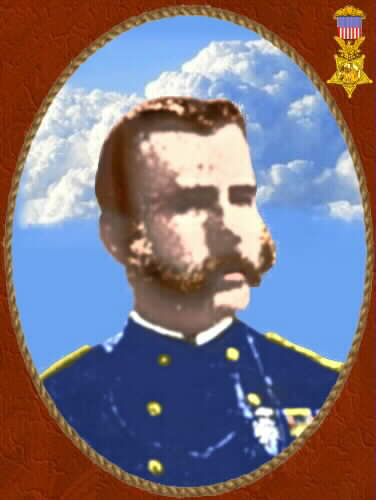
Photo Courtesy of the Home of Heroes
CARTER, ROBERT G.
Rank and organization: Second Lieutenant, 4th U.S. Cavalry. Place and date: On Brazos, River, Texas, 10 October 1871. Entered service at: Bradford, Massachusetts. Birth: Bridgeport, Maine. Date of issue: 27 February 1900.
Citation
Held the left of the line with a few men during the charge of a large body of Indians, after the right of the line had retreated, and by delivering a rapid fire succeeded in checking the enemy until other troops came to the rescue.
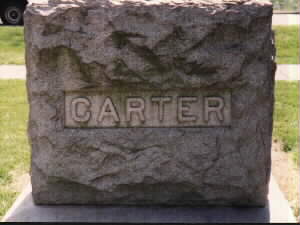
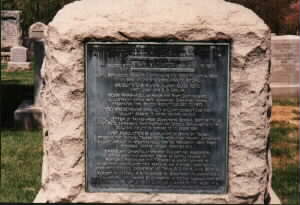
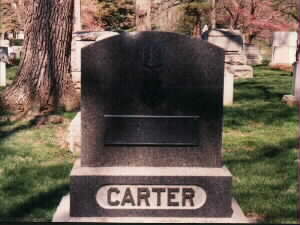

Michael Robert Patterson was born in Arlington and is the son of a former officer of the US Army. So it was no wonder that sooner or later his interests drew him to American history and especially to American military history. Many of his articles can be found on renowned portals like the New York Times, Washingtonpost or Wikipedia.
Reviewed by: Michael Howard