
MAJOR GENERAL DAVID M. JONES
Retired June 1, 1973. Died November 25, 2008.
Major General David M. Jones was commander of the Air Force Eastern Test Range, Cape Kennedy, Flprida. He also served as Department of Defense Manager for Manned Space Flight Support Operations.
General Jones was born in 1913, at Marshfield, Oregon, and attended the University of Arizona at Tucson, Arizona, from 1932 to 1936, where he enlisted in the Arizona National Guard. He served one year of active duty in the Cavalry prior to entering pilot training in June 1937. He was graduated from three major Armed Forces schools: Command and General Staff School, Fort Leavenworth, Kansas, 1946; Armed Forces Staff College, Norfolk, Virginia, 1948; and the National War College, Washington, D.C., 1956.
He next served as a pilot with the 17th Attack Group and then the 95th Bombardment Squadron. In early 1942 he volunteered for the Doolittle Project. During the training phase of this project, he flew the initial evaluation flights on the B-25 aircraft which were specially equipped for the mission. After the Doolittle raid on Tokyo, he bailed out over China. The Chinese people assisted him in returning to the United States. He received the Distinguished Flying Cross for his participation as a flight commander in the planning, training and completion of the mission.
In September 1942 General Jones was assigned as Commander of the 319th Bombardment Group in North Africa. His belief in low-level bombing and his experience with the Doolittle Project resulted in an assignment to develop low-level bombing tactics and techniques. On December 4, 1942, he was shot down over Bizerte, North Africa, and spent two and a half years as a prisoner of war in Stalag Luft III. As a result of his constant agitation and harassment of the enemy he was selected for the “escape committee” by fellow prisoners. The committee reviewed escape plans and directed escapes. After his liberation in April 1945, General Jones was commended for leadership among his fellow prisoners.
General Jones served successively from July 1946 to February 1952 as air inspector at Headquarters Air Training Command; attended the Armed Forces Staff College; director of war plans, Tactical Air Command Headquarters; director of combat operations, Ninth Air Force; and commander, 47th Bombardment Group. From February 1952 to July 1955 he was commander of the 47th Bombardment Wing (a jet-bomber wing) at Langley Air Force Base, Virginia, and Sculthorpe, England.
He started his research and development work in 1956 while assigned as deputy chief of staff for operations for the Air Proving Ground Command at Eglin Air Force Base, Florida. His experience in bombardment-type aircraft and previous command staff assignments in research and development resulted in his being selected director of the B-58 Test Force, organized in February 1958 at Carswell Air Force Base, Texas. Throughout this assignment, General Jones maintained his flying status in the B-58, TF-102, and T-33 aircraft. He participated in design speed dashes, low-level penetrations, night, weather, formation and inflight refueling missions.
When he was transferred to Wright-Patterson Air Force Base, Ohio, in September 1960, as Vice Commander of the Wright Air Development Division, General Jones had flown more supersonic time testing the B-58 than any senior U.S. Air Force pilot. In October 1961 he was named program manager of the GAM-87 “Skybolt” at Aeronautical Systems Division. When that project was cancelled, he became ASD Deputy for systems management and later Vice Commander.
In August 1964 he was assigned as Deputy Chief of Staff for Systems at Headquarters Air Force Systems Command, Andrews Air Force Base, Maryland, and in December 1964 became Deputy Associate for Manned Space Flight with the National Aeronautics and Space Administration. In May 1967 he assumed duties as commander of the Air Force Eastern Test Range, Cape Kennedy, Florida.
His military decorations and awards include the Legion of Merit, Distinguished Flying Cross with oak leaf cluster, Air Medal, Air Force Commendation Medal with oak leaf cluster, Purple Heart, Yum Hwei from the Chinese Government, the NASA Exceptional Service Medal with device, and the NASA Distinguished Service Medal.
General Jones' hometown is Winters, Texas.
He was promoted to the temporary grade of Major General effective July 1, 1965, with date of rank October 5, 1960.
Although the military career of Major General David M. Jones took him all over the world, he was best known as a pilot with Doolittle's Raiders, and he had special connections with San Antonio, Texas.
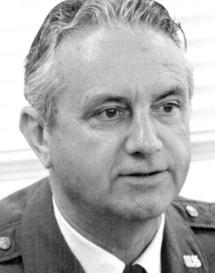
Jones died November 25, 2008 of heart failure. He was 94.
Born in Oregon and reared in Tucson, Arizona, he enlisted in the Army after graduating from the University of Arizona. His early training included learning to ride on horseback. After he served in the Army cavalry, he went to the Army Air Corps and came to San Antonio for pilot training at what was then Kelly Field.
In 1942, he volunteered as a pilot for a secret mission under Lieutenant Colonel James H. “Jimmy” Doolittle.
Doolittle's Raiders flew 16 B-25 bombers from the U.S.S. Hornet on a secret attack on Tokyo and four other cities. The raid, on April 18, 1942, gave a huge boost to a United States, still reeling from Pearl Harbor.
Jones, a Captain at the time, was the pilot of plane No. 5. He had to bail out of his craft over China, but landed in friendly hands and returned to the U.S. safely. He spoke to the Express-News in 2001 about the experience of bailing out.
“I saw this big black hole,” Jones said. “I was scared, there's no doubt about that.”
Later, Jones was assigned as commander of a bombardment group in North Africa. He was shot down over Bizerte, Tunisia and spent two and a half years in the Stalag Luft III prison camp in Germany. His fellow prisoners selected him to be part of the “escape committee” which, according to his Air Force biography, reviewed escape plans and directed escape attempts. The prisoners' actions formed the basis for the classic film, “The Great Escape.” He was liberated from the camp in April 1945.
After the war, Jones had various assignments in air and space research and development, including flying supersonic jets.
In 1967, he was appointed commander of the Air Force Eastern Test Range at Cape Canaveral and remained in that position for most of the Apollo moon missions.
He retired in Florida in 1973. Since 1999, he made his home in San Antonio and in Tucson.
From time to time, members of Doolittle's Raiders held reunions at Karam's Mexican Dining Room, a San Antonio landmark until it closed earlier this year. It devoted an entire wall to Doolittle and his fellow fighters.
According to Air Force News, nine of the 80 members of Doolittle's Raiders are left.
David M. Jones (December 18, 1913–November 25, 2008) was a United States Air Force pilot who served with distinction during World War II. He was one of the Doolittle Raiders whose exploits in April 1942 were dramatized in the film Thirty Seconds Over Tokyo. He then flew combat missions over North Africa, where he was shot down. He was a German prisoner of war for two and a half years — helping with the escape attempt described in the book Great Escape, which was later the subject of a Hollywood film.
In his last assignment with the Air Force, Jones was the Commander of the Air Force Eastern Test Range in Cape Kennedy, Florida as well as the Department of Defense Manager for Manned Space Flight Support Operations. He retired from the Air Force after 37 years of distinguished service.
David M. Jones was born on December 18, 1913 in Marshfield, Oregon. He enlisted in the Arizona National Guard while he was attending the University of Arizona at Tucson, from 1932 to 1936. His later education included three major Armed Forces schools: Command and General Staff School in Fort Leavenworth, Kansas, 1946; Armed Forces Staff College in Norfolk, Virginia, 1948; and the National War College in Washington, D.C., 1956.
Jones was commissioned a second lieutenant in the U.S. Cavalry arm of the Arizona Army National Guard, where he served one year of active duty before transferring to the Army Air Corps and entering pilot training in June 1937. After completing his training in June 1938, he served as a pilot with the 17th Attack Group and then with the 95th Bombardment Squadron.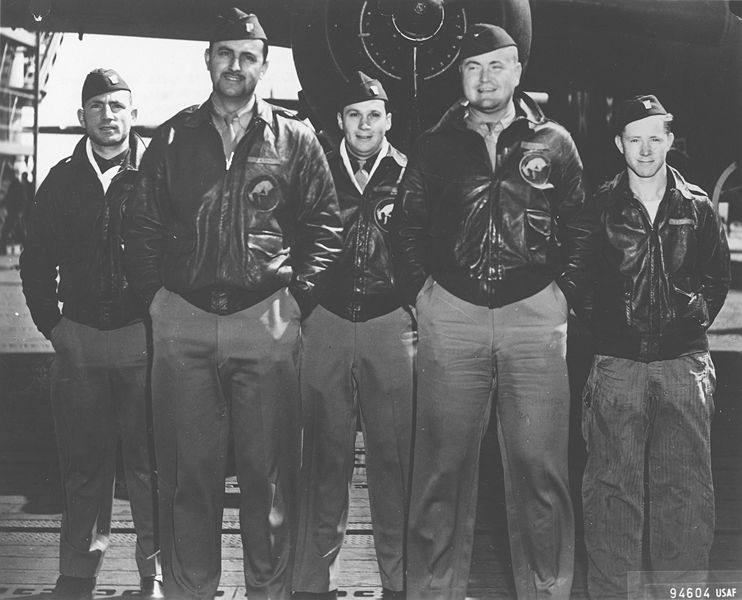
Doolittle Raider Crew No. 5: Front row: Captain David M. Jones, pilot; Lieutenant Wilder, copilot; back row: Lieutenant Eugene F. McGurl, navigator; Lieutenant Denver Vernon Truelove, bombardier; Sergeant Joseph W. Manske, flight engineer/gunner.In early 1942, Jones volunteered for the Doolittle Project — a secret bombing raid to be launched on Japan in retaliation for the December 1941 attack on Pearl Harbor.[2] During the training phase of this project, he flew the initial evaluation flights on the specially equipped B-25 aircraft. On April 18, 1942, the Doolittle Raid launched from the United States Navy carrier USS Hornet, dropping their bombs on Tokyo and four other Japanese cities.[2] This raid was the first good news that the Americans had from the Pacific front.
Lacking the fuel to return to the Hornet after the raid, Jones bailed out over China, where he was assisted by the Chinese people in returning to the United States. He received the Distinguished Flying Cross for his participation as a flight commander in the planning, training and completion of the mission.
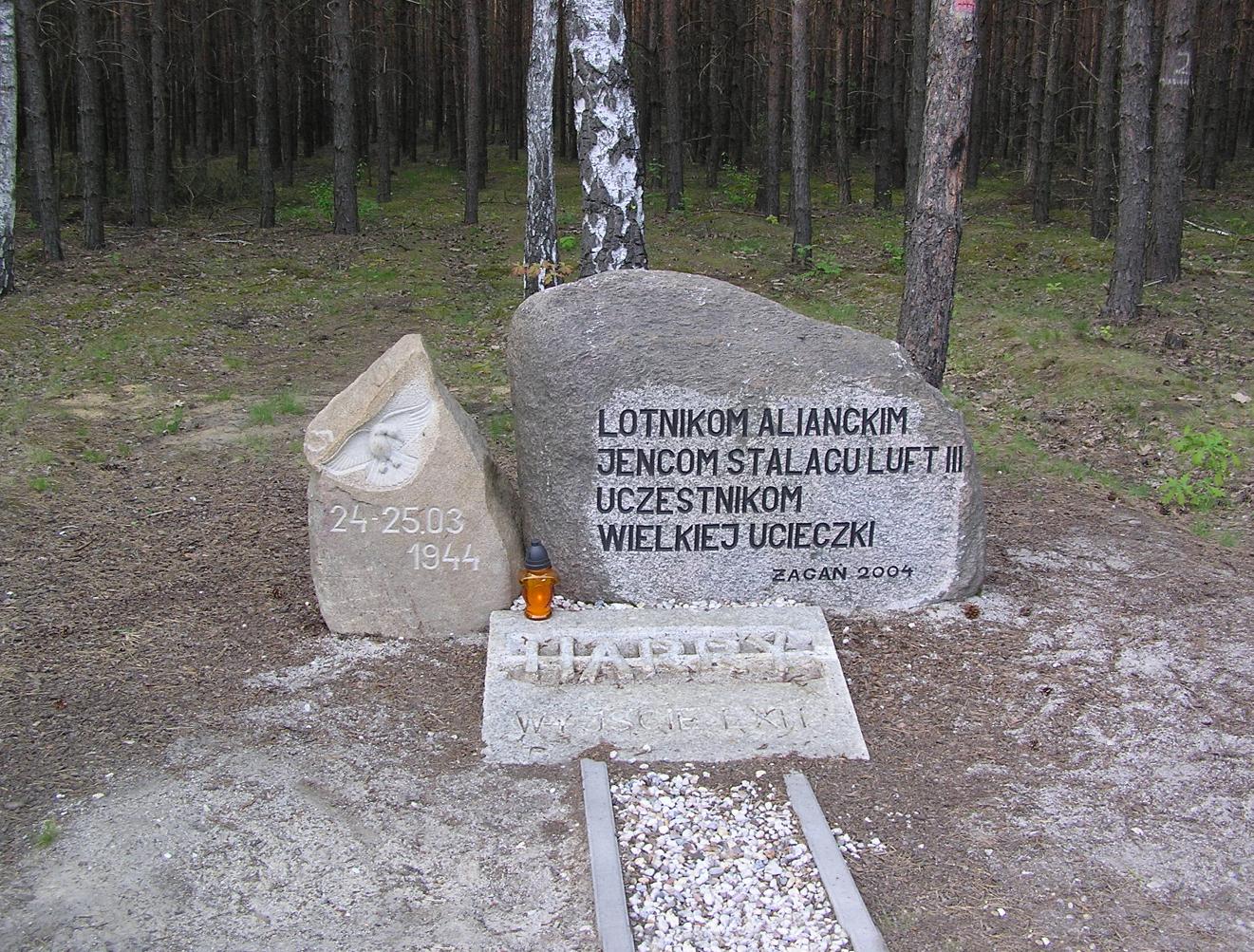
Scene of the “Harry” tunnel in Stalag Luft III.In September 1942, Jones was assigned as commander of the 319th Bombardment Group in North Africa. He was assigned to develop low-level bombing tactics and techniques due to his experience with the Doolittle project and his belief in low-level bombing tactics. On December 4, 1942, he was shot down over Bizerte, North Africa, and spent two and a half years as a prisoner of war in Stalag Luft III. As a result of his constant agitation and harassment of the enemy, he was selected for the “escape committee” by fellow prisoners. The committee reviewed escape plans and directed escapes.Jones led the digging team on tunnel “Harry” used in the Great Escape, chronicled in the Paul Brickhill's autobiographical book, and immortalized in the 1963 film starring Steve McQueen.After his liberation in April 1945, Jones was commended for leadership among his fellow prisoners
In July 1946, Jones was assigned as an air inspector at Headquarters Air Training Command. He followed this with attendance an the Armed Forces Staff College, which he completed in 1948. He then served as Director of War Plans at the Tactical Air Command Headquarters, followed by an assignment as Director of Combat Operations for the Ninth Air Force; then as Commander of the 47th Bombardment Group, until February 1952.
He was then the commander of the 47th Bombardment Wing (a jet-bomber wing) at Langley Air Force Base in Virginia and in Sculthorpe, England until July 1955.
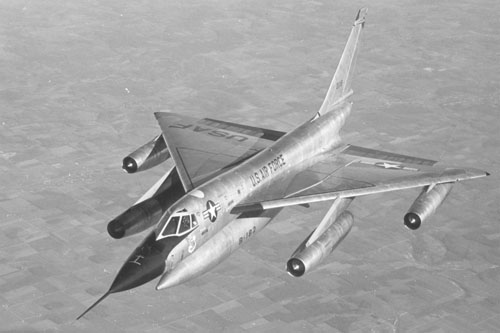
B-58 Hustler
Jones began working in research and development in 1956 when he was the Deputy Chief of Staff for Operations for the Air Proving Ground Command at Eglin Air Force Base, Florida. His experience in bombardment-type aircraft and previous command staff assignments in research and development resulted in his being selected director of the B-58 Test Force, organized in February 1958 at Carswell Air Force Base, Texas. The B-58 Hustler was the first operational jet bomber capable of Mach 2 supersonic flight. During this time, Jones continued to maintain his flight status in the B-58, TF-102, and T-33 aircraft; participating in design speed dashes, low-level penetrations, night, weather, formation and inflight refueling missions. He had more supersonic time testing the B-58 than any senior U.S. Air Force pilot.
In September 1960, he became vice commander of the Wright Air Development Division at Wright-Patterson Air Force Base in Ohio. In October 1961, he was named program manager of the GAM-87 “Skybolt” at Aeronautical Systems Division. When that project was cancelled, he became ASD deputy for systems management and later Vice Commander.
In August 1964, he became Deputy Chief of Staff for systems at Headquarters Air Force Systems Command at Andrews Air Force Base, Maryland, which had responsibility for research, development, and weapon system acquisition.
In December 1964, Jones became Deputy Assistant Administrator for Manned Space Flight with the National Aeronautics and Space Administration (NASA). In July 1965, he was given responsibility for development of the S-IVB Orbital Workshop and spent-stage experiment support module (SSESM) and spent-stage experiment support module (SSESM) — a concept of “in-orbit” conversion of a spent S-IVB stage to a shelter. In August 1965, he took on the additional duties as of the Saturn/Apollo Applications (SAA) Acting Director. Then, in May 1967, he assumed duties as Commander of the Air Force Eastern Test Range, Cape Kennedy, Florida.
Jones retired at the rank of Major General on May 31, 1973. He was one of five Doolittle raiders who later became generals; the others are James H. Doolittle, John A. Hilger, Everett W. Holstrom, and Richard A. Knobloch.
Jones died on November 25, 2008, at age 94, at his home in Tucson, Arizona. He was preceded in death by his first wife Anita Maddox Jones, and survived by his wife Janna-Neen J. Dingell-Cunningham-Jones, and daughter and two sons. At the time of his death, out of the eighty men who participated in the Doolittle Raid, there were ten remaining survivors.
Major General Jones' military decorations and awards include:
Legion of Merit
Distinguished Flying Cross with oak leaf cluster
Air Medal
Air Force Commendation Medal with oak leaf cluster
Purple Heart
NASA Distinguished Service Medal, the highest honor conferred by NASA
NASA Exceptional Service Medal with device
Yum Hwei from the Chinese government.
JONES, DAVID M
- MAJ GEN US AIR FORCE
- DATE OF BIRTH: 02/13/1913
- DATE OF DEATH: 11/24/2008
- BURIED AT: SECTION 3-FF ROW 27 SITE 4
ARLINGTON NATIONAL CEMETERY
JONES, ANITA M
- DATE OF BIRTH: 02/13/1918
- DATE OF DEATH: 05/08/1993
- BURIED AT: SECTION 3-FF ROW 27 SITE 4
ARLINGTON NATIONAL CEMETERY - WIFE OF JONES, DAVID M
MAJ GEN US AIR FORCE

Michael Robert Patterson was born in Arlington and is the son of a former officer of the US Army. So it was no wonder that sooner or later his interests drew him to American history and especially to American military history. Many of his articles can be found on renowned portals like the New York Times, Washingtonpost or Wikipedia.
Reviewed by: Michael Howard